 Team6 · October 15, 2026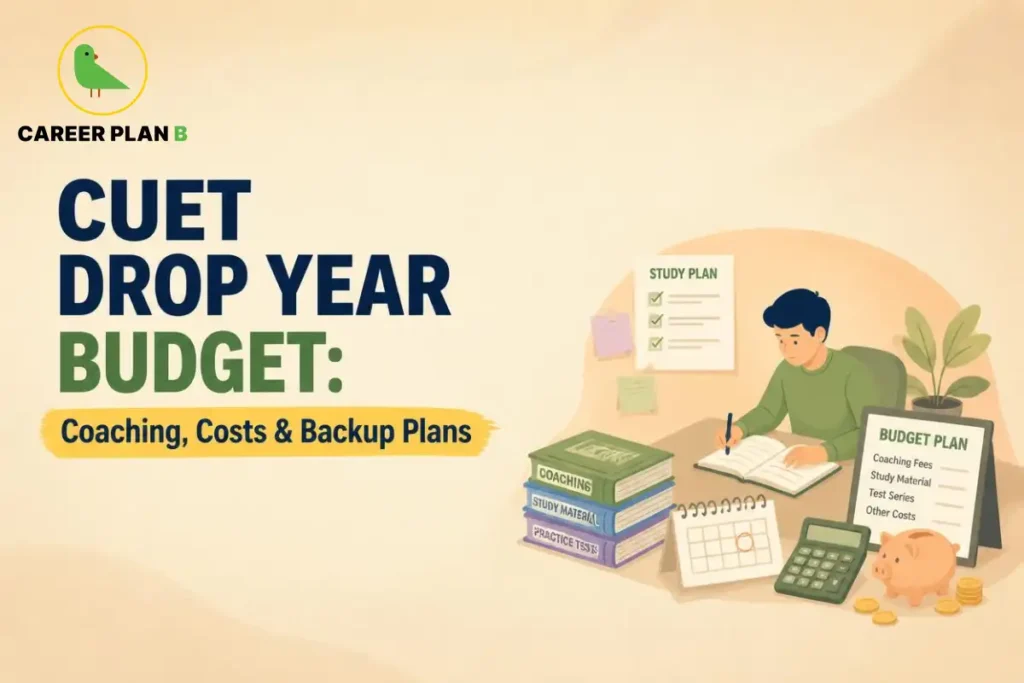
Introduction
I still remember staring at my CUET 2026 scorecard at 11 PM, phone screen way too bright, stomach in knots. Not because the score was a disaster, but because it wasn’t enough. Enough for the college I’d quietly promised myself since Class 11. And in that moment, “drop year” stopped being a term I’d read on forums and became my actual life.
If you’re reading this after a similar night, here’s the first thing I want you to know: a CUET drop year is not a punishment, it’s a plan. But like any plan, it needs a budget, a strategy, and a backup, because hope alone doesn’t pay coaching fees or keep your parents calm at the dinner table.
Why a CUET Drop Year Isn’t the End of the Road
There’s a strange shame attached to repeating an exam in India, isn’t there? As if everyone around you moved forward while you hit pause. But a pause isn’t the same as a stop. A drop year, when planned properly, is simply extra time bought with intention.
I spoke to three other CUET 2026 droppers before writing this, and every single one said the same thing in different words: the second attempt felt less chaotic because they finally understood the exam. They weren’t guessing the pattern anymore. They knew which sections cost them marks and which ones they could’ve aced with ten more minutes of practice.
That’s the quiet advantage of a drop year. You’re no longer a stranger to CUET. You’ve met it once, and now you get to prepare for round two with eyes open.
What Does a CUET Drop Year Actually Cost?
This is the part nobody talks about openly, money. Parents worry about it silently, students avoid bringing it up, and somehow everyone ends up stressed without ever discussing actual numbers.
Let’s fix that with a rough, realistic breakdown.
The Big Cost Buckets
| Expense Head | Approximate Range (Annual) | 2026–2027 Budget Optimization & ROI Execution |
|---|---|---|
| Coaching (offline, reputed institutes) | ₹60,000 – ₹1,50,000 | High fixed outlay; re-evaluate if daily travel times erode self-study time blocks needed for NCERT mastery. |
| Coaching (online programs) | ₹15,000 – ₹50,000 | Cost-effective alternative; offers structured recordings and live doubt clearance while preserving study hours. |
| Study material & books | ₹3,000 – ₹8,000 | Prioritize standard Class 12 NCERT textbooks and NTA PYQ question banks over redundant secondary guides. |
| Mock tests & test series | ₹2,000 – ₹10,000 | Essential ROI investment; ensures CBT platform familiarity, speed optimization, and negative marking control. |
| CUET application fee (per subject) | ₹1,000 for the first subject, ₹400 per additional subject | Direct NTA registration fee; plan domain subject mapping carefully to cover eligibility across target universities. |
| Miscellaneous (transport, stationery, internet) | ₹5,000 – ₹15,000 | Operational buffer for high-speed internet required for CBT simulations and routine digital resource access. |
These numbers shift depending on your city, the coaching brand’s reputation, and how many subjects you’re attempting. A student preparing for five domain subjects in a metro city will obviously spend more than someone doing two subjects from a smaller town with online resources.
Why Costs Sneak Up on Families
Here’s something I learned the hard way: it’s rarely the coaching fee that breaks the budget. It’s the small, recurring expenses, photocopies, extra reference books, a “better” internet plan for online classes, the occasional crash course right before the exam. None of these feel big individually. Together, they can add 15-20% on top of your planned budget.
So when you’re mapping your CUET drop year budget, build in a buffer. Not a “nice to have” buffer, a non-negotiable one.
Choosing Coaching Wisely: Offline, Online, or Self-Study?
Should you join a coaching institute at all? Honestly, it depends on what broke down in your first attempt.
When Offline Coaching Makes Sense
If you struggled with discipline, lost focus easily, or simply didn’t know how to structure a 6-hour study day, a physical classroom adds accountability that’s hard to replicate alone. You show up, someone takes attendance, and peer pressure (the good kind) keeps you moving.
When Online Coaching Works Just as Well
If your core problem was concept clarity rather than discipline, recorded lectures and live online batches can deliver the same academic value at a fraction of the cost. Many droppers I know switched to online programs in their second attempt purely to save money without compromising on quality.
When Self-Study Is the Right Call
And sometimes, neither is necessary. If you scored reasonably well and just need to polish specific sections, self-study with a strong test series might be the smartest, most budget-friendly route. Why pay for a full course when you only need targeted practice?
There’s no universally “correct” choice here. The right coaching format is the one that matches your actual gap, not the one your neighbour’s son joined.
Building a Realistic Monthly Budget for Your Drop Year
A yearly number feels abstract. A monthly number feels manageable. Here’s a simple way to break it down across a typical 10-12 month drop year.
- List fixed costs first – coaching fee (divided monthly if paid in installments), internet, transport.
- Add a study materials line – books, printouts, stationery, roughly ₹500-800 a month.
- Set aside test series money separately – mock tests are non-negotiable for CUET prep, budget around ₹500-1000 monthly.
- Keep a 10% contingency – because something will always cost more than expected.
- Track actual spending weekly – even a simple notes app entry helps you catch overspending early.
Doing this with your parents, not for them, but with them, also removes a lot of the silent tension drop years often create at home. Money conversations are easier when they’re planned rather than reactive.
Have Any Doubts?
What If Things Don’t Go as Planned? Backup Options Worth Knowing
Nobody likes discussing Plan B while chasing Plan A, but a backup plan isn’t pessimism, it’s preparation.
Alternate Admission Routes
Several universities also admit students through entrance tests separate from CUET, or accept board-marks-based admission for select courses. It’s worth checking individual university admission pages directly on their official websites rather than relying on rumors or coaching center claims, because eligibility criteria can change every year.
Skill-Building During the Gap
A drop year doesn’t have to be 100% exam prep, 24/7. Many successful droppers use a few hours weekly to build a certifiable skill, basic coding, content writing, design tools, anything that adds a credential to their profile regardless of how CUET 2027 turns out.
Part-Time or Bridge Courses
Some students enroll in short-term diploma or certificate programs alongside their prep. This keeps the resume active and reduces the psychological weight of “doing nothing but studying,” which, surprisingly, often improves focus rather than distracting from it.
The goal of a backup plan isn’t to expect failure. It’s to remove the fear of failure so you can prepare with a calmer mind.
How Career Plan B Helps
Career Plan B helps students navigate the complexities of a drop year with clarity, confidence, and a structured plan for success:
- Personalized Career Counselling: Helps students evaluate coaching options, academic goals, backup pathways, and long-term aspirations so decisions are based on strategy rather than stress.
- Psycheintel & Career Assessment Tests: Provides data-backed insights into aptitude, personality traits, interests, and learning styles, helping students understand their strengths and make better-informed choices.
- Admission & Academic Profile Guidance: Supports students in strengthening their academic profile, exploring parallel opportunities, and planning realistic admission pathways alongside exam preparation.
- Career Roadmapping: Creates a structured, step-by-step plan that connects drop-year efforts with future university admissions, skill development, and career goals.
- End-to-End Guidance: Assists students in balancing coaching decisions, budget considerations, and backup plans so every choice is thoughtful, practical, and aligned with their future.
For Latest Information
Frequently Asked Questions
1. Is taking a drop year for CUET actually worth it?
It depends on the gap between your score and your goal. If the gap is small and fixable with focused prep, yes, a drop year is usually worth it. If the gap is huge, it’s worth combining prep with backup options simultaneously.
2. How much does a CUET drop year typically cost overall?
Most students spend anywhere between ₹80,000 to ₹2,00,000 across coaching, materials, and miscellaneous expenses for a full year, though this varies widely by coaching format and location.
3. Can I prepare for CUET 2027 without joining any coaching?
Absolutely. Many students self-study successfully using NCERT textbooks, official mock tests, and a disciplined timetable, especially if their main issue was practice rather than concepts.
4. Will dropping a year affect my college admission eligibility?
Generally no, since CUET allows candidates to appear in subsequent years as long as they meet the basic eligibility criteria each time. It’s always best to confirm specific eligibility details on the official CUET portal before assuming anything.
5. How do I convince my parents that a drop year is a good decision?
Bring numbers, not just emotions. Show them a budget, a study plan, and a backup option. Parents worry less when they see a structured plan instead of just a feeling.
Conclusion
A drop year isn’t a detour from your story, it’s a chapter you write with more clarity than the first draft. The budget matters, the coaching choice matters, but what matters most is walking into CUET 2027 having actually learned from CUET 2026 instead of just waiting it out.
So take a breath. Map your costs, pick the prep style that fits you, and keep one backup plan quietly ready in your pocket. Not because you’ll need it, but because knowing it’s there makes the main plan a lot less scary to chase.


