 Team6 · October 15, 2026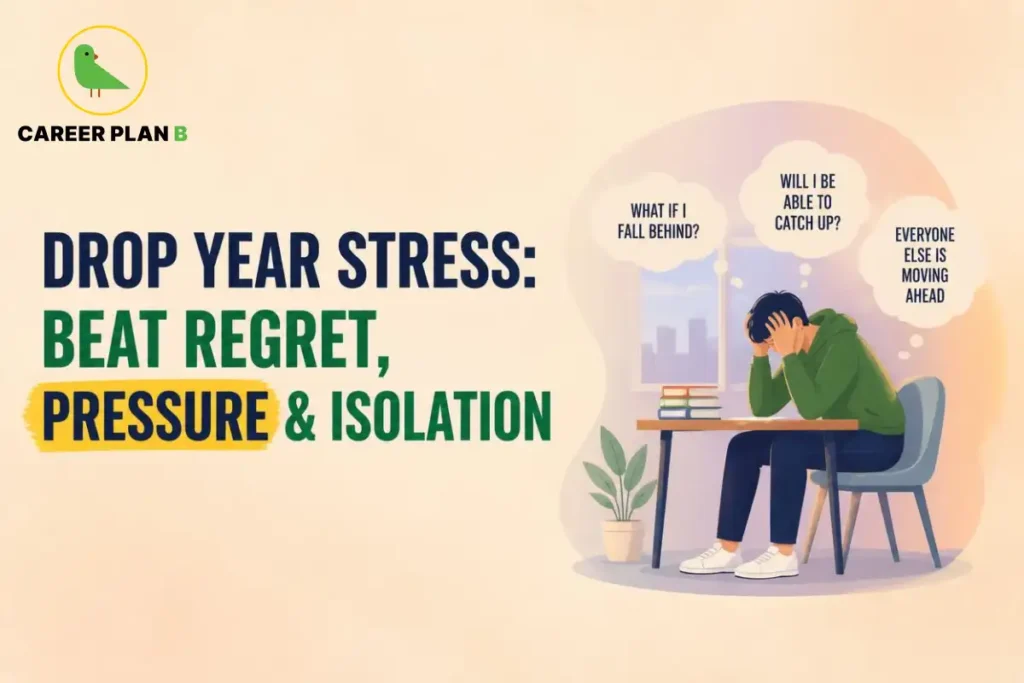
Introduction
The house feels different the day results come out. Your phone buzzes with college joining updates from friends, but your own screen just shows a number that didn’t quite get you where you wanted. That quiet, heavy feeling has a name, and it’s drop year stress, and if you’re sitting with it right now after CUET 2026, please know you are not the only one.
This is the kind of stress that doesn’t show up on any chart, yet it sits with you every single day of the year you take to try again. It comes from regret over what you could have studied differently, pressure from people who mean well but ask too many questions, and a loneliness that creeps in when your friends move into hostel rooms while you stay back home. This blog walks through why a drop year feels so heavy, the three struggles most students go through silently, and how you can actually plan this year so it works for you instead of against you.
Why Does a Drop Year Feel So Heavy?
There’s a strange kind of grief that comes with a drop year. You’re not mourning a person, you’re mourning a version of the year you imagined for yourself, the one where you’d be settling into a new college, making new friends, and starting fresh. Instead, you’re back in your old room, with the same study table, doing the same syllabus again. That gap between expectation and reality is exactly where drop year stress lives.
Is It Normal to Feel Like You’ve Fallen Behind?
Yes, completely normal. CUET, conducted by the National Testing Agency, sees lakhs of students appearing every single year, and not everyone clears it on the first attempt. NTA’s own rules confirm there’s no cap on the number of attempts a candidate can make, which means taking a second shot at CUET is not some rare, shameful exception. It’s simply part of how the system works. Feeling behind doesn’t mean you are behind. It usually just means you’re comparing your middle chapter to someone else’s highlight reel.
The Three Silent Struggles of a Drop Year
Most people only see the studying part of a drop year. They don’t see what’s happening underneath. Three things tend to weigh on students the most, and naming them is often the first step to handling them.
Regret: Replaying What You Could’ve Done Differently
Regret shows up at odd hours, usually right before sleep. You replay the mock test you didn’t take seriously, the chapter you skipped, the month you spent overthinking instead of revising. This kind of regret is exhausting because it solves nothing; it just drains the energy you need for today’s preparation. The honest truth is that you made the best decision you could with the information you had then. Today, you have more information, and that’s the only thing that matters going forward.
Pressure: When Everyone Has an Opinion About Your Life
Then there’s pressure, the relative who casually asks “so what happened with your exam” at every family gathering, the neighbour who compares your marks to their child’s college admission, the parent who doesn’t mean to add stress but does anyway out of their own worry. This pressure during a drop year for CUET can feel louder than the syllabus itself. It helps to remember that most of these comments come from people who simply don’t understand what a competitive exam actually demands, not from people who wish you harm.
Isolation: Watching Everyone Else Move Forward
This is the one nobody talks about enough. Your school friends form new friend groups in their colleges. Your group chats slowly go quiet because everyone’s busy with fresher’s week and new subjects. You’re stuck in a strange in-between space, not in school anymore, not in college yet either. That isolation during a drop year often hurts more than the academic pressure because it touches something deeper, the fear of being left behind socially, not just academically.
Have Any Doubts?
How to Actually Plan Your Drop Year (Not Just Survive It)
A drop year without a plan turns into a long, anxious wait. A drop year with a plan turns into a genuine second chance. Here’s how to build a structure that actually works for CUET 2027 preparation.
- Fix a daily routine, not just a study target: Wake up, eat, study, take breaks, sleep at consistent times. Your brain performs better with rhythm than with random bursts of last-minute cramming.
- Break the year into phases: Spend the first few months on concept building, the middle stretch on practice papers, and the final two months purely on mock tests and revision.
- Track progress weekly, not daily: Daily scores fluctuate and can mess with your confidence. Weekly trends tell you the real story of whether you’re improving.
- Stay updated through the official source only: Bookmark the official CUET website for registration dates, syllabus updates, and exam pattern changes, instead of relying on rumours or random forwarded messages.
- Build in one social activity every week: A call with a friend, a family dinner out, anything that isn’t books. This single habit fights isolation more than people expect.
Drop Year Do’s vs Don’ts
| Do | Don’t | Status |
|---|---|---|
| Set realistic weekly goals | Compare your daily output to toppers online | ⚖️ |
| Take one full day off each week | Study for 12+ hours without breaks, hoping it’ll “make up” for lost time | 🧠 |
| Talk openly with parents about pressure | Bottle up frustration until it explodes | 💬 |
| Check the official CUET site for updates | Trust unverified WhatsApp forwards about exam dates | 🔗 |
| Celebrate small wins, like finishing a chapter | Wait for the “final result” to feel proud of yourself | 🎯 |
Staying Connected Instead of Isolated
Isolation during a drop year is rarely about having zero people around you. It’s about feeling like nobody around you understands what you’re going through. The fix isn’t to disappear into books and cut off everyone; it’s to find your people, even if it’s just one or two.
Why Does Isolation Hurt More Than the Exam Itself?
Because exams have a fixed syllabus and a fixed date, but loneliness has no clear endpoint. You know roughly what to study for CUET 2027, but you don’t always know when the lonely evenings will stop feeling so lonely. Try joining a study group, even an online one, with other students also preparing for a second attempt. Talk to your parents honestly about how the comments from relatives affect you, instead of just absorbing it silently. And keep at least one friendship alive that has nothing to do with marks or exams at all.
How Career Plan B Helps
Career Plan B helps students navigate a drop year with clarity, structure, and consistent support so they don’t feel alone in the process:
- Personalized Career Counselling: Helps students reflect on their goals, understand their situation clearly, and make informed decisions about how to use their drop year effectively.
- Psycheintel & Career Assessment Tests: Provides data-backed insights into aptitude, personality traits, interests, and learning styles, helping students gain a deeper understanding of their strengths and direction.
- Admission & Academic Profile Guidance: Supports students in strengthening their academic profile, exploring parallel opportunities, and planning strategically for future admissions.
- Career Roadmapping: Creates a structured, step-by-step plan that turns the drop year into a purposeful journey with clear academic and career milestones.
- End-to-End Guidance: Assists students throughout the year so the experience feels guided, intentional, and productive rather than isolating or uncertain.
For Latest Information
Frequently Asked Questions
1. Is taking a drop year for CUET actually worth it?
It can be, if you use the time with a clear plan. A drop year only pays off when it’s spent improving weak areas and rebuilding confidence, not just waiting for time to pass.
2. How do I deal with relatives constantly asking about my exam?
A short, calm response works best: “I’m preparing again, I’ll share good news when there’s news to share.” You don’t owe anyone a detailed explanation of your academic journey.
3. How many hours should I study daily during a drop year?
Quality matters more than hours. Most students find 6 to 8 focused hours, broken into sessions with proper breaks, more effective than 12 hours of distracted studying.
4. Will taking a drop year affect my college admission chances?
No, CUET has no restriction on the number of attempts a student can make, as confirmed by NTA guidelines, so a second attempt doesn’t disadvantage your application.
5. How do I stop comparing myself to friends who already got into college?
Remind yourself that college admission timing isn’t a race; it’s a personal path. Their chapter one looking different from yours doesn’t mean your story ends differently.
Conclusion
A drop year will test more than your academic knowledge; it tests your patience, your self-belief, and your ability to keep going when things feel uncertain. But here’s the thing, regret fades the moment you start acting instead of just replaying the past, pressure softens when you stop carrying other people’s opinions as your own truth, and isolation eases the moment you let even one person in.
If this year feels overwhelming right now, that’s okay, you don’t have to figure it all out alone. Reach out for guidance, lean on people who actually understand what a second attempt demands, and give yourself permission to grow at your own pace. This drop year isn’t a pause in your story, it’s simply a different chapter, one you still get to write.


