Team Career Plan B · October 6, 2026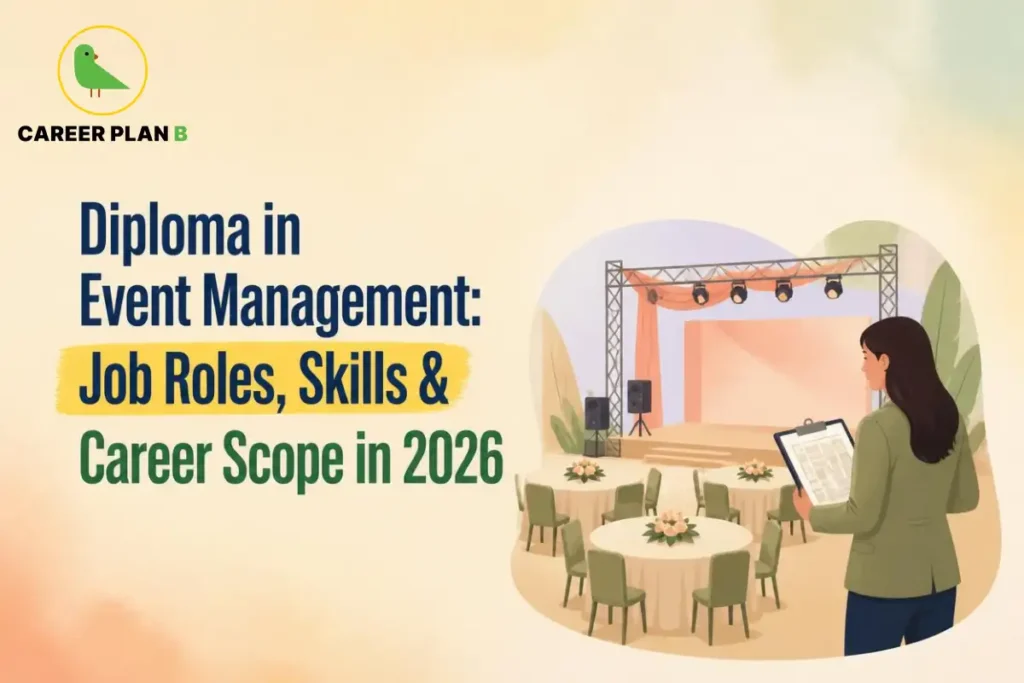
Introduction
Not every path into event management requires a full three-year degree. For many students, a diploma offers a faster and more practical route into the industry. A Diploma in Event Management typically runs for one to two years and focuses heavily on hands-on skills rather than broad theoretical coursework.
This makes it different from a full bachelor’s degree in the same field.
This guide covers what a genuine Event Management Diploma Course teaches, the real entry-level job roles available, and the potential career scope. The goal is to help you make a decision based on structural facts rather than promotional course descriptions.
What an Event Management Diploma Course Actually Covers
An Event Management Diploma Course typically covers event planning and logistics, vendor coordination and negotiation, budgeting and cost control, and basic event marketing and promotion.
Many programmes also introduce digital and hybrid event tools. Unlike a full degree, which may include business coursework, economics, organisational behaviour, and general management theory, a diploma focuses mainly on practical skills.
These skills help students manage an event from planning through delivery.
Most diploma programmes also include a live event project or internship. This practical exposure matters because the event industry places significant value on demonstrated execution experience, often more than the specific credential type itself.
Diploma in Event Management Admission 2026: How the Process Works
For Diploma in Event Management Admission 2026, eligibility generally requires a Class 12 pass from any stream. Most programmes do not require a specific subject combination.
Admission processes vary by institute. Many private training institutes admit students based on Class 12 merit or a basic interview. Some university-affiliated diploma programmes may require an entrance test or portfolio review.
Diploma programmes are available through a wide range of institutes, from established universities to standalone private academies. Therefore, verify your target institute’s admission process directly instead of assuming that one standard route applies everywhere.
Event Management Skills: What You Actually Need to Build
Beyond coursework, several Event Management Skills matter on the job.
Calm and structured decision-making is essential because events rarely go exactly as planned. Strong vendor negotiation and relationship management skills also matter. You also need budgeting and cost-tracking discipline.
Increasingly, professionals should feel comfortable using event technology platforms for registration, ticketing, and hybrid attendee engagement.
Communication skills are equally important. You need to communicate clearly with clients, vendors, venue staff, and on-ground teams. During live events, these teams often need quick and precise instructions.
A diploma course can introduce these skills. However, genuine competency usually develops through real event experience, internships, volunteer work, or paid event assignments.
Read more: Event Management Careers After 12th: Certification Courses & Job Roles
Diploma in Event Management Jobs: Realistic Entry-Level Roles
Diploma in Event Management Jobs at the entry level typically include event coordinator roles. These professionals handle on-ground logistics and vendor coordination under a senior planner’s direction.
Other starting roles include junior wedding or social event planning assistants. Graduates can also support corporate events, conferences, and brand activations.
Venue and vendor-side coordination roles are another option. These positions can involve working with hotels, banquet halls, or event equipment suppliers.
These roles are normal, execution-focused starting points. Strategic planning responsibilities and client-facing ownership usually develop after one to two years of demonstrated on-ground experience.
For Personalized Guidance
Event Management Career Scope: Where Diploma Holders Actually Progress
Understanding Event Management Career Scope for diploma holders means recognising that this is a merit- and experience-driven field. Career progression does not depend only on credential level.
Diploma holders who build a strong execution record can progress into senior event planner roles. Some specialise in corporate events or wedding planning. Others eventually launch their own event management businesses.
Starting an independent business is a common career direction once professionals build strong vendor relationships and client trust.
Some diploma holders also pursue a further degree or specialised certification. This can strengthen their profile for larger corporate or international event roles. However, additional qualifications are not always required for progression within the field.
How Career Plan B Helps
Choosing between a diploma and a full degree in event management requires more than picking the fastest course. Building the right practical experience alongside your studies also matters. This is where Career Plan B can help by offering:
- Personalized Career Counselling: Evaluate whether a Diploma in Event Management or a full degree fits your timeline and career goals.
- Psychometric & Career Assessment Tests: Identify whether your strengths align with the fast-paced and execution-focused demands of event work.
- Career Roadmapping: Build a realistic plan connecting your diploma with genuine internship and entry-level opportunities.
- Admission & Academic Profile Guidance: Get support in evaluating an institute’s curriculum quality and internship partnerships before enrolling.
Get In Touch With Us
Frequently Asked Questions
Q1. Is a Diploma in Event Management enough to build a full career, or do I need a degree eventually?
A diploma can support a genuine and growing career in this field because employers value demonstrated execution experience. A further degree or certification can help with larger corporate roles but is not always required.
Q2. What’s the real difference between a diploma and a full event management degree?
A diploma focuses mainly on practical and execution-based coursework over a shorter period. A full degree generally adds broader business and management theory alongside event-specific training.
Q3. Do I need a specific Class 12 stream for Diploma in Event Management Admission 2026?
No. Most programmes accept students from any Class 12 stream. Eligibility usually depends on completing Class 12 rather than studying a specific subject combination.
Q4. Which Event Management Skills matter most for landing a first job?
Calm decision-making under pressure, vendor negotiation, budgeting discipline, and clear communication are among the most important skills. Practical experience also helps demonstrate these abilities to employers.
Q5. What’s a realistic first job title from Diploma in Event Management Jobs?
Event coordinator and planning assistant roles are typical starting points. Professionals can progress toward senior planning positions as they gain more on-ground experience.
Conclusion
A Diploma in Event Management offers a practical and faster route into a creative, execution-driven field. The industry rewards demonstrated skills and hands-on experience as much as, or sometimes more than, the specific credential you hold.
Understanding the curriculum, admission process, and realistic career progression can help you approach this path with the right expectations instead of relying on promotional course claims.
Build genuine hands-on experience through internships or live event assignments alongside your diploma. Practical execution plays an important role in this field.
If you’d like help evaluating whether this path fits your goals, Career Plan B’s counsellors are ready to guide you through it.