Deepti · October 26, 2026
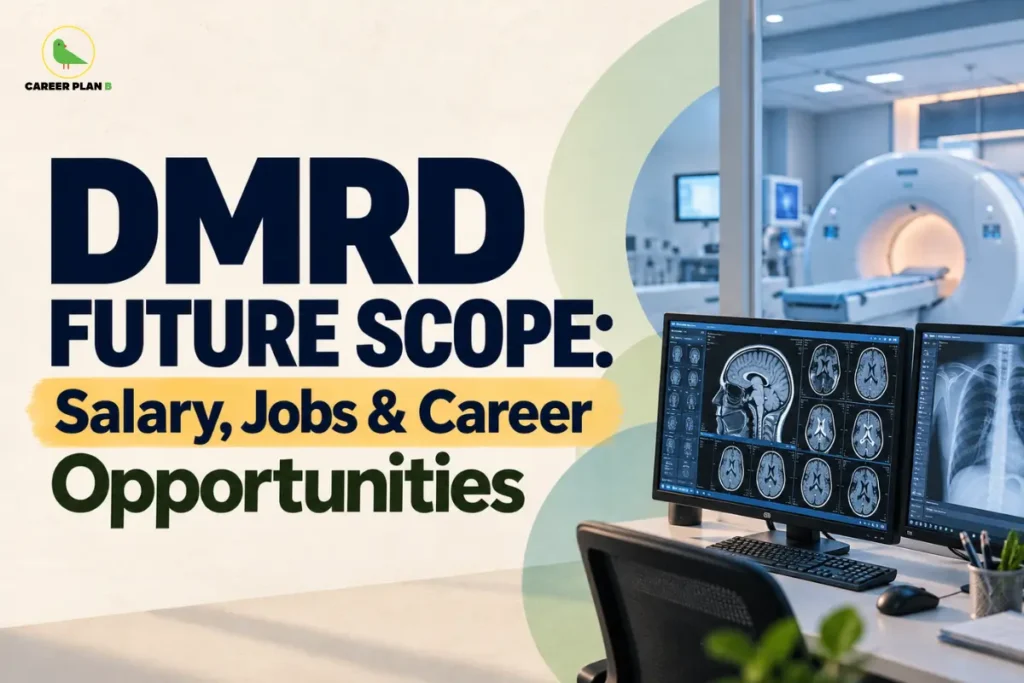
DMRD Future Scope includes hospital employment, diagnostic-centre work, eligible government positions, private practice, and further medical qualifications. Doctors can build careers in radiodiagnosis through clinical experience and additional training. Salary, job eligibility, and professional growth depend on qualifications, experience, location, and employer requirements. Understanding these options helps medical graduates choose a practical path after completing the Diploma in Medical Radio-Diagnosis.
What Does DMRD Training Prepare You For?
The Diploma in Medical Radio-Diagnosis (DMRD) provides postgraduate training in diagnostic imaging. Doctors develop skills in imaging techniques, image interpretation, diagnostic procedures, and clinical decision-making.
The National Medical Commission’s DMRD curriculum outlines the competencies expected from postgraduate diploma trainees. The qualification provides a foundation for work in radiodiagnosis, subject to applicable professional regulations and the requirements of the intended role.
Doctors should consider their clinical interests, practical experience, and long-term goals before choosing their next step.
What Are the Career Options After DMRD?
The Career After DMRD can follow several paths. Each option offers different responsibilities, work settings, and progression opportunities.
1. DMRD Hospital Jobs
Hospitals provide opportunities to work within diagnostic imaging departments. Depending on the position and eligibility criteria, doctors may handle diagnostic imaging responsibilities, contribute to reporting, support clinical teams, and participate in patient evaluation.
Potential employers include:
- Government medical colleges and hospitals.
- Private multispecialty hospitals.
- Corporate healthcare networks.
- Teaching hospitals and specialised medical institutions.
Doctors should check each employer’s qualification requirements before applying for consultant or specialist positions.
2. Diagnostic Centres and Imaging Facilities
Diagnostic centres offer another route for doctors exploring DMRD Jobs. These facilities serve patients referred by physicians, surgeons, and other specialists.
Relevant opportunities may include working with established imaging providers, accepting eligible consulting assignments, and developing expertise in diagnostic workflows. Employers may specify particular qualifications, experience, reporting skills, or additional training for different roles.
3. Remote Reporting and Consulting
Some imaging providers offer remote reporting or flexible consulting arrangements. These positions depend on the employer’s clinical requirements, the doctor’s qualifications, and the professional rules that apply to the work.
Remote work can support flexible schedules. Doctors should verify reporting responsibilities, quality standards, patient-data safeguards, and contractual terms before accepting an assignment.
What Is the DMRD Salary in India?
The DMRD Salary in India varies by employer, experience, location, workload, and appointment type. Government pay scales may provide fixed basic pay and allowances. Private hospitals may offer fixed salaries, while consulting arrangements may depend on workload or agreed fees.
An official recruitment notice provides a useful example. The Bhabha Atomic Research Centre (BARC) recruitment notice dated 27 January 2026 listed an initial basic pay of ₹67,700 per month plus Non-Practising Allowance (NPA) for the Scientific Officer-D position in Radiodiagnosis/Radiology.
The notice allowed candidates with MBBS and a postgraduate diploma in Radio-diagnosis/Radiology to apply through one eligibility route with three years of post-diploma experience. Candidates with the specified MD or DNB qualifications could also meet the alternative route, subject to the notification’s conditions.
This example demonstrates the earning potential of a specific eligible government position. It does not represent the average DMRD Salary Per Month across India.
Private employers do not follow one universal national salary scale for every DMRD role. Doctors should review current recruitment notices and obtain written details about fixed pay, allowances, duty hours, workload, and other benefits before accepting an offer.
Radiodiagnosis Diploma Salary also differs between full-time employment and independent consulting. Doctors should compare the complete compensation package rather than relying on a single advertised figure.
For Personalized Guidance
What Is the DMRD Stipend During Training?
The DMRD Stipend applies to the training period, not to employment after qualification. The amount depends on the applicable institutional and government rules.
The NBEMS stipend notice dated 3 June 2025 revised the minimum stipend for trainees in covered two-year, post-MBBS diploma programmes:
| Training year | Minimum monthly stipend |
|---|---|
| First year | ₹43,000 |
| Second year | ₹45,000 |
These figures apply to the NBEMS-accredited programmes covered by the notice. The guidelines also account for a higher applicable state-government stipend policy.
Doctors must check their college or hospital’s official stipend notice before using these amounts for financial planning. The rates do not automatically apply to every DMRD seat.
Can You Get DMRD Government Jobs?
DMRD Government Jobs may offer structured pay, employment benefits, and opportunities to serve in public healthcare institutions. Recruitment depends on the available vacancies and the qualification requirements for each position.
Government employers may include medical colleges, hospitals, public-sector medical institutions, and specialised organisations.
The BARC vacancy illustrates how a government employer can specify a postgraduate diploma, relevant experience, and a defined pay level for a radiodiagnosis position.
Before applying, doctors should verify:
- Recognition of the qualification.
- Required medical registration.
- Post-qualification experience.
- Age limits and category-specific conditions.
- Required documents and application deadlines.
A DMRD qualification does not automatically make a candidate eligible for every radiology vacancy. The official recruitment notice determines the requirements.
Is DMRD Private Practice a Good Career Option?
DMRD Private Practice can appeal to doctors who prefer independent consulting or want to develop a diagnostic-services business. The right model depends on clinical experience, professional eligibility, investment capacity, and local demand.
Doctors may explore consulting arrangements with established diagnostic centres or investigate the requirements for establishing an imaging facility.
Operating a centre requires careful planning. Equipment, rent, staff, maintenance, utilities, and compliance can create significant costs. Revenue also depends on patient volume, referral networks, and operating expenses.
The Atomic Energy Regulatory Board’s diagnostic radiology guidance explains the licensing and safety requirements for diagnostic X-ray equipment. Doctors must obtain the applicable permissions and meet relevant professional and facility requirements before starting an imaging business.
What Are the Further Studies After DMRD?
Further Studies After DMRD can help doctors build additional expertise and qualify for a wider range of roles.
Post Diploma DNB in Radio Diagnosis
The National Board of Examinations in Medical Sciences (NBEMS) offers a Post Diploma DNB route in Radio Diagnosis through the DNB-PDCET admission process.
The official DNB-PDCET 2026 Information Bulletin explicitly lists DMRD/DMRD (NBE) as an eligible feeder qualification for DNB in Radio Diagnosis.
Candidates must satisfy the applicable recognition, registration, entrance examination, and admission requirements. Future applicants should consult the latest NBEMS bulletin for the relevant session because eligibility dates and admission rules can change.
Additional Clinical Training and Academic Development
Doctors can also consider relevant fellowships, focused clinical training, research, or academic opportunities. Each programme sets its own eligibility requirements.
Doctors exploring other postgraduate specialties can also review Career Plan B’s guide to private MD Radiation Oncology colleges in Uttarakhand. Radiation oncology is a separate specialty, so this option should not be treated as a direct continuation of DMRD.
Can You Work Abroad After DMRD?
DMRD Jobs Abroad depend on the destination country’s medical licensing system and recognition of overseas qualifications. Completing DMRD in India does not automatically grant permission to practise independently or work as a specialist in another country.
For example, the UK General Medical Council’s guidance on overseas medical qualifications explains how it assesses qualifications for registration. Doctors must meet the applicable registration and licensing requirements before practising in the UK.
The rules differ across countries. Doctors exploring Career Opportunities After DMRD Abroad should check qualification recognition, examinations, language requirements, supervised practice rules, and any additional specialist registration criteria.
Working Abroad After DMRD requires careful planning. Candidates should verify their eligibility directly with the relevant medical regulator before paying for an overseas placement or training programme.
How Can You Improve Your DMRD Career Growth?
Strong clinical skills and careful career planning can support DMRD Career Growth. Doctors should strengthen their image interpretation and reporting skills, gain experience in relevant imaging techniques, and follow current clinical standards.
They should also review job eligibility criteria before pursuing additional qualifications. A recognised advanced qualification may open pathways that a diploma alone does not support.
Doctors can make better decisions by weighing their preferred work setting, income goals, learning interests, and willingness to pursue further training.
How Career Plan B Helps
Career Plan B supports doctors who need clarity about their next professional step through Personalized Career Counselling, PsycheIntel and Career Assessment Tests, Admission and Academic Profile Guidance, and Career Roadmapping.
These services help individuals review their interests, understand suitable learning pathways, assess their options, and plan practical next steps around their qualifications and long-term goals.
Get In Touch With Us
Frequently Asked Questions
Q1. What is the DMRD salary per month in India?
DMRD Salary Per Month varies by employer, experience, location, and role. BARC’s 2026 notice listed ₹67,700 initial basic monthly pay plus NPA for one eligible Scientific Officer-D position.
Q2. What are the best DMRD hospital jobs for fresh graduates?
Eligible entry-level opportunities may exist in hospital radiodiagnosis departments and diagnostic centres. Candidates must check each employer’s qualification and experience requirements.
Q3. Can DMRD holders apply for government jobs?
Yes, DMRD holders can apply for government posts that accept their qualification and experience. The official recruitment notice determines eligibility.
Q4. Can I pursue DNB after DMRD?
Yes. NBEMS lists DMRD as an eligible feeder qualification for Post Diploma DNB in Radio Diagnosis. Candidates must meet the current DNB-PDCET and admission requirements.
Q5. Is private practice possible after DMRD?
Doctors may explore eligible consulting work or diagnostic-centre ownership. Their scope of practice, registration, facility permissions, and equipment licensing must meet applicable rules.
Q6. What are the requirements for working abroad after DMRD?
Career Opportunities After DMRD Abroad depend on the destination country’s qualification recognition and licensing rules. Doctors should contact the relevant medical regulator before applying.
Conclusion
The DMRD Future Scope includes hospital jobs, eligible government positions, consulting, private practice, and further study. The right path depends on your skills, qualifications, and long-term goals. Review official eligibility and salary notices before making a decision. Explore Career Plan B’s guidance to plan your next career move with greater clarity.