Team6 · August 13, 2026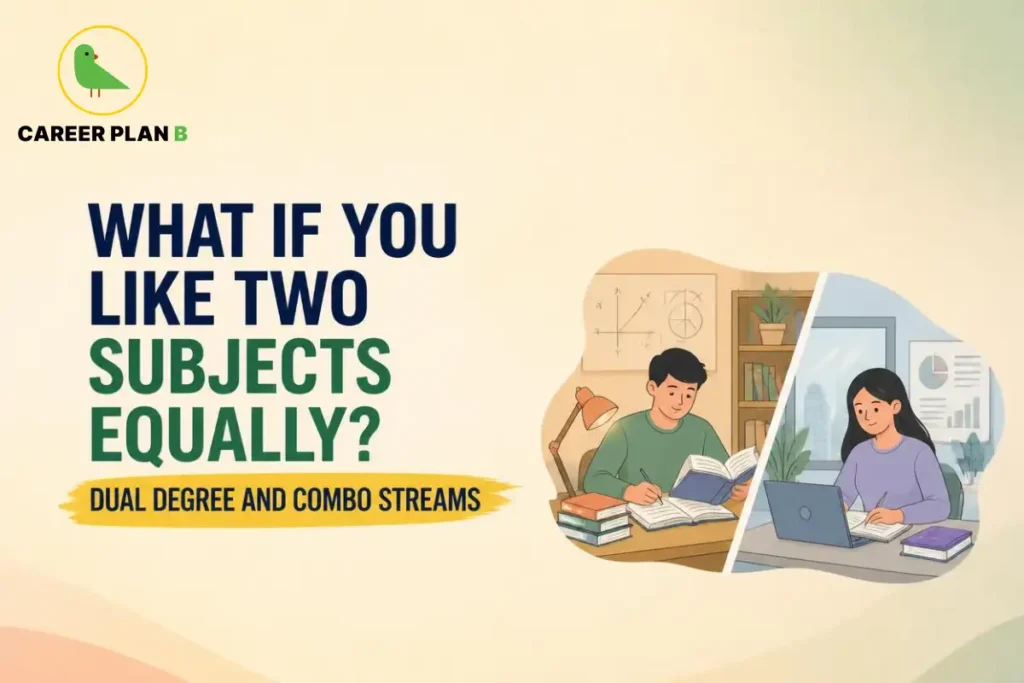
Introduction
Liking two subjects equally used to mean picking one and quietly giving up the other. Dual degree and combo streams now offer a genuine, structured alternative to that forced choice. This guide covers what UGC and NEP 2020 allow, and how to choose between a dual degree and a combo.
Why This Question Has a Real Answer Now
The University Grants Commission issued formal guidelines on 13th April 2022, allowing students to pursue two academic programmes simultaneously. This marked a genuine structural shift, not just informal flexibility.
Before this, Indian students could only enrol in one full-time regular programme at a time. Dual degree and combo streams are now backed by a specific, dated regulatory change, not just general policy spirit.
What UGC’s Dual Degree Guidelines Actually Allow
Students can now pursue two full-time regular academic programmes, provided class timings do not overlap. Alternatively, students can combine one full-time regular programme with one Open and Distance Learning or online programme. Two ODL programmes together also work.
This means a genuine Science and Commerce combination, or a Science and Arts combination, is now formally possible. Dual degree and combo streams no longer require students to abandon one interest entirely in favour of the other. CUET already admits students across streams for many undergraduate programmes, making dual degree planning easier. [Source: National Testing Agency, CUET UG official portal]
What Dual Degrees Do Not Allow
These guidelines carry real limits worth understanding before committing. The Open and Distance Learning or online programme must come from an institution formally recognised for that mode.
The dual degree provision also does not apply to PhD or MPhil programmes. Most IITs do not permit two separate full-time bachelor’s degrees, given demanding schedules. Some offer their own integrated tracks like BS plus MTech.
Combo Streams: NEP 2020’s Multidisciplinary Majors and Minors
A full second degree is not the only option for liking two subjects equally. NEP 2020‘s Choice-Based Credit System lets students add a minor from a different discipline within a single undergraduate degree.
This combo route carries a lighter workload than two full-time regular degrees. A Science major with a Humanities minor, or a Commerce major with a tech minor, both fit this structure.
Dual Degree vs Combo Major-Minor: Which Fits Which Student
Neither option is universally better. A full dual degree suits students genuinely committed to two distinct credentials. It demands a carefully scheduled workload.
A major-minor combo suits students who want genuine exposure to a second subject without the intensity of two complete degrees. This route often fits students still exploring their interests, rather than certain about two separate career paths.
Step-by-Step Roadmap to Explore This Option
- Identify whether you want two full credentials or lighter exposure to a second subject.
- Check whether your target university offers formal dual degree or minor combinations.
- Confirm class schedules do not overlap if considering two full-time regular programmes.
- Research whether your target ODL or online programme is UGC-recognised for that mode.
- Speak with a career counsellor about workload realism before committing to either path.
Have Any Doubts?
Benefits, Challenges, and What the Data Says
Dual degree and combo streams now offer genuine, UGC-backed pathways for students with more than one strong interest. This removes the older, rigid requirement to choose only one field entirely.
However, no official dataset tracks completion rates or long-term outcomes for students pursuing dual degrees in India. Claims about success rates or workload manageability often come from individual institutions or private sources, not verified government data. Treat such claims as indicative only.
Common challenges include genuine time management difficulty and the risk of overlapping coursework diluting depth in either subject. Choosing this path requires realistic self-assessment, not just enthusiasm for both subjects.
How Career Plan B Helps
Deciding between a full dual degree and a lighter combo option can feel like a lot to weigh alone. Career Plan B simplifies this through:
- Personalised Career Counselling: matching your genuine interests and workload capacity to the right dual degree or combo option
- Psycheintel Career Assessment Tests: identifying whether you’re genuinely suited to managing two academic tracks simultaneously
- Admission and Academic Profile Guidance: helping you understand UGC’s dual degree rules and university-specific minor offerings
- Structured Career Roadmapping: a clear step-by-step plan from your chosen path to a well-managed, realistic academic journey
For Latest Information
Frequently Asked Questions
Q1.Can I really pursue two full degrees at the same time in India?
Yes, since UGC’s April 2022 guidelines, provided class timings for both programmes do not overlap.
Q2.What is the difference between a dual degree and a minor combination?
A dual degree means two full credentials, while a minor adds lighter exposure to a second subject.
Q3.Can I combine an online degree with a regular full-time degree?
Yes, as long as the online or ODL programme comes from a UGC-recognised institution for that mode.
Q4.Do IITs allow two full bachelor’s degrees simultaneously?
Generally no, though some IITs offer their own integrated dual-degree tracks like BS plus MTech.
Q5.Is there official data on how many students complete dual degrees successfully?
No official dataset tracks this. Treat completion-rate claims from private sources as indicative only.
Q6.Which option is easier to manage, a dual degree or a combo minor?
A combo minor generally carries a lighter workload, making it more manageable for most students.
Conclusion
Dual degree and combo streams mean liking two subjects equally no longer forces an early, painful choice. UGC’s 2022 guidelines and NEP 2020’s multidisciplinary framework both offer real, structured paths forward.
Choosing between a dual degree and a combo option comes down to honest self-assessment, not just enthusiasm.
Connect with Career Plan B today to find the right dual degree or combo path for your interests.