Team5 · July 10, 2026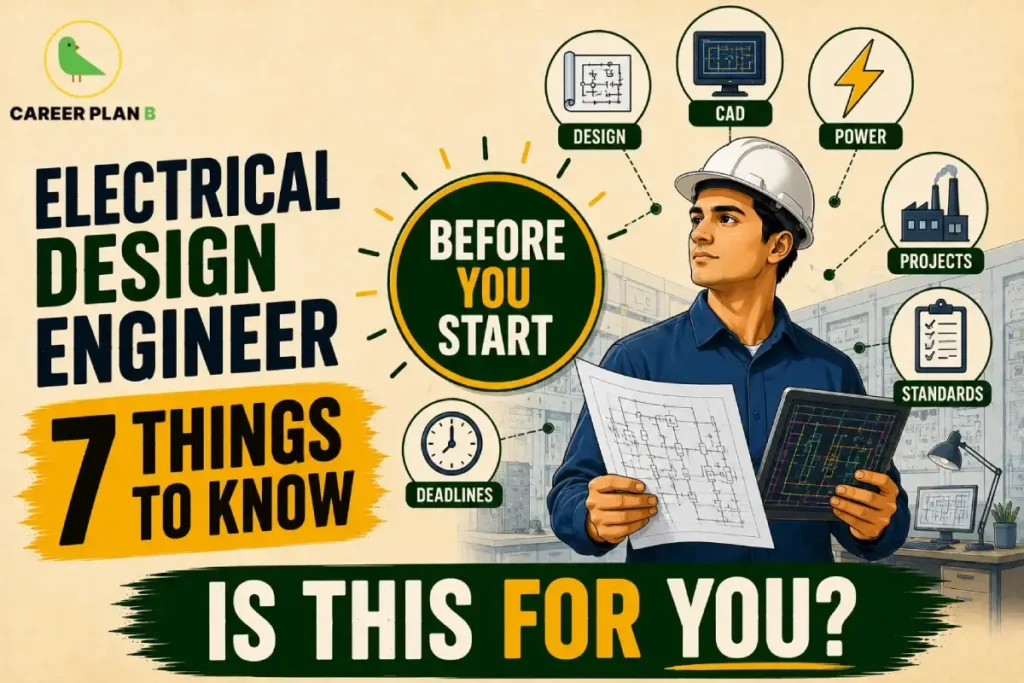
Introduction
Every building you enter, every factory you pass, and every power system you depend on exists because someone designed the electrical systems behind it. That someone is an electrical design engineer, and if you are considering becoming an electrical design engineer, you are looking at one of the most detail-driven, high-impact, and consistently in-demand roles in engineering today.
India’s infrastructure boom, renewable energy expansion, and rapid industrial growth have created a surge in demand for electrical design professionals. From smart buildings to solar farms and metro rail projects, electrical design engineers are shaping the physical world around us. But before you commit to this path, there are some important things you need to know. Here are seven of them.
Who Is an Electrical Design Engineer?
An electrical design engineer creates detailed electrical plans and schematics for systems used in buildings, industrial facilities, power infrastructure, and machinery. Unlike a general electrical engineer who may focus on maintenance or operations, an electrical design engineer works primarily in the design and planning phase using software tools to develop layouts, load calculations, single-line diagrams, and specifications that other engineers and contractors then bring to life.
They work across industries including construction and real estate, power and energy, oil and gas, defence, manufacturing, and infrastructure, making it a genuinely versatile electrical design engineer career in India.
7 Things to Know Before Becoming an Electrical Design Engineer
1. You Need the Right Educational Foundation
The first step in becoming an electrical design engineer is getting the right degree. A B.Tech or BE in electrical engineering, electronics engineering, or electrical and electronics engineering (EEE) is the standard qualification for this role.
To get into a good engineering college, you need to clear a recognised entrance exam:
- JEE Main For NITs, IIITs, and centrally funded technical institutes: jeemain.nta.ac.in
- JEE Advanced For IITs: jeeadv.ac.in
- State-level exams: WBJEE, MHT-CET, KCET, and others depending on your state
For postgraduate studies or PSU jobs, the GATE exam in electrical engineering is the most relevant path. Meeting the electrical design engineer eligibility and qualifications starts with strong fundamentals in physics and mathematics right from classes 11 and 12.
2. Software Skills Are Non-Negotiable
This is probably the most important practical reality of the job and one that many students underestimate. AutoCAD electrical engineering jobs require you to be proficient in design software from day one.
Key tools you need to learn include:
- AutoCAD Electrical For drawing electrical schematics and panel layouts
- ETAP (Electrical Transient Analyzer Program) For power system analysis and load flow studies
- EPLAN Electric P8 Widely used in industrial and panel design
- DIALux For lighting design calculations
- MATLAB/Simulink For simulation and modelling
Most companies will not hire an electrical design engineer who cannot use at least two or three of these tools competently. Start learning them during your B.Tech itself through online platforms, college labs, or short-term electrical design courses in India.
3. You Must Understand Electrical Standards and Codes
Design is not just about drawing lines on a screen. Every electrical design must comply with national and international safety standards. In India, the primary standards authority is the Bureau of Indian Standards (BIS), which publishes the IS codes that govern electrical installations, wiring, and equipment.
Other important standards include:
- IEC (International Electrotechnical Commission) standards for global projects
- IE Rules (Indian Electricity Rules) under the Ministry of Power
- NBC (National Building Code of India) for electrical systems in buildings
Understanding these codes is what separates a competent design engineer from a truly professional one. Compliance knowledge is also critical for project approvals, safety audits, and client sign-offs.
4. Internships and Real Projects Matter More Than You Think
Classroom learning gives you the theory. Real projects give you the instinct. One of the most valuable things you can do during your B.Tech is to secure internships with organisations that handle large-scale electrical design work.
Good places to look for internships include:
- BHEL (Bharat Heavy Electricals Limited) Power plant and industrial electrical systems
- NTPC Limited Power generation projects
- Central Public Works Department (CPWD) Government building infrastructure
- Power Grid Corporation of India (PGCIL) Transmission system design
Even a two-month internship where you work on real schematics or site visits will teach you more about the electrical engineering career path in India than an entire semester of theory.
5. Certifications Give You a Competitive Edge
A B.Tech degree qualifies you for the field. Certifications make you stand out. As you build your profile for electrical design courses in India and beyond, consider adding recognised certifications to your resume:
- Autodesk Certified Professional in AutoCAD Electrical
- ETAP-certified engineer for power systems
- EPLAN Training Certification for industrial design
- Short-term courses from CPRI (Central Power Research Institute) cpri.in
- Energy auditor courses from Bureau of Energy Efficiency (BEE)
These certifications signal to employers that you have hands-on, tool-specific competency, which is exactly what AutoCAD electrical engineering jobs and design firms look for.
6. The Job Market Is Wider Than You Expect
One of the biggest surprises for new graduates is how many industries actually hire electrical design engineers. It is not just power companies. The electrical design engineer career in India spans the following:
- Infrastructure and Construction Airports, metro rail, smart cities
- Power and Energy Thermal, solar, wind, and hydro projects
- Oil and Gas Refineries, pipelines, and offshore platforms
- Defence and Aerospace Electrical systems for military and space applications
- Industrial Manufacturing Automated plants and factory design
- EPC Companies: Engineering, Procurement, and Construction firms handling large projects
Top employers include Larsen and Toubro, Tata Projects, Sterlite Power, KEC International, and major consultancy firms like AECOM and Jacobs. PSUs like CPWD, BHEL, and NTPC also regularly hire electrical design professionals.
7. Growth Requires Continuous Learning
The electrical design field is evolving fast. Technologies like BIM (Building Information Modelling), digital twins, smart grid design, and AI-driven load analysis are changing how engineers work. If you stop learning after your degree, you will quickly fall behind.
Stay updated by following updates from the Ministry of Power and MNRE, joining professional bodies, attending industry webinars, and regularly upgrading your software skills. The engineers who grow fastest in this field are those who treat learning as a career-long habit, not just a college phase.
Have Any Doubts?
Electrical Design Engineer Salary in India
| Experience Level | Average Annual Salary |
|---|---|
| Entry-Level (0–2 Years) | ₹3.5 – ₹6.5 LPA |
| Mid-Level (3–7 Years) | ₹7 – ₹14 LPA |
| Senior-Level (8+ Years) | ₹15 – ₹28+ LPA |
| PSU (via GATE – CPWD / BHEL / NTPC) | ₹8 – ₹18 LPA + Additional Benefits & Perks |
Engineers with strong electrical design engineering skills in tools like ETAP and EPLAN, combined with experience in large EPC projects, command significantly higher packages, especially in the Gulf and international markets.
Top Companies Hiring Electrical Design Engineers in India
Public Sector:
- CPWD Central infrastructure projects
- BHEL Industrial and power plant design
- NTPC Power generation projects
- PGCIL Transmission system engineering
Private and EPC Sector:
- Larsen and Toubro One of India’s largest EPC companies
- Tata Projects, Sterlite Power, KEC International
- Consultancy firms: AECOM India, Jacobs, WSP India
How Career Plan B Helps
Choosing the right electrical engineering career path in India, whether to go into design, power systems, or automation, is a decision that shapes your entire professional journey. Career Plan B helps you make that choice with confidence. Through personalised career counselling, Psycheintel-based career assessment tests, and structured career roadmapping, Career Plan B identifies whether electrical design is the right fit for your strengths and interests. Whether you are a Class 12 student choosing between engineering branches or a B.Tech graduate confused about next steps, Career Plan B gives you a clear, customised plan to move forward in your electrical design engineer career in India.
For Latest Information
Frequently Asked Questions (FAQs)
- What qualifications do I need to become an electrical design engineer?
A B.Tech or BE in electrical engineering is the standard qualification. Clearing JEE Main for college admission and GATE for PSU jobs or M.Tech programmes is recommended. Meeting the electrical design engineer eligibility and qualifications also includes proficiency in design software like AutoCAD Electrical and ETAP.
- Is AutoCAD necessary for electrical design engineers?
Yes. AutoCAD Electrical is one of the most widely used tools in the field. Most AutoCAD electrical engineering jobs require at least basic to intermediate proficiency in this software, along with knowledge of other tools like ETAP or EPLAN.
- What is the difference between an electrical engineer and an electrical design engineer?
An electrical engineer can work in maintenance, operations, power systems, or design. An electrical design engineer specifically focuses on creating detailed electrical schematics, layouts, and technical specifications for projects before they are built or installed.
- Which sector pays the most for electrical design engineers in India?
Oil and gas, defence, and large EPC infrastructure projects typically offer the highest salaries. International assignments particularly in the Middle East and Europe further boost the electrical design engineer salary in India benchmarks.
- Can a diploma holder become an electrical design engineer?
Yes, but with limitations at the entry level. A diploma in electrical engineering qualifies you for junior or assistant design roles. Pursuing a lateral entry B.Tech programme significantly improves your long-term career prospects in electrical design courses in India.
Conclusion
Becoming an electrical design engineer is a rewarding and future-ready career choice, but it requires the right preparation, the right tools, and the right mindset. From mastering software like AutoCAD and ETAP to understanding IS codes and building real project experience, every step matters.
To recap the 7 things: get the right degree, master design software, learn electrical standards, prioritise internships, earn certifications, explore the wide job market, and commit to continuous learning.
If you are still figuring out whether this is the right path for you or need help planning your electrical engineering career path in India, visit Career Plan B today. The right career guidance can turn uncertainty into a clear, confident plan.
India is building fast. And it needs engineers who can design what gets built.