Team6 · October 7, 2026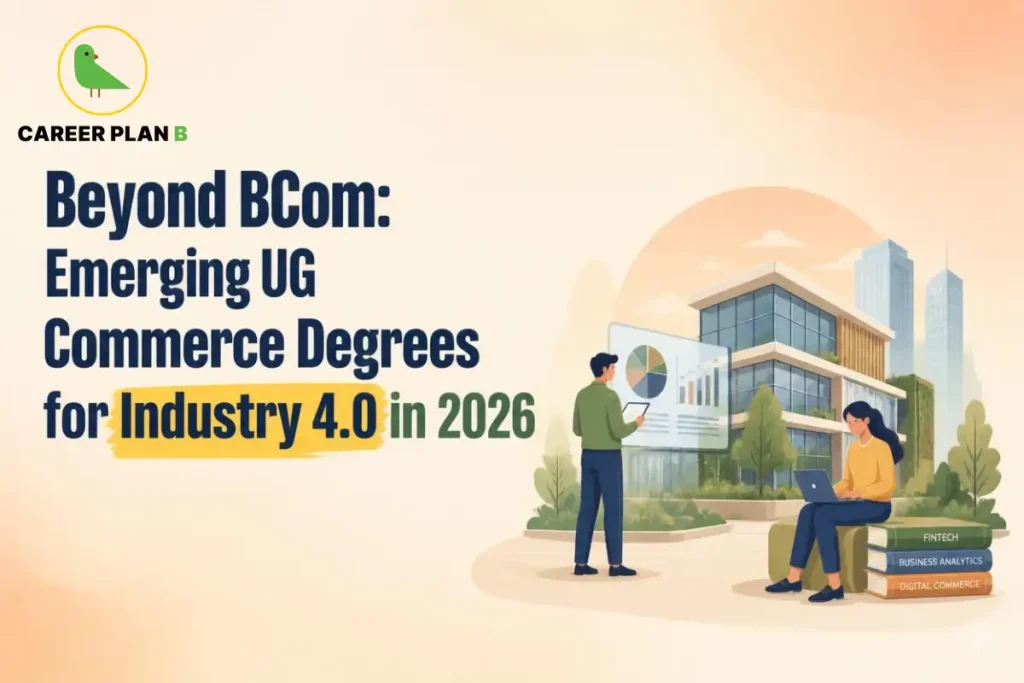
Introduction
The standard BCom, accounting, taxation, business law, still exists, but it’s no longer the only serious commerce degree on offer. Emerging UG Commerce Degrees for Industry 4.0 now blend traditional commerce fundamentals with fintech, data analytics, and ESG-focused coursework, reflecting genuine shifts in what finance and business roles actually require today.
This guide covers real, currently offered examples of these emerging degrees, verified directly through university sources rather than a vague trend description, so you understand Emerging UG Commerce Degrees for Industry 4.0 through genuine curriculum evidence.
The Regulatory Flexibility Behind This Trend
Before looking at specific examples, it helps to understand why this proliferation is even possible: the UGC’s Curriculum and Credit Framework for Undergraduate Programmes, introduced alongside NEP 2020, gives institutions genuine flexibility to design multidisciplinary, credit-based programmes combining traditionally separate fields (source: ugc.gov.in). This regulatory shift is precisely what allows universities to launch commerce degrees blending finance with technology, data, and sustainability coursework, rather than being confined to older, rigid BCom structures.
Beyond BCom Courses: Real, Verified Examples
Beyond BCom Courses genuinely exist today at established institutions, not just as marketing concepts. Manipal Academy of Higher Education’s School of Commerce and Economics offers a BCom in Fintech and Data Analytics, according to the university’s own official programme page, alongside separate BCom tracks in Capital Markets and a professional BCom integrated with ACCA certification. This isn’t an isolated example; it reflects a broader pattern of established universities restructuring commerce education around specific, technically demanding specializations rather than one generalized degree.
New Commerce Courses After 12th: What These Programmes Actually Teach
New Commerce Courses After 12th in this emerging category typically combine core commerce fundamentals, accounting, economics, financial reporting, with dedicated technical modules covering data analytics, financial technology platforms, digital currency concepts, and increasingly, ESG and sustainable finance coursework. Some programmes explicitly reserve a defined portion of their curriculum for these emerging domains; one such programme structures around 20% of its coursework specifically around forensic accounting, ESG finance, and cybersecurity, reflecting a deliberate curriculum design choice rather than a superficial addition of a few trendy electives.
Industry 4.0 Commerce Degrees: Why This Blend Genuinely Matters
Industry 4.0 Commerce Degrees respond to a genuine shift in how finance and business functions actually operate now. Financial services increasingly run on data analytics platforms, algorithmic trading, and blockchain-based systems, while corporate reporting increasingly incorporates ESG metrics investors and regulators actively scrutinize. A commerce graduate trained only in traditional accounting and taxation, without any exposure to these technical and sustainability-focused dimensions, genuinely enters the workforce with a narrower skill set than these emerging degrees are specifically designed to address.
Have Any Doubts?
Future Commerce Careers: Where These Degrees Actually Lead
Future Commerce Careers tied to these emerging degrees include fintech product and operations roles at banks and financial technology companies, financial data analyst positions applying analytics directly to investment and risk decisions, ESG and sustainability reporting roles within corporations facing growing regulatory and investor scrutiny, and forensic accounting and financial crime analysis roles, an increasingly specialized field as financial systems grow more complex. Each of these roles genuinely rewards the specific technical and sustainability-focused training these emerging commerce degrees provide, beyond what a traditional BCom curriculum typically covers.
Read more:- 10 High-Demand Careers in 2026 Across All Streams
UG Commerce Admission 2026: How to Evaluate a Specific Programme
For UG Commerce Admission 2026 planning, evaluate any specific emerging commerce degree against concrete factors rather than an appealing title alone: request the actual curriculum breakdown showing genuine technical and specialized coursework, not just a handful of superficial electives, confirm the institution’s genuine accreditation and track record, and check whether the programme includes real industry partnerships or professional certification integration, since several genuine examples explicitly build in certifications like ACCA or partnerships with technology firms as part of their core structure. Admission processes vary considerably by institution, some use CUET, others run their own entrance tests or merit-based admission, so verify your specific target university’s exact process directly.
How Career Plan B Helps
Evaluating whether a specific emerging commerce degree offers genuine technical depth, or is mostly a traditional BCom with a trendier name, takes real curriculum scrutiny beyond a prospectus.
- Personalized Career Counselling: Helps you evaluate whether an Emerging UG Commerce Degrees for Industry 4.0 path genuinely fits your interests and career goals.
- Psychometric & Career Assessment Tests: Identifies whether fintech, analytics, or sustainability-focused commerce roles suit your strengths best.
- Career Roadmapping: Builds a realistic plan connecting your chosen programme to genuine industry entry points.
- Admission & Academic Profile Guidance: Supports you in evaluating a specific institution’s genuine curriculum depth and industry partnerships before you commit.
Get In Touch With Us
Frequently Asked Questions
1. Are these emerging commerce degrees genuinely different from a traditional BCom, or just rebranded?
Genuinely different when built with real technical depth; programmes like Manipal’s BCom in Fintech and Data Analytics explicitly structure significant curriculum time around specialized, technical coursework beyond standard BCom content.
2. What’s a realistic way to verify if a specific “Beyond BCom” programme has genuine substance?
Request the detailed curriculum breakdown and check for real industry partnerships or professional certification integration, rather than trusting a course title alone.
3. Do these New Commerce Courses After 12th require different eligibility than a standard BCom?
Generally similar baseline eligibility, a Class 12 pass, often with Commerce preferred, though specific institutions may set their own additional criteria or entrance requirements.
4. Which Future Commerce Careers benefit most from this kind of hybrid training?
Fintech operations, financial data analytics, ESG reporting, and forensic accounting roles specifically reward this blend of commerce fundamentals with technical and sustainability-focused skills.
5. Should I choose an emerging commerce degree over a traditional BCom?
It depends on your specific career interest; if you’re drawn to fintech, analytics, or ESG-focused work, a well-verified emerging degree can offer a genuine advantage, while a traditional BCom still serves broader, more generalist career paths well.
Conclusion
Emerging UG Commerce Degrees for Industry 4.0 are genuinely real and substantive at several established institutions, not just a marketing trend, reflecting real shifts in how finance and business functions now operate. Verifying a specific programme’s actual curriculum depth and industry partnerships, rather than trusting an appealing title, protects you from choosing style over genuine educational substance.
Research any specific emerging commerce degree’s real technical content before committing. If you’d like help evaluating whether one of these paths genuinely fits your goals, Career Plan B’s counsellors are ready to guide you through it.