Team Career Plan B · August 12, 2026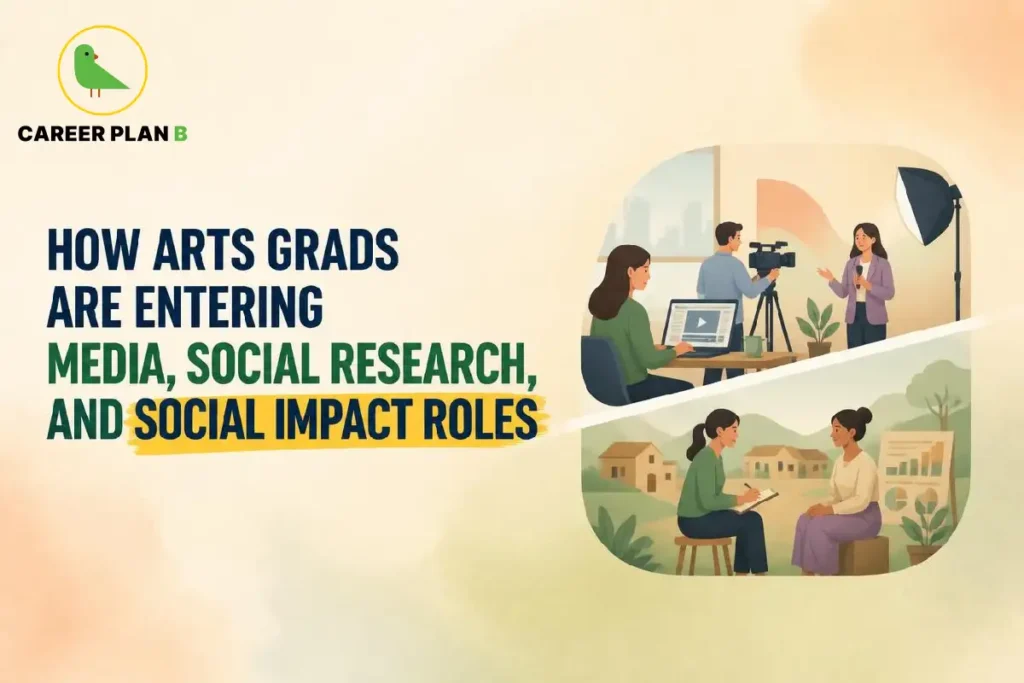
Introduction
Arts graduates entering media, social research, and social impact roles often assume there’s one clear, linear entry route, the way there is for engineering or medicine. In reality, these three fields reward a genuinely different kind of entry strategy, built on demonstrated work and structured exposure rather than a single defining exam.
This guide covers exactly how Arts graduates actually break into these three closely related fields. It focuses specifically on the real entry mechanics, internships, fellowships, portfolio building, and research assistantships, rather than just listing course names and job titles.
Why These Three Fields Share a Common Entry Logic
No Single Gatekeeping Exam Defines Entry Here
Unlike medicine or engineering, media, social research, and social impact roles rarely gate entry through one dominant, standardised exam. This absence of a single filter means demonstrated work and structured exposure carry considerably more weight in how graduates actually get hired.
Why This Makes Entry Feel Harder, Not Easier
Without one clear exam to prepare for, many Arts graduates struggle to identify a concrete first step. This guide addresses that gap directly, focusing on the specific, repeatable actions that genuinely open doors in these fields.
Entry Mechanism One: Internships During the Degree Itself
Why Internships Matter More Here Than in Many Fields
Media houses, research organisations, and NGOs consistently prioritise candidates with genuine internship experience over those with strong academics alone. This reflects how much these fields value practical exposure to real, messy, ambiguous problems that classroom learning simply can’t replicate.
How to Actually Secure One as a Student
Reach out directly to local media outlets, research organisations, or NGOs, even for unpaid or short-term positions, rather than waiting for a formal placement process. Many students find their first genuine opportunity through direct outreach rather than a structured campus recruitment pipeline.
Entry Mechanism Two: Building a Demonstrated Portfolio
What This Actually Means in Practice
For media roles specifically, this means published bylines, however small, a college publication article, a freelance piece, or a personal blog with consistent, quality writing. For social research, this means a genuine research project, even a small survey or literature review completed independently or through coursework.
Why This Matters More Than a Strong Transcript Alone
Editors, research leads, and NGO hiring managers consistently look for evidence you can actually do the work, not just evidence you studied related subjects. A modest but genuine portfolio outperforms strong grades with no visible, demonstrated output almost every time.
Entry Mechanism Three: Fellowships as a Structured Entry Route
How Fellowships Function Differently From a Regular Job
Fellowships offer a structured, time-bound program combining real fieldwork, mentorship, and often a stipend, specifically designed for graduates entering the social impact or education sector. These typically run for one to two years, offering considerably more structured support than jumping directly into an entry-level job.
What to Look for in a Genuine Fellowship Program
Verify the fellowship’s track record, alumni outcomes, and the specific organisations or communities it partners with before committing. A strong fellowship should offer real mentorship and skill-building, not just placement into unstructured, unsupported fieldwork.
Entry Mechanism Four: Research Assistantships
What This Role Actually Involves
Research assistantships place graduates within a professor’s research project, a think tank, or a research-focused NGO, supporting data collection, literature review, and analysis under senior guidance. This path suits Arts graduates from Political Science, Sociology, Psychology, or Economics backgrounds specifically.
How to Actually Find These Opportunities
Reach out directly to professors or research leads whose work genuinely interests you, rather than waiting for a formal, advertised opening. Many research assistantship positions get filled through direct outreach and demonstrated genuine interest, not competitive, widely publicised applications.
Entry Mechanism Five: Building Domain-Specific Skills Alongside Your Degree
Why Generalist Arts Skills Alone Often Fall Short
Strong writing and critical thinking form a genuine foundation, but employers in these three fields increasingly expect specific, additional skills layered on top. Media roles increasingly value basic data journalism and digital publishing skills. Social research roles value survey design and basic statistical literacy. Social impact roles value program evaluation and monitoring frameworks specifically.
How to Build These Skills Practically
Take short, focused courses in these specific skill areas alongside your core degree, rather than assuming your Arts coursework alone covers them. Even a basic understanding of survey tools or data visualisation meaningfully strengthens your profile across all three fields.
Entry Mechanisms at a Glance
| Entry Mechanism | What It Actually Involves | Best For |
|---|---|---|
| Internships during your degree | Direct outreach to media houses, NGOs, or research bodies | Building genuine, early exposure to real work |
| Demonstrated portfolio | Published writing, small research projects, visible output | Standing out beyond academic performance alone |
| Fellowships | Structured, time-bound programs with mentorship and stipend | Graduates wanting structured support entering the field |
| Research assistantships | Supporting a professor or think tank’s research directly | Political Science, Sociology, Psychology, Economics graduates |
| Domain-specific skill building | Data journalism, survey design, program evaluation skills | Strengthening a generalist Arts background practically |
How These Three Fields Actually Overlap
Skills Transfer Across All Three More Than Most Students Realise
A student who builds strong research skills often finds this transfers directly into social impact work, since program evaluation relies heavily on the same research methods. Similarly, media skills like clear, structured writing genuinely strengthen social research communication and impact reporting.
Why This Overlap Matters for Your Own Planning
You don’t need to commit exclusively to one of these three fields immediately. Building skills that genuinely transfer across all three, research literacy, clear writing, and basic data comfort, keeps your options meaningfully open while you figure out your specific direction.
For Personalized Guidance
Common Mistakes Arts Graduates Make Entering These Fields
Waiting for a Formal Process That Doesn’t Really Exist
Many students wait for a structured, advertised opportunity the way they might for a corporate campus placement. In these three fields, direct outreach and demonstrated initiative genuinely open more doors than waiting for a formal process to appear.
Treating a Degree Alone as Sufficient Preparation
A relevant degree helps, but without internships, a demonstrated portfolio, or research experience layered on top, most Arts graduates struggle to differentiate themselves in these competitive fields. Start building this evidence early, not in your final semester.
How Career Plan B Helps
Figuring out how to actually enter media, social research, or social impact roles, beyond just choosing the right degree, takes real strategic planning. Career Plan B helps you build that strategy through:
- Personalized Career Counselling to identify which of these three closely related fields genuinely fits you.
- PsycheIntel Career Assessment Tests to confirm your working style aligns with fieldwork, research, or media specifically.
- Career Roadmapping to sequence your internships, portfolio building, and skill development strategically.
- Admission & Academic Profile Guidance to strengthen your application for fellowships or research opportunities.
Get In Touch With Us
Frequently Asked Questions
1. Do I need a specific degree to enter media, social research, or social impact roles?
Not strictly one specific degree, though Political Science, Sociology, Psychology, Journalism, and Economics backgrounds all connect naturally. Demonstrated work and relevant skills often matter more than the exact degree title.
2. How early should I start building internship experience for these fields?
As early as possible, ideally from your first or second year of college. Waiting until your final year significantly limits how much genuine experience you can build before graduating.
3. Are fellowships a better entry route than a direct entry-level job?
Fellowships offer more structured mentorship and support, which suits graduates wanting real guidance early on. A direct entry-level job can also work well if you’ve already built strong internship experience and a demonstrated portfolio beforehand.
4. Can I build skills for all three fields, media, social research, and social impact, at once?
Yes, genuinely. These fields share considerable skill overlap, particularly around research literacy and clear writing, so building transferable skills keeps your options open while you determine your specific direction.
Conclusion
Arts graduates entering media, social research, and social impact roles succeed less through a single defining exam and more through deliberate, demonstrated preparation. Internships, a genuine portfolio, fellowships, research assistantships, and specific domain skills all matter considerably more than degree title alone in these three closely related fields.
Start building this evidence early, reach out directly rather than waiting for formal opportunities, and recognise how much these three fields’ required skills genuinely overlap.
Not sure how to start building your own path into media, social research, or social impact work? Structured career counselling at Career Plan B can help you build a concrete, strategic plan.