Team Career Plan B · July 15, 2026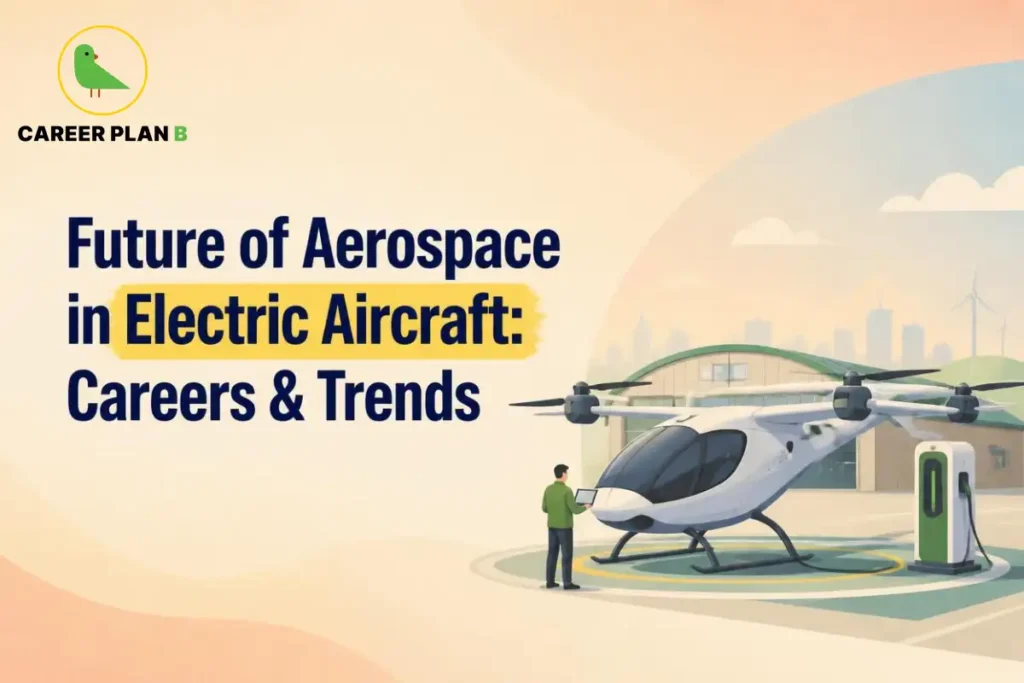
Introduction
Imagine boarding a flight where you don’t hear the roar of a jet engine, and the aircraft leaves behind zero carbon emissions. That’s not science fiction anymore; it’s the direction the aviation industry is actively moving toward. The future of aerospace in electric aircraft is one of the most talked-about shifts in engineering today, and it’s opening up an entirely new set of career paths for students who choose aerospace.
But how close are we, really? And what does this shift mean if you’re considering aerospace engineering as a career? This blog breaks down what’s driving the move toward electric propulsion, where the technology currently stands, and what kind of jobs this emerging field is creating, especially in India.
What Is Electric Aircraft Technology?
Electric aircraft technology replaces or supplements traditional jet fuel engines with battery-powered or hybrid-electric propulsion systems. Instead of burning fossil fuel to generate thrust, these aircraft use electric motors powered by batteries, fuel cells, or a combination of electric and conventional systems.
There are broadly three categories:
- Fully electric aircraft – powered entirely by batteries, currently used for small aircraft and short-range flights
- Hybrid-electric aircraft – combine a conventional engine with an electric motor to reduce fuel use
- Hydrogen-electric aircraft – use hydrogen fuel cells to generate electricity onboard
Why the Aviation Industry Is Shifting to Electric
Aviation currently contributes a meaningful share of global carbon emissions, and the pressure to decarbonize has never been higher. Airlines, regulators, and manufacturers are all under pressure to cut emissions, which is why electric and hybrid-electric propulsion has become a serious area of research and investment globally.
Why Sustainable Aviation Matters Now
Globally, aviation accounts for roughly 2-3% of carbon emissions, and that share is expected to grow as passenger traffic increases. In India specifically, air travel is expanding rapidly; the country is already the world’s third-largest domestic aviation market, and passenger numbers are projected to grow sharply over the next decade.
This is why sustainable aviation India-wide has become a policy priority. It’s worth noting, though, that India’s most immediate steps toward greener flying are currently centred on Sustainable Aviation Fuel (SAF), a blended fuel approach, rather than electric aircraft, since battery and hydrogen-electric planes are still considered a longer-term solution, likely a decade or more away from large-scale commercial use. Electric propulsion, however, remains the direction the industry is building toward for the next generation of aircraft, particularly for shorter regional routes.
How Electric Propulsion Systems Work
At a basic level, electric propulsion systems convert stored electrical energy into thrust using electric motors instead of combustion. Here’s a simplified breakdown:
- Batteries store energy, similar to an electric vehicle, but must be far lighter and more energy-dense for flight
- Electric motors convert that stored energy into mechanical power to turn propellers or fans
- Power electronics manage and regulate the flow of electricity throughout the system
- Hybrid configurations pair a small conventional engine with electric motors to extend range while reducing emissions
Current Limitations of Battery-Powered Aviation
The biggest challenge facing battery-powered aviation is energy density. Batteries are heavy compared to the amount of energy jet fuel provides. This limits current electric aircraft to short distances and smaller passenger loads. Charging infrastructure at airports and certification standards for battery safety are also still developing.
Emerging Career Opportunities in Electric Aviation
Despite these challenges, this shift is creating genuinely new roles within aerospace, not replacing traditional aerospace careers but expanding them.
Aerospace Engineering Careers in Electric Propulsion
Some of the newer roles emerging in this space include:
- Battery systems engineer – designing and testing energy storage systems for flight
- Electric propulsion designer – working on motor and power electronics integration
- Avionics engineer for electric aircraft – handling the software and control systems unique to electric flight
- Sustainability and emissions analyst – assessing lifecycle emissions and regulatory compliance
These roles sit at the intersection of traditional aerospace engineering and newer domains like battery chemistry and power electronics, making them a genuinely interdisciplinary career path.
Where These Jobs Are Emerging in India
Green aviation jobs India-wide are still a developing category, but momentum is building. Research institutions, aerospace startups working on regional and short-haul electric or hybrid concepts, and established players in aviation manufacturing are beginning to build out teams focused on this space. Government-backed research bodies are also exploring related battery and materials research relevant to future aircraft design.
Skills Aerospace Engineers Need for This Shift
| Traditional Aerospace Skills | Electric Aviation Skills |
|---|---|
| Aerodynamics & Structural Design | Battery Chemistry & Energy Storage |
| Jet Propulsion Systems | Electric Motor & Power Electronics Design |
| Materials Science (Metals & Composites) | Lightweight Materials for Battery Integration |
| Flight Control Systems | Software-Driven Control Systems for Electric Propulsion |
| Certification (Conventional Aircraft) | Emerging Certification Standards for Electric & Hybrid Aircraft |
Aspiring engineers who want to work in this niche will benefit from building skills in both areas: the fundamentals of aerospace engineering, plus a working knowledge of electrical and battery systems.
Have Any Doubts?
What Does This Mean for Aerospace Engineers’ Future Scope?
Looking ahead, the aerospace engineer’s future scope in electric and hybrid propulsion is likely to grow gradually rather than overnight. Short-haul and regional aircraft are expected to be the first commercial applications of electric and hybrid-electric technology, since battery limitations make long-haul flights impractical for now.
For students entering aerospace today, this means the field is expanding, not shrinking. Traditional propulsion, materials, and structural design roles remain in demand, while a new layer of electric-propulsion-focused roles is steadily being added on top.
How Career Plan B Helps
Electric aviation is a fast-evolving niche within aerospace, and knowing whether it’s the right fit takes more than following a trend. Career Plan B offers personalised career counselling and the PsycheIntel assessment to help students understand their aptitude for emerging aerospace specializations. With academic profile guidance and structured career roadmapping, Career Plan B helps students plan a path into this evolving field with clarity rather than guesswork.
For Latest Information
Frequently Asked Questions
- Are electric aircraft actually in use today?
Small electric aircraft exist for short-range flights and pilot training, and several hybrid-electric prototypes are in testing globally. However, large-scale commercial electric aviation is still years away, particularly for longer routes.
- What subjects should I study to work in electric aviation?
A strong foundation in aerospace engineering combined with electives or additional learning in electrical engineering, battery technology, or power electronics is ideal for this niche.
- Is electric aviation a good career choice for the future?
Yes, as a long-term growth area within aerospace. It’s an emerging niche rather than the current mainstream, so early skill-building can be an advantage as the field matures.
- Which companies are working on electric aircraft?
Several global aerospace manufacturers and specialized startups are developing electric and hybrid-electric aircraft, along with research collaborations between academic institutions and aviation companies.
- Will electric aircraft replace traditional jet aircraft?
Not entirely, and not soon. Electric propulsion is expected to serve short-haul and regional routes first, while conventional and sustainable-fuel-based aircraft will continue to handle long-haul travel for the foreseeable future.
Conclusion
The future of aerospace in electric aircraft represents a gradual but meaningful shift in how the industry approaches propulsion, sustainability, and engineering design. While full-scale electric aviation is still developing, the career opportunities it’s creating, from battery systems to electric propulsion design, are very real and growing.
If this emerging niche within aerospace excites you, don’t navigate it alone. Connect with Career Plan B and take the Psycheintel assessment to understand how your strengths align with this evolving field. Being early to a growing niche can be one of the smartest career moves you make.