Team6 · September 19, 2026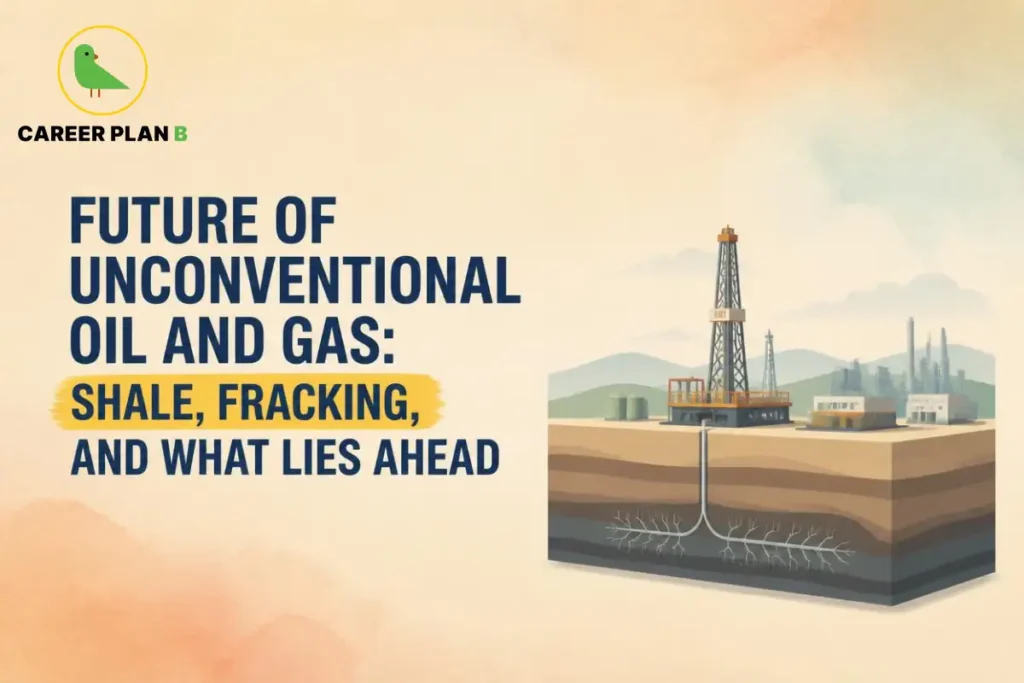
Introduction
The world is hungry for energy. And as conventional oil wells run deeper and drier, the energy industry is turning to a bold question: What lies beneath the rock? The future of unconventional oil and gas is no longer a distant concept debated in boardrooms. It is actively reshaping how nations produce energy, how engineers work, and how students plan their careers.
Unconventional oil and gas refers to hydrocarbons that cannot be extracted using traditional drilling methods. Think shale gas trapped inside dense rock formations, or tight oil locked in low-permeability reservoirs. Getting to these resources requires advanced techniques, and that is exactly where the industry is investing billions of dollars today.
For petroleum engineering students in India, understanding this shift is not optional. It is essential. Whether you aim to work with ONGC, join a global energy firm, or build a niche specialisation, the future of unconventional oil and gas will define the industry you enter.
What Are Unconventional Oil and Gas Resources?
Before we talk about the future, let us understand what we mean by unconventional energy resources.
Conventional oil and gas flows easily from porous rock once a well is drilled. Unconventional resources, on the other hand, are trapped in formations that do not allow easy flow. They require special extraction techniques to become commercially viable.
The main types include:
- Shale gas natural gas found within shale rock formations
- Tight oil crude oil trapped in low-permeability rock like sandstone or carbonates
- Coalbed methane (CBM) natural gas extracted from coal seams
- Oil sands: heavy crude mixed with sand and clay
India has significant deposits of coalbed methane and shale gas, particularly in basins like the Krishna-Godavari (KG) Basin, Cambay Basin, and Gondwana Basin. The Directorate General of Hydrocarbons (DGH) has identified these as priority zones for future exploration.
The Global Shale Revolution: Where Does It Stand Today?
The United States rewrote energy history with its shale boom. By combining horizontal drilling with hydraulic fracturing technology, the US went from being an oil-importing nation to the world’s largest oil producer within a decade. Tight oil production from formations like the Permian Basin and Bakken Shale drove this transformation.
According to the U.S. Energy Information Administration (EIA), tight oil now accounts for over 65% of total US crude oil production.
Other nations, Canada, Argentina, China, and Australia, have followed with their own unconventional programmes. The global momentum is clear. While high extraction costs and oil price volatility have slowed some projects, the long-term direction of oil and gas industry trends in 2025 and beyond points firmly toward unconventional sources as conventional reserves decline.
Does India Have a Shale Future?
This is the question every petroleum engineering student in India should be asking.
India’s shale gas story is still in its early chapters. The country holds an estimated 584 trillion cubic feet of technically recoverable shale gas, according to assessments cited by the Ministry of Petroleum and Natural Gas.
ONGC and Oil India Limited (OIL) have been conducting exploratory studies in key basins. ONGC’s efforts in the KG Basin and Damodar Valley Basin are particularly noteworthy.
However, India faces real challenges in unlocking this potential:
- Water scarcity: Hydraulic fracturing is water-intensive, and many Indian basins are in water-stressed regions
- Dense population land acquisition near drilling sites is more complex in India than in the US
- Regulatory framework: India is still developing a comprehensive shale gas policy
- Infrastructure gaps pipelines, processing units, and skilled manpower need to scale simultaneously
Despite these hurdles, the government has signalled intent. The New Exploration Licensing Policy (NELP) and the Hydrocarbon Exploration and Licensing Policy (HELP) have opened doors for private and foreign investment in unconventional blocks. The Petroleum and Natural Gas Regulatory Board (PNGRB) oversees sector regulation.
Have Any Doubts?
The Fracking Debate: Innovation vs. Environmental Concern
No discussion about the future of unconventional oil and gas is complete without addressing fracking environmental impact honestly.
Hydraulic fracturing technology works by injecting high-pressure water, sand, and chemicals into rock formations to crack them open and release trapped hydrocarbons. It is effective but not without controversy.
Key environmental concerns include the following:
- Water contamination improper well casing can allow chemicals to seep into groundwater
- Seismic activity disposal of fracking wastewater has been linked to increased minor earthquakes in some regions
- Methane leakage poorly sealed wells can release methane, a potent greenhouse gas
- Water usage: a single fracking operation can use millions of litres of water
The good news is that technology is responding. Green fracking techniques, waterless fracking using CO2 or propane, and AI-driven leak detection systems are reducing the environmental footprint significantly. Regulatory bodies in the US and EU have tightened standards, and India’s Ministry of Environment, Forest and Climate Change (MoEFCC) provides the environmental clearance framework for any such operations.
The debate is not black and white. The fracking environmental impact is real, but so is the energy security argument. Responsible, regulated extraction with modern technology is the path most energy experts advocate.
What Is the Future of Unconventional Oil and Gas?
Here is what the data and industry signals tell us about where things are headed.
- Bridge Fuel Role in Energy Transition Natural gas from unconventional sources is widely seen as a bridge fuel cleaner than coal and more reliable than intermittent renewables. The International Energy Agency (IEA) projects that natural gas will remain a significant part of the global energy mix through 2040
- Digital Technology Will Drive Efficiency Artificial intelligence, machine learning, and digital twins are transforming unconventional extraction. Predictive drilling, real-time reservoir monitoring, and automated fracking control systems are cutting costs and improving yield. Engineers who combine petroleum knowledge with digital skills will be in high demand.
- Tight Oil Production Will Grow in Emerging Markets Countries like Argentina (Vaca Muerta), China (Sichuan Basin), and India are expected to scale up tight oil production as technology becomes more affordable and regulatory clarity improves.
- Sustainability Pressure Will Reshape Operations ESG (Environmental, Social, and Governance) standards are forcing energy companies to invest in lower-emission extraction. Carbon capture integration with unconventional sites is already being piloted in North America.
For a petroleum engineering student today, this landscape means one thing: opportunity exists, but only for those who prepare with the right skills and the right guidance.
How Career Plan B Helps
Navigating a petroleum engineering career in the age of unconventional oil and gas can feel overwhelming. Career Plan B offers personalised career counselling, psychometric and career assessment tests, and tailored career roadmapping to help engineering students identify where they fit in this evolving industry, whether in core petroleum roles, digital energy, or environment-focused upstream work.
Get In Touch With Us
Frequently Asked Questions
1. Does India have shale gas reserves?
Yes. India has significant estimated shale gas reserves, particularly in the KG Basin, Cambay Basin, and Damodar Valley. However, commercial extraction has not yet begun at scale due to regulatory, water, and infrastructure challenges.
2. Is hydraulic fracturing banned in India?
No, fracking is not banned in India. The government is still developing a detailed shale gas extraction policy. ONGC and OIL have conducted pilot studies, and the regulatory environment is gradually evolving.
3. Is the fracking environmental impact manageable?
With modern technology and strict regulation, the environmental risks of hydraulic fracturing can be significantly reduced. Green fracking methods and AI-driven monitoring are making operations cleaner than they were a decade ago.
4. What career opportunities exist in unconventional oil and gas for Indian engineers?
Opportunities exist in reservoir engineering, drilling engineering, environmental compliance, data analytics for energy, and policy and regulation roles. Engineers with cross-disciplinary skills combining petroleum knowledge with digital or sustainability expertise have a strong edge.
5. How is India’s government supporting unconventional energy exploration?
The Ministry of Petroleum and Natural Gas and DGH have opened new licensing rounds and policy frameworks to attract investment in unconventional blocks. Policies like HELP aim to make exploration more investor-friendly.
Conclusion
The future of unconventional oil and gas is not a question of if; it is a question of how and when. Shale gas, tight oil, and hydraulic fracturing technology will remain central to global energy security for decades to come, even as renewables grow. For India, the opportunity is significant but still being unlocked.
As an engineering student, the smartest move you can make is to understand these shifts early, build skills that align with where the industry is going, and seek guidance to chart a clear career path. The energy sector is evolving; make sure your career plan is evolving too.
Start by exploring your options at Career Plan B.