Team2 · September 20, 2025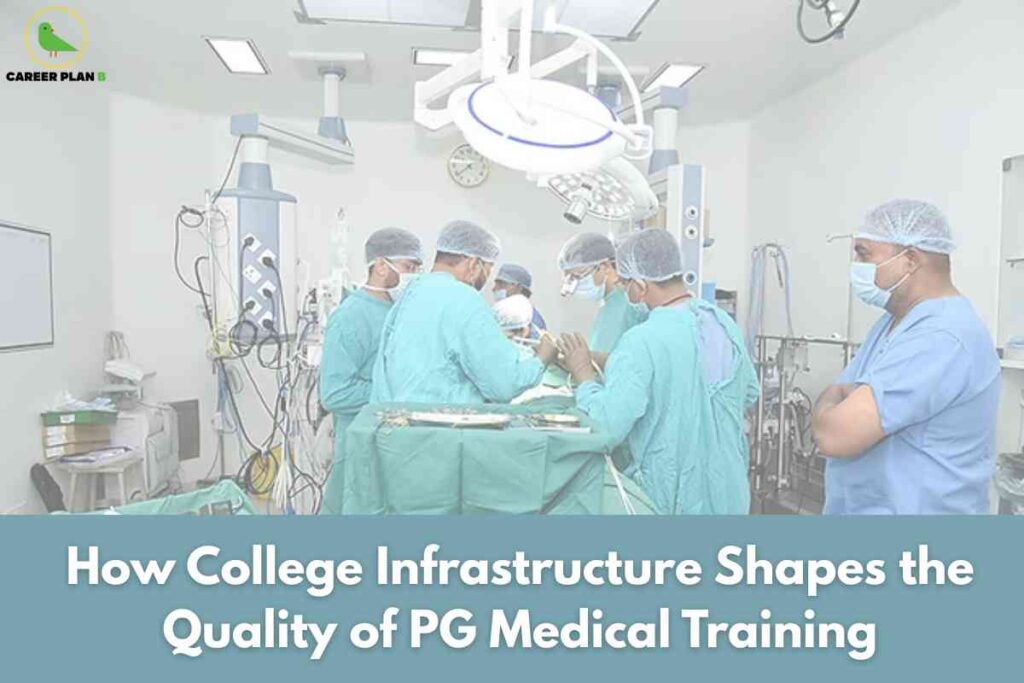
Introduction
Choosing the right hospital for medical residency is a major step for every MBBS graduate. When young doctors evaluate specialist courses, they quickly realize that PG medical education depends heavily on institutional resources. A medical campus needs far more than basic lecture halls and classrooms.
High-quality PG medical education requires modern diagnostic equipment, well-equipped surgical suites, and advanced intensive care units. Consequently, these facilities directly shape how junior doctors learn diagnostic skills and surgical procedures. Without modern healthcare systems, postgraduate residents cannot acquire strong practical competencies.
Core Role of Medical College Infrastructure
Inpatient Bed Strength and Bed Occupancy Rates
Hospital bed capacity forms the foundation of clinical postgraduate learning. The National Medical Commission sets mandatory minimum bed counts for teaching hospitals across India. However, sheer bed numbers are ineffective without high daily occupancy.
Teaching hospitals with over 1,000 active inpatient beds expose junior residents to a broad variety of medical cases. Consequently, high bed turnover allows trainees to monitor disease progress, evaluate treatment outcomes, and manage post-treatment complications.
In contrast, low bed occupancy restricts clinical exposure to simple, repetitive conditions. Therefore, the strength of medical college infrastructure directly decides the variety of illnesses a resident treats each day.
| Infrastructure Component | Minimum Standard Requirement | Direct Impact on PG Clinical Training |
|---|---|---|
| Teaching Bed Capacity | 750 – 1,500+ Active Beds | Broad disease exposure, continuous bedside clinical teaching |
| Intensive Care Units | 10% – 15% of Total Bed Strength | Hands-on training in mechanical ventilation, hemodynamic lines |
| Operation Theaters | Modular OTs with Laparoscopic Suites | Procedural autonomy, advanced surgical navigation training |
| Diagnostic Radiology | Multi-Slice CT, 1.5T/3T MRI, USG | Diagnostic accuracy, rapid trauma imaging interpretation |
| Central Laboratory | 24/7 Automated Pathology & Microbiology | Real-time clinical correlation, antimicrobial stewardship |
Advanced Intensive Care Units (ICUs) and Resuscitation Care
Emergency and critical care management demands advanced monitoring tools. Postgraduate trainees in General Medicine, Anaesthesiology, Pulmonary Medicine, and Paediatrics work in intensive care units daily.
Modern intensive care units must house invasive monitors, advanced ventilators, and continuous dialysis machines. Additionally, dedicated neonatal (NICU) and pediatric (PICU) units provide vital training in emergency pediatric care.
When these medical college facilities are missing, residents only learn critical care through textbooks. In contrast, comprehensive critical care infrastructure builds confidence in treating septic shock, breathing distress, and organ failure.
How Hospital Facilities Affect PG Medical Training
Diagnostic Infrastructure and Real-Time Patient Correlation
Accurate diagnosis requires quick radiological and laboratory confirmation. Therefore, the standard of medical college clinical training facilities shapes a resident’s clinical reasoning.
Having 24/7 access to 128-slice CT scanners and high-field MRI units helps trainees evaluate trauma cases quickly. Furthermore, digital Picture Archiving and Communication Systems (PACS) allow residents to review cross-sectional scans directly from hospital wards.
Moreover, fully automated central laboratories provide rapid blood, microbiology, and biopsy reports. Consequently, postgraduates learn how to interpret complex blood tests, tissue samples, and culture reports without delay.
Operation Theater Complexes and Procedural Autonomy
Surgical postgraduates in General Surgery, Orthopaedics, ENT, and OBGY need structured operative experience. The design and volume of modular operation theaters dictate how quickly trainees gain surgical independence.
Modern operation theaters require electrosurgical units, laparoscopic systems, high-definition camera towers, and intraoperative C-arm machines. For example, Orthopaedic postgraduates need modern fracture tables and arthroscopy equipment to learn joint repair procedures.
Additionally, dedicated recovery rooms and post-anaesthesia care units teach residents how to manage post-surgical patients. Without modern operative suites, surgical residents remain limited to basic open procedures.
Importance of Clinical Exposure in PG Medical Training
Daily Outpatient Load and Emergency Triage Volume
The outpatient department (OPD) acts as the main screening area for medical disorders. A busy OPD with over 2,000 daily patient visits presents rare clinical signs that books cannot show.
During outpatient postings, residents learn to make initial diagnoses, order targeted tests, and write rational prescriptions. Moreover, managing large casualty and emergency triage departments builds fast clinical reflexes.
Trainees learn how to prioritize accident victims, handle heart emergencies, and manage acute poisoning cases. Consequently, the importance of clinical exposure in PG medical training remains essential for building practical doctor-patient skills.
Specialized Super-Specialty Departments and Interventional Facilities
Modern medical practice is becoming increasingly sub-specialized. Therefore, teaching hospitals equipped with super-specialty departments offer distinct learning advantages to residents.
Access to digital cardiac catheterization labs, endoscopy units, and nephrology dialysis suites enriches general residency. For example, General Medicine postgraduates rotate through Cardiology, Neurology, and Nephrology units to learn specialized care.
Furthermore, cancer tumor boards and organ transplant units expose residents to complex clinical discussions. This broad exposure bridges the gap between basic specialty residency and future super-specialty fellowships.
Read more:-NEET PG vs Rank 2026: How Cutoffs and Percentile Really WorkMarks
Factors Affecting PG Medical Training Quality
Simulation Centers and Clinical Skills Laboratories
The modern medical curriculum emphasizes patient safety and skill-based learning. Consequently, the National Board of Examinations in Medical Sciences (NBEMS) and NMC stress the need for dedicated simulation facilities.
Medical college facilities for PG medical students should include high-fidelity mannequins, surgical trainers, and airway simulation models. These skills labs allow junior residents to practice central venous lines, endotracheal tubes, and lumbar punctures safely.
As a result, trainees refine their physical hand skills before treating critically ill patients. Incorporating simulation training significantly enhances overall PG medical training quality.
Academic Spaces, Digital Libraries, and Research Facilities
Practical medical training must be supported by continuous scientific learning. A comprehensive campus provides 24-hour digital libraries with access to international medical journals and databases.
Additionally, departmental seminar halls with audio-visual tools support weekly journal clubs, clinical audits, and case discussions. Dedicated medical research laboratories provide the infrastructure required for quality PG medical thesis work.
These academic medical college facilities encourage postgraduates to write research papers, examine clinical data, and present findings at medical conferences.
Have Any Doubts?
How to Evaluate Medical College Infrastructure Before Counselling
Medical aspirants participating in online counselling through the Medical Counselling Committee (MCC) or state portals should evaluate several practical factors:
- Check whether the hospital runs specialized ICUs with modern monitoring systems.
- Verify annual surgical logbooks to ensure junior residents perform sufficient supervised operations.
- Confirm the availability of in-house CT, MRI, blood bank units, and automated microbiology laboratories.
- Review academic resources like digital library access, simulation centers, and departmental seminar schedules.
Evaluating these parameters ensures that you select a training hospital that supports your professional growth.
How Career Plan B Helps
Navigating medical admissions, checking hospital training setups, and building option lists requires clear strategic planning. We guide MBBS graduates and parents through every stage of the postgraduate admission journey.
- Personalized Career Counselling: We evaluate your NEET-PG rank, preferred clinical specialties, and budget to find hospitals with strong clinical facilities.
- Psychometric & Career Assessment Tests: Our medical branch assessments help doctors choose clinical specialties aligned with their individual strengths.
- Career Roadmapping: We provide structured guidance across MCC All-India rounds, state quota counselling, and DNB seat matrices.
- Admission & Academic Profile Guidance: Our advisors offer verified data on hospital bed strengths, surgical volumes, statutory fees, and institutional accreditations.
Get In Touch With Us
Frequently Asked Questions
Q1. Why is hospital bed occupancy important for PG medical education?
High bed occupancy provides continuous exposure to diverse diseases, allowing residents to manage varied medical cases daily.
Q2. What role do simulation labs play in medical college infrastructure?
Simulation labs allow residents to practice invasive procedures and emergency care on training models without risking patient safety.
Q3. How does diagnostic infrastructure impact postgraduate clinical residency?
In-house imaging and automated laboratories provide fast test results, teaching residents how to interpret complex clinical findings quickly.
Q4. Does hospital infrastructure differ between MD/MS and DNB training centers?
Both pathways require recognized bed strengths, though DNB programs often operate within large corporate and trust-run multi-specialty hospitals.
Q5. How can I verify the clinical facilities of a medical college before admission?
You can review official NMC inspection reports, check departmental surgical logbooks, and talk directly with current resident doctors.
Conclusion
Medical residency is a demanding phase that shapes your clinical skills and professional growth. While academic training builds theoretical knowledge, modern hospital facilities provide hands-on exposure that strengthens diagnostic abilities, procedural skills, and surgical expertise.
Selecting an institution with strong healthcare systems ensures that your PG medical education prepares you for independent specialist practice. If you need personalized assistance in comparing hospital infrastructure or planning counselling choices, connect directly with Career Plan B’s counsellors to build a rewarding medical career.