Team6 · July 14, 2026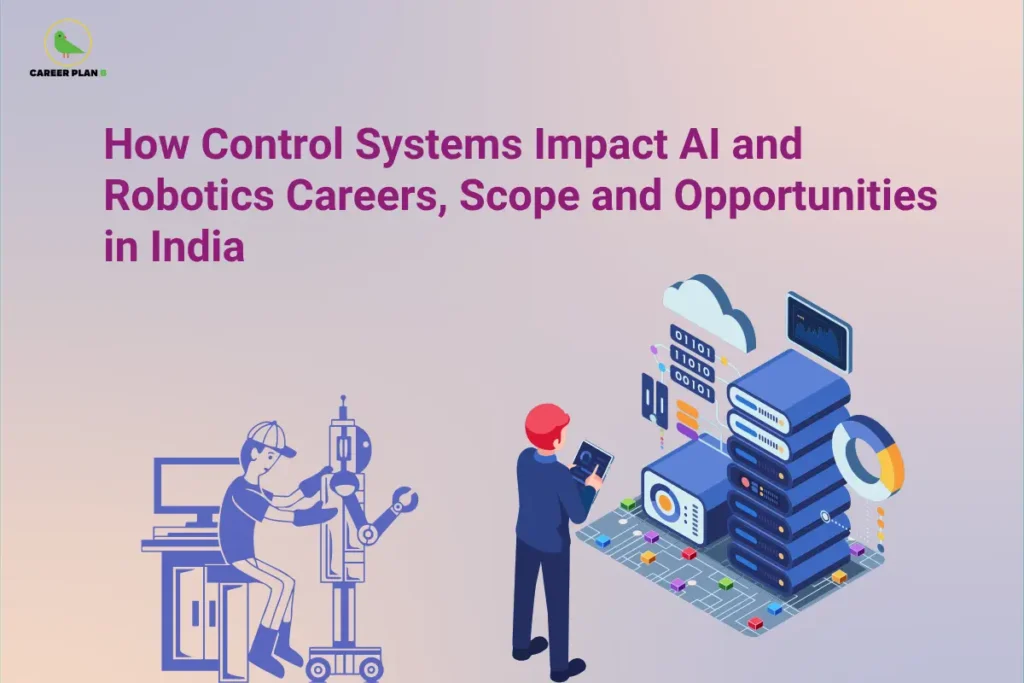
Introduction
The robotic arm assembling a car body in a Pune factory moves with millimetre precision, pausing, rotating, and welding exactly where it should, every single time. A drone delivering medicine to a remote Himalayan village navigates wind, altitude, and terrain without a human pilot. A spacecraft launched by ISRO adjusts its trajectory mid-flight using onboard intelligence. None of these systems work through raw computing power alone. All of them depend on one fundamental engineering discipline: control systems.
Understanding how control systems impact AI and robotics is not just an academic exercise it is the key to understanding where the most exciting and high-growth engineering careers of the next decade are being created. As India scales its robotics, defence technology, autonomous vehicles, and space programmes, engineers who combine control systems expertise with AI and robotics knowledge are becoming among the most sought-after professionals in the country.
This blog explains the connection, the career opportunities it creates, and exactly how you can position yourself to be part of this transformative field.
What Are Control Systems and How Do They Connect to AI and Robotics?
A control system is an engineered mechanism that regulates the behaviour of another system using sensors to measure outputs, comparing them to desired targets, and adjusting inputs to correct any deviation. The classic example is a thermostat; it measures room temperature, compares it to the set point, and switches the heater on or off to maintain the desired level.
In robotics, control systems perform this function at extraordinary speed and precision, managing joint angles, motor torques, gripper forces, and navigation trajectories simultaneously. In AI-driven systems, classical control theory is combined with machine learning to create adaptive controllers that learn from experience and improve their performance over time.
The key connection is this: AI provides intelligence, but control systems provide precision and stability. A robot that can identify an object using computer vision still needs a control system to move its arm accurately to pick it up. An autonomous vehicle that can interpret sensor data still needs a control system to smoothly steer, accelerate, and brake. This is the foundation of the control systems engineering career in AI and robotics opportunities.
How Control Systems Impact AI and Robotics Key Areas
Precision Motion Control in Industrial Robots
In manufacturing, industrial robots perform welding, painting, assembly, and material handling with sub-millimetre precision, and that precision is entirely delivered by advanced motion control systems. As Indian manufacturing scales under Make in India, the deployment of industrial robots is accelerating directly, creating demand for robotics engineer jobs in India specialising in motion control.
Autonomous Navigation in Self-Driving Vehicles and Drones
Autonomous ground vehicles and drones use control systems to translate high-level navigation commands “go to point B” into precise actuator commands for motors, servos, and thrusters. Technologies like Model Predictive Control (MPC) and Linear Quadratic Regulators (LQR) are the backbone of autonomous navigation systems in everything from delivery drones to autonomous tractors.
AI-Powered Adaptive Control for Intelligent Systems
Traditional PID controllers work well in predictable environments. But real-world systems are unpredictable; loads change, environments vary, and components wear out. AI-driven adaptive control uses machine learning to continuously update control parameters in response to changing conditions, making systems more robust, efficient, and capable. This fusion of AI and control theory is at the cutting edge of the AI-driven control systems engineering India career space.
Human-Robot Interaction and Collaborative Robotics
Collaborative robots or cobots are designed to work safely alongside humans in shared workspaces. Control systems are what make cobots safe managing force, speed, and proximity with real-time precision to prevent injuries. As Indian industries adopt cobots in assembly, healthcare, and logistics, this area is becoming one of the fastest-growing segments of robotics and automation courses in India and industry hiring.
Space and Defence Applications
ISRO and DRDO are two of India’s most advanced employers of control systems engineers in AI and robotics. ISRO uses sophisticated control algorithms for launch vehicle guidance, satellite attitude control, and planetary rover navigation. DRDO develops control systems for unmanned aerial vehicles (UAVs), autonomous underwater vehicles (AUVs), and missile guidance systems, making these organisations premier destinations for autonomous systems engineer professionals in India.
What Does a Control Systems Engineer Do in AI and Robotics?
A control systems engineer in the AI and robotics space works at the intersection of mathematics, software, and physical systems, designing the algorithms and architectures that make intelligent machines behave precisely and safely.
Their day-to-day responsibilities include:
- Designing feedback control algorithms: PID, LQR, MPC, and adaptive controllers
- Integrating machine learning models into real-time control loops
- Developing autonomous navigation and path planning systems using ROS (Robot Operating System)
- Building simulation environments in MATLAB/Simulink or Gazebo for system testing
- Implementing computer vision pipelines for perception-based control
- Validating and testing control systems in both simulated and physical environments
- Ensuring system stability and safety under real-world operating conditions
Key Job Roles in Control Systems Engineering Career in AI and Robotics
The AI and robotics career path India offers a growing range of specialised engineering roles:
- Robotics Control Systems Engineer Designs motion and force control algorithms for robotic systems
- Autonomous Systems Engineer Develops control architectures for self-driving vehicles and drones
- AI-Driven Control Systems Specialist Integrates machine learning with classical control frameworks
- Motion Control Engineer Manages precision motor and actuator control in industrial automation
- Drone Systems Engineer Designs flight control systems and autonomous navigation for UAVs
- Human-Robot Interaction (HRI) Engineer Develops safe, intuitive control systems for collaborative robots
Each of these roles represents a direct application of how control systems impact AI and robotics, and all are projected to see strong demand growth through 2030 as India expands its robotics, defence, and autonomous systems sectors.
Have Any Doubts?
What Skills Does a Control Systems Engineer Need for AI and Robotics?
Core Technical Skills:
- Control theory PID, state-space, LQR, MPC, and adaptive control
- MATLAB and Simulink for control system design and simulation
- Python and C++ for robotics algorithm development
- ROS (Robot Operating System) for robotic system integration
- Machine learning and deep learning frameworks TensorFlow, PyTorch
- Computer vision for perception-driven control systems
- Knowledge of BIS standards for robotic systems: bis.gov.in
Emerging Skills:
- Reinforcement learning for autonomous control training robots through trial and error
- Digital twin simulation for virtual testing of control algorithms
- Edge AI for real-time onboard control in resource-constrained devices
- Neuromorphic computing for bio-inspired control systems
Soft Skills:
- Systems-level thinking: understanding how control, perception, and planning interact
- Analytical problem-solving under real-world constraints
- Innovation mindset pushing the boundaries of what autonomous systems can do
- Cross-disciplinary collaboration with mechanical, software, and AI teams
How to Build an AI and Robotics Career Path India Step-by-Step Roadmap
Step 1: Choose PCM in Class 12
Physics and Mathematics are the direct foundations of control theory and robotics engineering and are non-negotiable for any robotics and automation courses in the Indian pathway.
Step 2: Clear Engineering Entrance Exams
- JEE Main for NITs, IIITs, and centrally funded institutes: jeemain.nta.ac.in
- JEE Advanced for IITs: jeeadv.ac.in
- State-level exams like MHT-CET and WBJEE
Step 3: Pursue the Right B.Tech Branch
Best branches for the control systems engineering career in AI and robotics:
- B.Tech in Electrical Engineering (EE)
- B.Tech in Electronics and Communication Engineering (ECE)
- B.Tech in Computer Science Engineering (CSE) for software-heavy robotics roles
- B.Tech in Mechanical Engineering with mechatronics electives
- B.Tech in Robotics Engineering now offered at select IITs and NITs
Step 4: Build Real Robotics and Control Projects
Hands-on projects differentiate strong candidates from average ones in robotics engineer jobs in India. Build:
- A PID-controlled line-following robot
- A drone flight controller using ROS
- An AI-driven robotic arm using computer vision and control loops
- A simulation of an autonomous vehicle control system in MATLAB
Step 5: Crack GATE for PSU Jobs or M.Tech
A strong GATE score in Electrical Engineering (EE) or Electronics (ECE) opens doors to PSU recruitment at ISRO, DRDO, BEL, and HAL and to M.Tech specialisations in Robotics, Control Systems, and AI at IITs. IIT Bombay, IIT Delhi, IIT Kanpur, and IIT Hyderabad offer dedicated programmes in robotics and intelligent systems.
Step 6: Earn Certifications in Robotics and AI
- NPTEL Control Engineering, Robotics, and AI courses: nptel.ac.in
- IIT Bombay online certificate in AI and Machine Learning
- ROS (Robot Operating System) developer certification
- MATLAB and Simulink certifications from MathWorks
- CDAC programmes in embedded AI and robotics
Robotics and Automation Courses in India What to Pursue
Undergraduate:
- B.Tech in Electrical Engineering control systems and power electronics foundation
- B.Tech in ECE: electronics, embedded systems, and signal processing
- B.Tech in Robotics Engineering IIT Bombay, IIT Jodhpur, and select NITs
Postgraduate:
- M.Tech in Robotics and Autonomous Systems IIT Bombay, IIT Delhi
- M.Tech in Control and Automation IIT Kharagpur and IIT Roorkee
- M.Tech in AI and Machine Learning multiple IITs and NITs
Short-Term and Online:
- NPTEL Robotics, Control Engineering, and AI: nptel.ac.in
- CDAC programmes in embedded robotics and AI systems: cdac.in
- IIT online certificate programmes in AI, robotics, and autonomous systems
- MathWorks MATLAB and Simulink online training
Top Companies and Organisations Hiring in AI Robotics and Control Systems
Public Sector and Government:
- ISRO Spacecraft control, satellite attitude systems, rover navigation
- DRDO UAVs, AUVs, missile guidance, and defence robotics
- HAL (Hindustan Aeronautics Limited) Avionics and flight control systems
- BEL (Bharat Electronics Limited) Defence robotics and electronic systems
- BARC (Bhabha Atomic Research Centre) Nuclear facility robotics and control
Indian Technology Companies:
- L&T Technology Services Engineering R&D in robotics and automation
- TCS, Infosys, Wipro Robotics and AI practice divisions
Global MNCs with India Operations:
- ABB Robotics India Industrial robot control systems
- FANUC India CNC and robotic motion control
- Siemens India Industrial automation and AI-driven control
- Bosch India Automotive robotics and autonomous systems
- Honeywell India Process and building automation
Indian Robotics Startups:
- Ati Motors Autonomous material handling robots
- GreyOrange AI-powered warehouse robotics
- Addverb Technologies Logistics automation and cobots
- Systemantics Industrial robotic systems
These organisations collectively represent the strongest pipeline of autonomous systems engineering opportunities in India opportunities and with India’s defence modernisation, smart manufacturing push, and space programme expanding through 2030, hiring is expected to accelerate significantly.
Control Systems Engineer Salary in AI and Robotics
| Experience Level | Average Annual Salary |
|---|---|
| Entry-Level (0–2 years) | ₹5 – ₹9 LPA |
| Mid-Level (3–7 years) | ₹10 – ₹20 LPA |
| Senior-Level (8+ years) | ₹22 – ₹40+ LPA |
| PSU (GATE Entry) | ₹9 – ₹20 LPA + benefits |
The control systems engineer salary in AI robotics is among the highest in the engineering sector, particularly for professionals with reinforcement learning expertise, ROS development skills, or experience in defence and space robotics. International opportunities particularly in the USA, Germany, Japan, and South Korea offer significantly higher packages for senior control systems and robotics engineers with strong research and industry credentials.
How Career Plan B Helps
Understanding how control systems impact AI and robotics is exciting, but translating that understanding into a focused, well-planned career requires expert guidance. The AI and robotics career path in India involves multiple specializations motion control, autonomous systems, AI-driven control, and drone engineering, and choosing the right direction for your unique strengths makes all the difference. Career Plan B provides that direction through personalised career counselling tailored to engineering aspirants. With structured career roadmapping, Career Plan B guides you through selecting the right B.Tech branch, identifying the best robotics and automation courses in India, preparing for GATE, and planning your entry into ISRO, DRDO, or leading robotics companies with a clear and personalised plan at every step.
For Latest Information
Frequently Asked Questions (FAQs)
1. Is control systems engineering a good career in AI and robotics?
Absolutely. As India expands its robotics manufacturing, autonomous vehicle development, space programme, and defence technology, robotics engineer jobs in India combining control systems and AI expertise are among the fastest-growing and highest-paying engineering roles available today.
2. Which B.Tech branch is best for AI and robotics control systems?
Electrical Engineering, Electronics and Communication Engineering, and Computer Science Engineering are all valid entry points depending on your interest in hardware control, embedded systems, or software-driven AI robotics. Mechanical Engineering with mechatronics electives is also a strong option for the autonomous systems engineer career path in India.
3. Is GATE required for robotics engineer jobs in India?
GATE is not mandatory for private sector and startup roles but is essential for PSU recruitment at ISRO, DRDO, HAL, and BEL, India’s premier employers in defence and space robotics. A strong GATE score also enables M.Tech admissions in Robotics and Control Systems at IITs.
4. What is the difference between classical control and AI-driven control systems?
Classical control systems like PID controllers use mathematical models and fixed rules to regulate system behaviour. AI-driven control systems use machine learning, especially reinforcement learning, to adaptively learn and improve control strategies from experience. Modern robotics increasingly combines both approaches, which is the core of the AI-driven control systems engineer India specialisation.
5. Can CSE students become control systems engineers for robotics?
Yes. CSE graduates with strong skills in Python, machine learning, and ROS are highly sought for software-heavy robotics roles, including autonomous navigation, computer vision-based control, and AI integration. Building hands-on robotics projects and learning control theory fundamentals strengthens CSE graduates’ profiles for the control systems engineering career in AI and robotics.
Conclusion
The robots, drones, spacecraft, and autonomous vehicles shaping India’s future do not run on intelligence alone; they run on the precise, stable, and adaptive control systems that turn intelligent decisions into physical action. This is fundamentally why control systems impact AI and robotics and why engineers who master this intersection are among the most valuable professionals in India’s technology and engineering ecosystem.
To recap: choose the right B.Tech branch; build hands-on robotics and control projects from day one; crack GATE for ISRO and DRDO opportunities; earn certifications in ROS and MATLAB; and specialise in emerging areas like reinforcement learning control or autonomous navigation.
If you are ready to explore the AI and robotics career path in India but need expert guidance on where to start and how to plan your journey, visit Career Plan B today. With personalised counselling and structured roadmapping built around your strengths, Career Plan B helps you build a career at the cutting edge of India’s most exciting engineering frontier.
India’s intelligent machines are being engineered right now. Make sure you are one of the engineers controlling them.