Team Career Plan B · October 12, 2026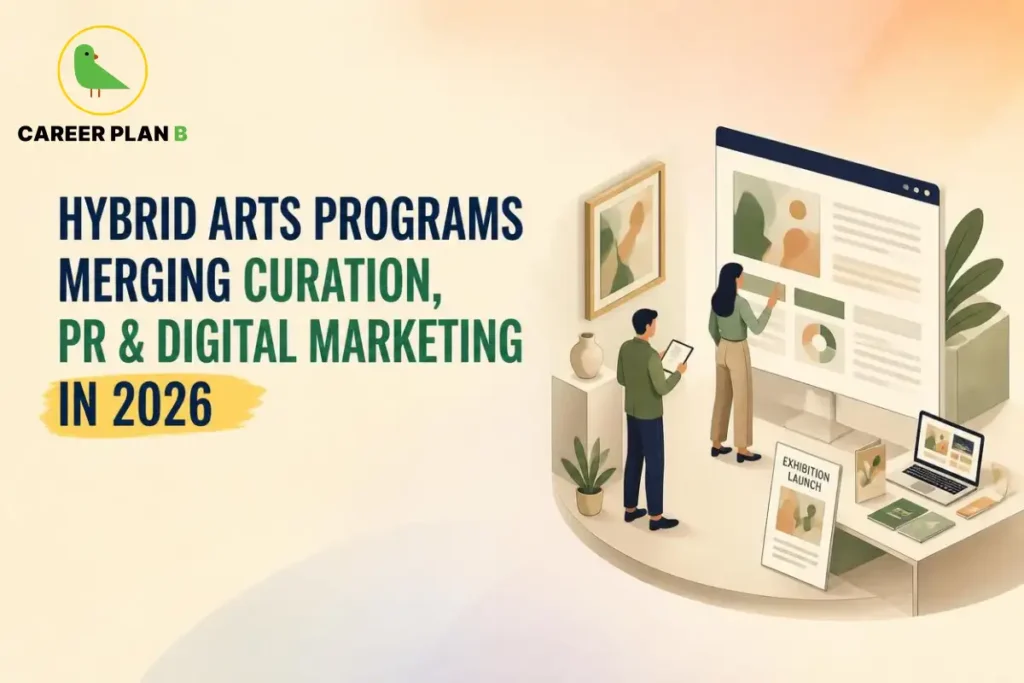
Introduction
The global creative economy in 2026 demands far more than traditional gallery curation or aesthetic appreciation. Modern cultural institutions, private art galleries, and digital auction houses desperately require visionary managers who can seamlessly blend art history with aggressive public relations and digital marketing strategies.
Consequently, hybrid arts programs merging curation, PR, and digital marketing have emerged as high-impact pathways for ambitious humanities and fine arts graduates. These interdisciplinary degrees train students to evaluate artistic value while simultaneously scaling digital audience engagement across global platforms.
Why Hybrid Arts Programs Are Surging in 2026
The primary driver of this shift is the digitization of global art markets and the rapid growth of virtual exhibitions. Museums and commercial galleries can no longer rely only on physical visitors. They must build global online communities to survive.
Furthermore, national cultural initiatives supported by bodies like the Ministry of Culture have strengthened public art infrastructure and digital archiving. The University Grants Commission (UGC) also supports institutional research through established frameworks. This helps keep modern cultural management degrees aligned with industry needs and globally competitive.
Core Curriculum: Blending Curation, PR, and Digital Marketing
To make an informed academic decision, you must understand how these three distinct pillars converge into a single, cohesive curriculum.
Curation and Exhibition Design
Students master art history, archival research, physical spatial layout, and digital exhibition design. They learn to tell compelling historical narratives through visual artwork while adhering to strict conservation protocols.
Pioneering national cultural resource hubs like the Indira Gandhi National Centre for the Arts (IGNCA) demonstrate how digital archiving and multidisciplinary exhibition planning have become central to modern curatorial workflows.
Public Relations and Media Strategy
The PR component focuses on high-stakes brand positioning, media relations, and crisis management for luxury art brands and cultural festivals. Students build relationships with art critics, journalists, and global collectors to drive international press coverage.
Prominent national bodies like the Lalit Kala Akademi actively promote contemporary visual arts, offering a benchmark for strategic media outreach and national art exhibition management.
Digital Marketing and Audience Analytics
The digital marketing modules teach search engine optimization, performance ad management, and social media storytelling. Curation specialists learn to interpret backend user analytics to maximize ticket sales, virtual tour engagement, and digital merchandise revenue.
Premier institutions such as the National Gallery of Modern Art (NGMA) utilize advanced digital archiving and virtual galleries to expand their public reach, illustrating the commercial power of data-driven art promotion.
Lucrative Career Opportunities in 2026
Graduates holding these hybrid credentials bypass entry-level gallery roles to step directly into high-impact management positions.
Common titles include Digital Curator, Art PR Director, Cultural Marketing Manager, and Gallery Communications Lead for major auction platforms like Saffronart. These professionals bridge the gap between creative visual artists, private investors, and global digital consumers.
For Personalized Guidance
Salary Expectations and ROI in 2026
The financial return on investment for interdisciplinary arts management degrees is exceptionally strong, reflecting the high corporate demand for hybrid creative leaders.
| Hybrid Arts Role | Core Corporate Focus | Entry-Level Salary (2026) | Senior Salary Scope (8+ Yrs) |
|---|---|---|---|
| Art PR & Media Director | Brand positioning, collector relations | ₹6.5 – ₹11.0 LPA | ₹25.0 – ₹50.0+ LPA |
| Digital Curator & Strategist | Virtual exhibitions, archival tech | ₹6.0 – ₹10.0 LPA | ₹22.0 – ₹45.0+ LPA |
| Cultural Marketing Lead | Digital campaigns, ticket sales ROI | ₹5.5 – ₹9.5 LPA | ₹20.0 – ₹40.0+ LPA |
| Gallery Communications Manager | Media outreach, exhibition catalogs | ₹5.0 – ₹8.5 LPA | ₹18.0 – ₹35.0+ LPA |
(Source: Aggregated data from 2026 Indian art market recruitment, gallery placement reports, and cultural management trends).
How Career Plan B Helps
Navigating interdisciplinary stream selection, competitive portfolio evaluations, and specialized postgraduate art admissions requires immense strategic precision. Career Plan B assists ambitious creative aspirants in securing the absolute best academic pathway.
- Personalised Career Counselling: We thoroughly evaluate your artistic and analytical profile to ensure a hybrid arts management degree aligns with your financial goals.
- Psycheintel & Career Assessments: Scientifically backed psychometric tests that accurately map your unique strengths for high-pressure art PR versus meticulous archival curation.
- Customized Admission Guidance: End-to-end strategic support to help you crack entrance gateways for premier art management and cultural policy institutes across India and globally.
- Career Roadmapping: Tailored, decade-long pathways that guarantee your academic investment perfectly aligns with executive gallery director and cultural leadership roles in 2026.
Get In Touch With Us
Frequently Asked Questions
Q1. What is a hybrid arts program?
A hybrid arts program is an interdisciplinary degree that combines traditional art curation and history with modern public relations, media management, and digital marketing strategies.
Q2. What is the starting salary for an Art PR Director in India in 2026?
In 2026, fresh postgraduates entering art PR and brand media management typically secure starting packages ranging from ₹6.5 Lakhs to ₹11.0 Lakhs per annum.
Q3. Do I need a Fine Arts degree to join a hybrid arts management program?
No. Most hybrid arts master’s programs welcome graduates from diverse backgrounds, including humanities, business administration, mass communication, and commerce.
Q4. Which industries hire digital curation and art marketing graduates?
Graduates are actively recruited by commercial art galleries, digital auction platforms, museums, luxury heritage brands, and international cultural festivals.
Conclusion
Analyzing the modern creative economy reveals exactly why hybrid arts programs merging curation, PR, and digital marketing are a brilliant choice in 2026. By refusing to choose between pure art history and modern digital strategy, ambitious graduates transform themselves into irreplaceable cultural architects.
Ultimately, thriving in the modern art market requires proving you can manage both human cultural heritage and complex digital marketing campaigns. If you are ready to identify the exact hybrid arts program that fits your unique ambitions, consult Career Plan B today to build a meticulously personalized roadmap to success.