Team6 · July 23, 2026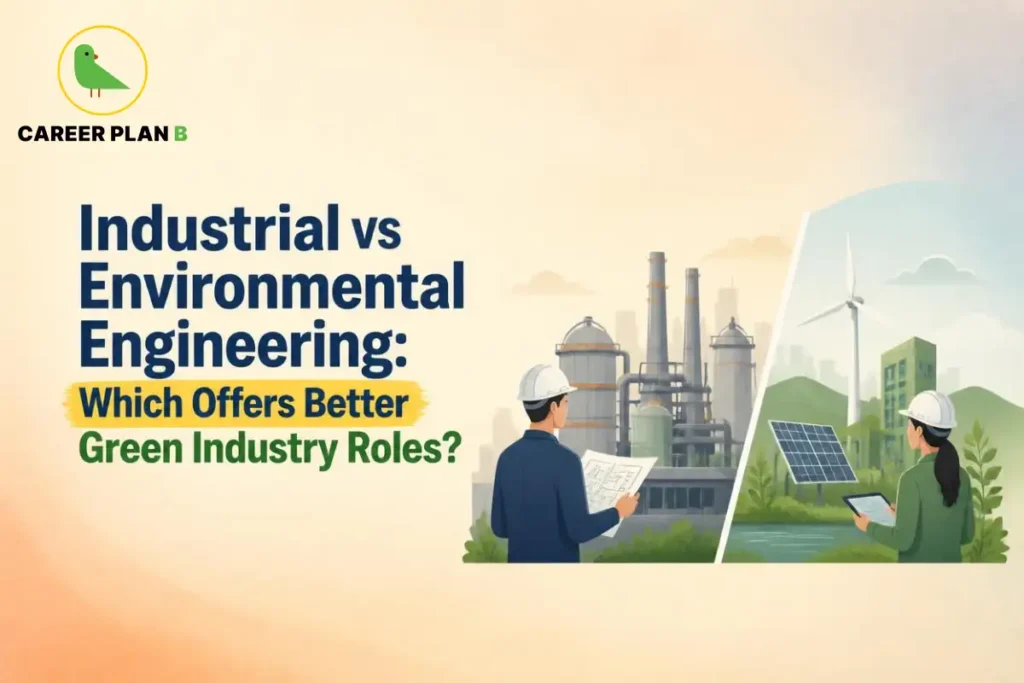
Introduction
India’s green tech sector is projected to create over 10 million jobs by 2030, and understanding industrial vs environmental engineering: Green industry roles require recognising that both branches feed into this growth, just through genuinely different mechanisms. Many students assume green jobs belong exclusively to environmental engineering, completely missing how directly industrial engineers contribute to sustainability through efficiency-focused systems work. This assumption often leads students to overlook a genuinely strong sustainability career path simply because it doesn’t carry an obvious “green” label in its name. This blog breaks down what each branch actually contributes to green industry work, comparing real roles, certifications, and salary in depth, so you can choose with genuine clarity.
What Each Branch Actually Contributes to Green Industry Work
Environmental Engineering: Direct Ecological Impact Focus
Environmental engineering approaches sustainability directly, designing systems that reduce pollution, treat contaminated water, manage waste, and assess ecological impact before industrial or infrastructure projects proceed. This branch sits at the very core of what most people picture when they think “green career”, since its entire foundation revolves around protecting ecosystems and public health from industrial side effects. Consequently, an environmental engineering career India-wide naturally aligns with government sustainability missions and regulatory compliance work from day one.
Industrial Engineering: Efficiency-Driven Sustainability
Industrial engineering, by contrast, contributes to sustainability indirectly but powerfully by optimizing how resources, energy, and materials get used within a system to minimize waste. A factory that reduces energy consumption by 20 per cent through better process design isn’t achieving that through pollution control technology; it’s achieving it through the systems-level efficiency thinking that defines industrial engineering scope. Therefore, industrial engineers contribute to green outcomes by making existing operations leaner and less resource-intensive, rather than by directly designing environmental protection systems.
Why Green Jobs Aren’t Limited to One Engineering Branch
Is it fair to assume only environmental engineers qualify for genuinely “green” careers? The International Labour Organization’s own definition suggests otherwise. According to the ILO, green jobs are decent jobs that contribute to preserving or restoring the environment, existing not just in emerging green sectors but also within traditional fields like manufacturing that are evolving to adopt sustainable practices. This definition explicitly includes industrial engineering-adjacent work within its scope, since manufacturing efficiency and resource conservation both directly serve environmental preservation goals, even when the job title itself doesn’t mention sustainability.
Real Sustainability Roles Within Each Branch
Environmental Engineering’s Green Industry Roles
Within environmental engineering, common green engineering careers include environmental analysts who evaluate industrial projects for ecological impact, water resource engineers developing conservation and purification solutions, and green building specialists who design eco-friendly infrastructure. These roles typically require direct interaction with regulatory frameworks and environmental impact assessment processes, making them closely tied to government sustainability missions like Clean India Mission and Jal Jeevan Mission.
Industrial Engineering’s Green Industry Roles
Industrial engineers, meanwhile, find sustainability-focused roles in energy efficiency consulting, lean manufacturing implementation, and increasingly, carbon footprint reduction projects within large manufacturing operations. Green tech jobs in India are growing at roughly 8 percent annually, faster than average engineering roles, with companies like Tata Power and Adani Green actively seeking professionals who bring efficiency and systems-thinking skills alongside pure environmental expertise. This growing demand reflects how sustainability careers India-wide increasingly need both direct environmental protection skills and the operational efficiency skills industrial engineers specifically bring.
Which of These Two Paths Actually Suits Your Sustainability Interests?
So how do you decide between these two genuinely different approaches to green work? If your interest in sustainability centres on ecological protection, regulatory compliance, and direct environmental impact assessment, environmental engineering offers that focus more naturally. If you’re drawn to sustainability through the lens of efficiency, waste reduction, and optimizing how resources get used within a system, industrial engineering’s systems-thinking approach might actually align better with how you naturally think about problems. Neither path is a lesser green career than the other; they simply approach environmental impact from genuinely different technical angles.
Have Any Doubts?
Career Scope and Certifications That Matter for Both
Both branches benefit significantly from specialized sustainability certifications that strengthen a candidate’s profile considerably. Credentials like LEED Green Associate and IGBC certification for green building design suit environmental engineers well, while Six Sigma and lean manufacturing certifications strengthen an industrial engineer’s efficiency-focused sustainability profile. Both paths also connect to India’s broader climate commitments, with the Ministry of Environment, Forest and Climate Change serving as the nodal agency coordinating the country’s net zero by 2070 strategy across sectors, including manufacturing and industrial efficiency. Additionally, the Skill Council for Green Jobs, backed by the Ministry of New and Renewable Energy, runs training programmes spanning renewable energy, environment, and industrial sustainability, reflecting how both branches feed into the same national green skilling ecosystem.
Salary and Growth Comparison in Green Industry Roles
| Career Stage | Environmental Engineering (Green Roles) | Industrial Engineering (Green Roles) |
|---|---|---|
| Entry-Level | INR 4.5 – 7L Junior environmental compliance and sustainability auditing. |
INR 3 – 6L Waste reduction and basic lean manufacturing support. |
| Mid-Level | INR 8 – 18L Pollution control systems and green building management. |
INR 6 – 12L Sustainable supply chain and energy efficiency tracking. |
| Senior-Level | INR 15 – 30L+ Director of sustainability and environmental policy. |
INR 12 – 20L+ Head of green operations and corporate ESG strategy. |
Environmental engineering shows a somewhat wider senior-level ceiling in dedicated sustainability roles, largely because regulatory and compliance expertise commands a premium as companies face increasing ESG reporting obligations, while industrial engineering’s efficiency-focused sustainability roles offer steadier, manufacturing-tied growth.
How Career Plan B Helps
Career Plan B helps students and professionals make informed career decisions by providing personalized guidance, career assessments, and structured planning to choose the right sustainability-focused career path.
Personalized Career Counselling: Provides expert guidance based on individual interests, skills, career goals, and sustainability preferences. It helps students understand whether they are better suited for direct environmental impact roles or efficiency-driven industrial sustainability careers.
Psychometric & Career Assessment Tests: Identify strengths, personality traits, problem-solving abilities, and career interests to determine suitable opportunities in industrial engineering, environmental engineering, green technology, sustainability, and related fields.
Career Roadmapping: Creates a clear step-by-step career plan covering skill development, certifications, higher education options, and industry pathways required to build a successful career in green engineering, sustainable manufacturing, and environmental sectors.
Admission & Academic Profile Guidance: Helps students select the right courses, colleges, and certifications while improving their academic profile for long-term opportunities in sustainability careers, industrial engineering roles, environmental engineering fields, and India’s growing green economy.
Get In Touch With Us
Frequently Asked Questions
Q1. Which branch has more green job opportunities, industrial or environmental engineering?
Both offer genuine opportunities environmental engineering leads in regulatory and direct ecological roles, while industrial engineering contributes through efficiency and resource optimization work.
Q2. Can an industrial engineer work in renewable energy or sustainability roles?
Yes, industrial engineers frequently work in renewable energy project efficiency, lean manufacturing, and carbon footprint reduction roles across sustainability-focused companies.
Q3. Which certifications help most for green industry careers?
LEED and IGBC certifications suit environmental engineers, while Six Sigma and lean manufacturing certifications strengthen an industrial engineer’s sustainability profile.
Q4. Is environmental engineering the only “true” green career path?
No, the ILO’s own definition of green jobs explicitly includes efficiency-focused roles within traditional sectors like manufacturing, not just dedicated environmental protection roles.
Q5. Which branch pays more in sustainability-focused roles?
Environmental engineering generally shows a higher senior-level pay ceiling in dedicated sustainability roles, though industrial engineering offers steadier, manufacturing-tied growth.
Conclusion
Comparing Industrial vs Environmental Engineering: Green Industry Roles makes it clear that sustainability careers genuinely welcome both branches, just through different technical approaches to the same underlying goal of reducing environmental impact. Environmental engineering offers a more direct path into ecological protection and regulatory compliance work, while industrial engineering contributes powerfully through efficiency and systems optimization that reduces waste at its source. Rather than assuming only one of these branches counts as a “real” green career, it’s worth reflecting on whether your interest in sustainability leans more toward ecological protection or operational efficiency.
If you’re still unsure which path fits your genuine interests best, a conversation with a Career Plan B counsellor can help you weigh your options clearly before you commit to either direction.