Team5 · August 7, 2026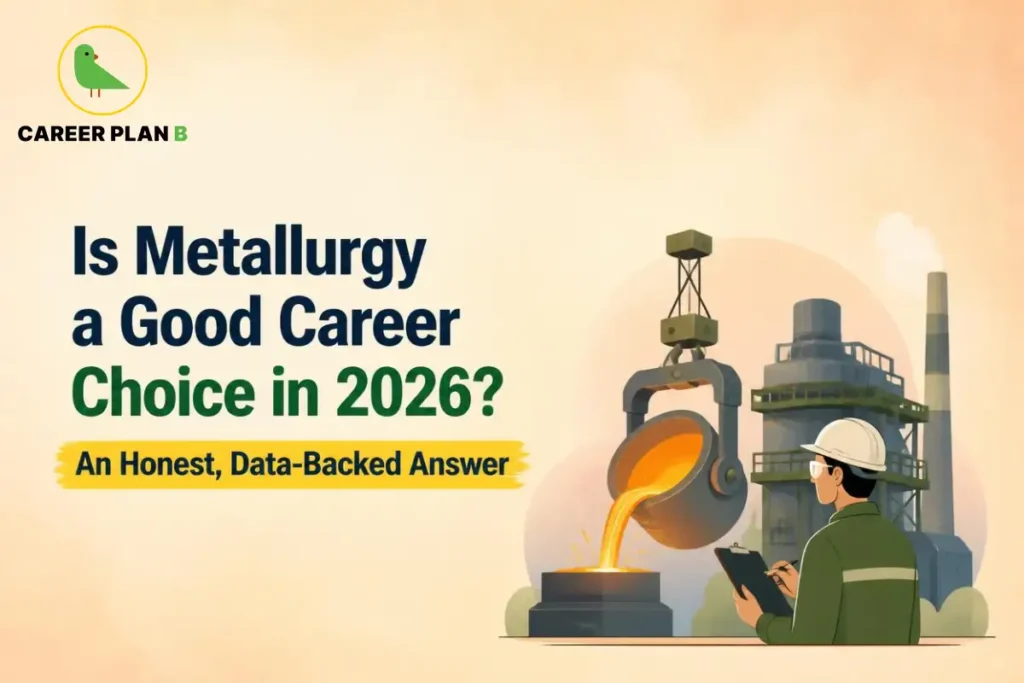
Introduction
This branch now sits at the intersection of green hydrogen, semiconductor materials, defence manufacturing, and EV battery growth simultaneously, a genuinely unusual position for what many still consider a traditional engineering discipline. So, Is Metallurgy a Good Career Choice in 2026? Students researching this question get genuinely conflicting signals, with some framing this as a golden era for materials science while others recall stories of limited domestic research jobs from just a few years ago. Rather than picking a side based on hype or outdated complaints, this blog works through the real, current evidence honestly, covering genuine growth areas, real challenges, and how to decide if this path fits you specifically.
The Genuine Growth Areas Making 2026 a Strong Year for This Field
Green Hydrogen and Green Steel’s Materials Challenges
India’s National Green Hydrogen Mission, backed by investments exceeding ₹8 lakh crore, explicitly targets decarbonizing the iron and steel sector alongside refining, fertilizer, and cement. This creates genuine metallurgical demand, since hydrogen-based steel production and hydrogen embrittlement concerns in storage and pipeline infrastructure are named government-acknowledged technical challenges requiring materials expertise specifically. Consequently, green steel India manufacturing represents a real, currently unfolding growth area rather than a speculative future possibility.
Semiconductor and Defence Manufacturing’s Growing Pull
Beyond green energy, India Semiconductor Mission 2.0, backed by a ₹1.25 lakh crore outlay, explicitly targets producing semiconductor materials, chemicals, and gases domestically, an objective that inherently needs metallurgical and materials science talent. Simultaneously, defence manufacturing continues expanding under Atmanirbhar Bharat, with DRDO and defence PSUs consistently recruiting metallurgists for advanced alloy and armour materials research. Together, these sectors give this metallurgical engineering career India genuinely diverse, policy-backed growth avenues beyond its traditional steel-plant roots.
The Honest Challenges Nobody Sugarcoats
Is this field genuinely thriving everywhere, or are there real caveats worth knowing before committing? Being fair to both sides matters here. This branch remains genuinely niche, with very few institutes offering dedicated programmes compared to mechanical or civil engineering, meaning your college options are considerably narrower from the start. Additionally, a recurring historical complaint from graduates, including one IIT Kharagpur alum’s candid account, noted that domestic materials research opportunities felt limited a few years ago, with many strong opportunities existing primarily abroad rather than within India. It’s also worth noting that oversaturation concerns aren’t unique to any single branch; even mechanical engineering, a considerably larger field, sees nearly 40 per cent of new graduates struggling to secure relevant employment within six months, according to recent research, illustrating that no engineering path guarantees automatic placement without genuine skill-building.
Is the domestic job scope actually improving or still limited?
Why Historical Complaints About Domestic R&D Jobs Are Becoming Outdated
So has anything genuinely changed since those earlier, more pessimistic accounts? The evidence suggests real improvement, driven specifically by policy shifts rather than organic market growth alone. Government investment through the National Green Hydrogen Mission, India Semiconductor Mission 2.0, and sustained defence manufacturing expansion has created materials-specific demand that simply didn’t exist at this scale even five years ago. Therefore, while older complaints about limited domestic research opportunities held real truth at the time, the underlying conditions driving that scarcity are shifting considerably under current policy momentum.
Where Real Demand Concentrates Today
That said, this improved demand concentrates specifically around policy-backed sectors: green hydrogen, semiconductors, defence, and EV battery materials, rather than being evenly spread across the entire field. Students entering this branch today benefit most by deliberately targeting these growth areas rather than assuming general metallurgical training alone guarantees strong placement outcomes.
GATE-PSU Recruitment: Still This Field’s Strongest Career Anchor
Regardless of which specific growth sector interests you, the Graduate Aptitude Test in Engineering remains this field’s most reliable, structured career route. PSUs like SAIL, NALCO, and DRDO recruit through GATE PSU recruitment with pay scales following the 7th Pay Commission structure, typically starting at Level-7, translating to basic pay between ₹44,900 and ₹142,400 monthly, alongside housing and medical allowances. Programmes must be approved by the All India Council for Technical Education (AICTE), the Government of India’s apex technical education regulator, and you can verify official exam details through the GATE official website, maintained by the IIT hosting the exam that year, which conducts a dedicated Metallurgical Engineering paper covering metallurgical engineering eligibility requirements clearly.
Salary Reality Check: What You Can Genuinely Expect
| Career Stage | Private Sector | PSU/GATE Route |
|---|---|---|
| Entry-Level | INR 4 – 6 lakh | INR 5 – 17 lakh (varies by PSU) |
| Mid-Level | INR 6 – 10 lakh | Structured increments, plus allowances |
| Senior-Level | INR 10 – 20+ lakh (managerial/research) | Level-11+ with pension and job security |
As with most engineering fields, metallurgical engineer salary in India figures vary considerably across platforms, so treat PSU pay scales as your most reliable benchmark rather than inflated private-sector aggregator averages.
So, Is It Actually a Good Career Choice in 2026?
The honest verdict genuinely depends on your profile. If you’re drawn to hands-on materials science, comfortable with a narrower institute pool, and willing to specifically target growth sectors like green hydrogen, semiconductors, or defence rather than passively expecting placement, this field offers genuinely strong, policy-backed opportunities right now. If you’re seeking a branch with dozens of college options and immediate, guaranteed private-sector demand regardless of specialization, this narrower field may feel more restrictive than broader branches like mechanical or computer science engineering.
Have Any Doubts?
Career Roles and Growth Path
| Career Stage | Traditional Role | Emerging Sector Role |
|---|---|---|
| Entry-Level | Graduate Engineer Trainee (Steel/Metals) | Junior Materials Engineer (Semiconductor/Hydrogen) |
| Mid-Level | Quality Control Engineer | Materials/Corrosion Engineer (Green Steel, EV) |
| Senior-Level | Senior Metallurgist / Plant Manager | Materials R&D Lead / Semiconductor Materials Engineer |
How Career Plan B Helps
Career Plan B helps students and professionals make informed career decisions in specialized fields like metallurgy by providing guidance on career opportunities, emerging industries, required skills, and long-term growth pathways.
Personalized Career Counselling: Provides guidance based on individual interests, career goals, and preferred domains such as green hydrogen, semiconductor materials, defence manufacturing, steel industries, and advanced materials engineering.
Psychometric & Career Assessment Tests: Helps identify strengths, technical preferences, and suitable career opportunities within metallurgical engineering, including research, manufacturing, materials development, and emerging technology sectors.
Career Roadmapping: Creates a structured career plan covering required skills, certifications, internships, higher education options, and specialization areas to build a successful metallurgical engineering career.
Admission & Academic Profile Guidance: Helps students select suitable colleges, courses, and academic pathways while improving their profile for opportunities in metallurgy, materials science, GATE PSU recruitment, and advanced engineering fields.
Get In Touch With Us
Frequently Asked Questions
- Is metallurgy still relevant in 2026, or is it an outdated branch?
It’s genuinely more relevant now than in recent years, thanks to green hydrogen, semiconductor, and defence manufacturing initiatives all requiring materials expertise.
- Are domestic job opportunities in this field actually improving?
Yes, largely driven by specific government policies like the National Green Hydrogen Mission and India Semiconductor Mission 2.0, rather than broad organic market growth.
- What is the realistic starting salary for a metallurgical engineer?
Private sector freshers typically earn ₹4 to ₹6 lakh annually, while PSU roles through GATE offer considerably stronger, more structured starting pay.
- Should I choose this branch only if I get into an IIT or NIT?
Not necessarily, though top institutes do offer stronger placement networks; strong performance and specialization matter more than institute prestige alone for long-term success.
- Is this a good choice if I want to work abroad eventually?
Yes, metallurgical and materials engineering graduates have historically found strong postgraduate and research opportunities abroad, particularly in specialized materials research roles.
Conclusion
Answering ‘Is Metallurgy a Good Career Choice in 2026? ‘honestly requires acknowledging both genuine, policy-backed growth and real, structural limitations that have shaped this field’s reputation over the years. The evidence points toward a field genuinely strengthening right now, driven by green hydrogen, semiconductor, and defence manufacturing initiatives that specifically need materials expertise, rather than a branch coasting purely on traditional steel industry demand. That said, success here depends considerably more on deliberately targeting these growth sectors and building specialized skills than on passively expecting placement the way some broader engineering branches might offer. If you’re genuinely drawn to materials science and willing to specialize strategically, 2026 looks like a stronger year for this field than it has in some time.
If you’d like help figuring out whether this path fits your genuine interests, a conversation with a Career Plan B counsellor can help you plan your next steps with real clarity.