Team6 · October 6, 2026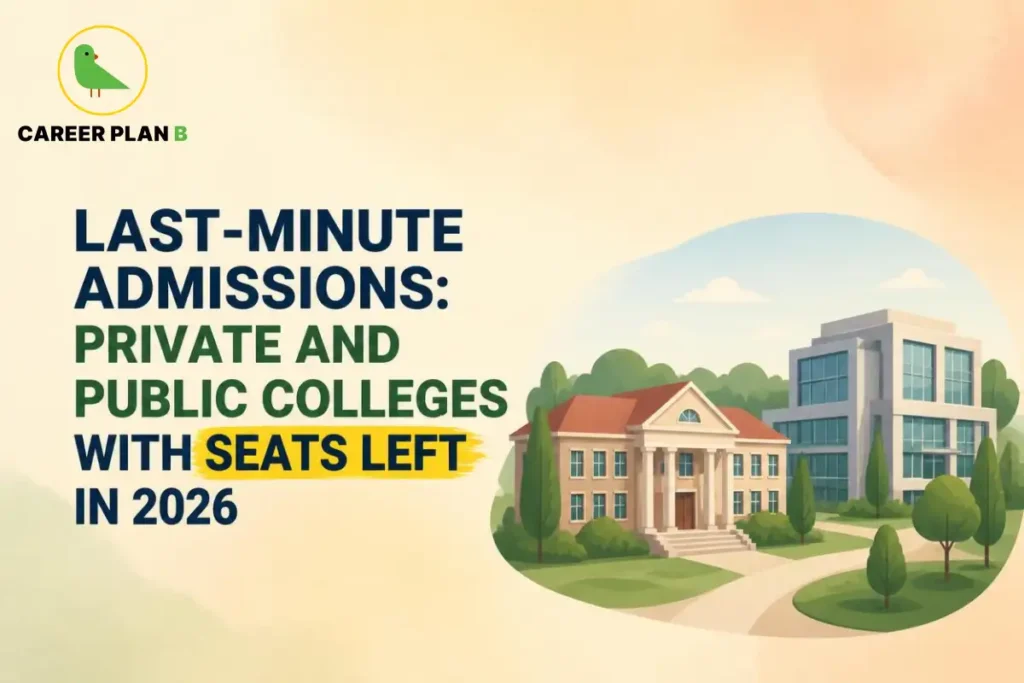
Introduction
The high-pressure season of competitive entrance exams and centralized counseling often leaves Indian students anxious about their academic futures. Lower-than-expected scores, missed deadlines, or changing career preferences can create additional stress. Many students then start searching for last-minute admissions in 2026.
Fortunately, the academic year does not end when the primary counseling rounds conclude.
A large secondary admission market exists to help institutions fill vacant seats. Finding private and public colleges with seats left is possible if you know where to look. Students can explore spot rounds, extended university application windows, and management quotas.
Colleges across engineering, medicine, management, and humanities may accept late applicants. These institutions often have vacancies after students withdraw from their allotted seats.
This guide explains the key timelines, legal frameworks, and strategies for securing a late seat in 2026. You will also learn how to approach vacant seats ethically and efficiently. With the right strategy, you can still save your academic year and begin your college journey.
1. Understanding the Late Admission Landscape
To secure last-minute admission, you first need to understand why colleges still have vacant seats in August and September.
Why Seats Remain Vacant
During centralized counseling, students often hold multiple seats across different portals. They eventually select their preferred college and surrender their backup seats. This creates new vacancies during the admission cycle.
As a result, finding private and public colleges with seats left is a normal part of the Indian admission process.
The Role of Extended Windows
Many universities extend their admission deadlines beyond the traditional July cutoffs. Private institutions and deemed universities may keep their application portals open until August or September.
These extended windows help institutions fill vacancies after the main counseling rounds. They also give students another opportunity to secure admission.
Spot Admissions and Counseling Rounds
Spot admission rounds can provide another route to vacant seats. Government and private institutions may conduct these rounds after their regular counseling process ends.
JoSAA and CSAB Special Rounds
For engineering students, the Joint Seat Allocation Authority (JoSAA) manages admissions to IITs and NITs. After the regular JoSAA rounds, the Central Seat Allocation Board (CSAB) conducts Special Rounds.
These rounds help fill remaining vacant seats across the NIT+ system. They can provide another opportunity for eligible JEE Main candidates.
State-Level and University Spot Rounds
State universities and specialized institutions may also conduct spot admission rounds. For example, Delhi University (DU) uses CSAS spot rounds. The Joint Admission Committee (JAC) Delhi also conducts spot counseling for vacancies at DTU and NSUT.
These rounds can move quickly. Students should keep their original documents ready. They should also prepare the required payment method in advance.
Direct Admission and Management Quota
If spot rounds are too competitive, students can explore direct admission options at eligible private institutions.
Navigating the Management Quota Safely
Management quota rules vary by institution and state. Students should therefore check the latest official regulations before applying.
Finding private colleges with seats available under such quotas may require early action. Students should also verify the institution’s approval status and admission rules before paying any fees.
Financial Implications of Direct Entry
Management quota admission can cost more than a standard merit-based seat. Some institutions may charge additional fees for these seats.
Before making a payment, compare the total cost with the college’s placement record. Also consider the expected return on your investment. This is especially important for expensive professional programs.
Have Any Doubts?
Alternative Pathways and Open Universities
Traditional campus programs may not always remain available late in the admission cycle. They may also be financially difficult for some students.
In such cases, alternative academic pathways can provide more flexibility.
UGC-DEB Approved Online Degrees
The University Grants Commission (UGC) regulates recognized higher education programs in India. Students can also explore approved online and distance-learning programs through the relevant official channels.
Online programs do not depend on traditional classroom capacity. Some universities may therefore offer longer admission windows.
An online BBA or BCA can be an option for students who missed regular campus admissions. However, students should always verify the institution and specific program before enrolling.
The IGNOU Late Admission Window
The Indira Gandhi National Open University (IGNOU) offers flexible admission options for many programs. Its admission schedules can also include extended registration periods.
Students should check the latest official IGNOU notification for the relevant academic session. Any late fee and deadline can change from one admission cycle to another.
How Career Plan B Helps
Navigating spot counseling and late admission options can be confusing. It also requires careful planning and attention to deadlines.
Career Plan B helps students and parents evaluate their available options before making an admission decision.
- Personalised Career Counselling: We evaluate your entrance scores and board marks. This helps identify suitable colleges and programs for your profile.
- Psycheintel & Career Assessments: These assessments help identify your strengths and interests. They can also help you choose a suitable academic direction.
- Customized Admission Guidance: Get step-by-step support during admission processes. This includes help with documentation and counseling requirements.
- Career Roadmapping: Build a long-term academic and career plan. Your college choice can then align with your career goals.
Get In Touch With Us
Frequently Asked Questions
Q1. Can I still get college admission in September 2026?
Possibly. Some private universities may keep their admission windows open until September. Availability depends on the institution and program.
Students should check the latest admission notice before applying.
Q2. Are spot admission degrees valid for future jobs?
A spot admission does not make a degree invalid. The validity of the degree depends on the institution and program’s recognition.
Always verify the college and course before accepting a seat.
Q3. How do I find private and public colleges with seats left?
Monitor official counseling portals such as CSAB and JAC. You should also check private university websites for vacant-seat notifications.
Always verify admission information through official sources.
Q4. Is management quota admission legal in India?
Management quota can be permitted for eligible private institutions. However, the applicable rules vary by institution and state.
Students should check the latest official regulations before making any payment.
Q5. What documents are required for instant spot admission?
Requirements vary between institutions. Students should generally keep their 10th and 12th mark sheets ready.
You may also need entrance exam scorecards and category certificates. Keep valid identity documents and the required payment method available as well.
Conclusion
Missing an initial admission deadline does not always mean losing an entire academic year. Students may still find opportunities through spot rounds, extended admission windows, and other legitimate pathways.
The search for private and public colleges with seats left requires quick action. It also requires careful verification of every admission offer.
Keep your documents ready and track official admission updates. Most importantly, verify the college, course, fees, and recognition status before making a payment.
If you want help identifying options that match your academic profile and career goals, consult Career Plan B. You can use the guidance to build a clear plan for your next admission step.