Team Career Plan B · July 20, 2026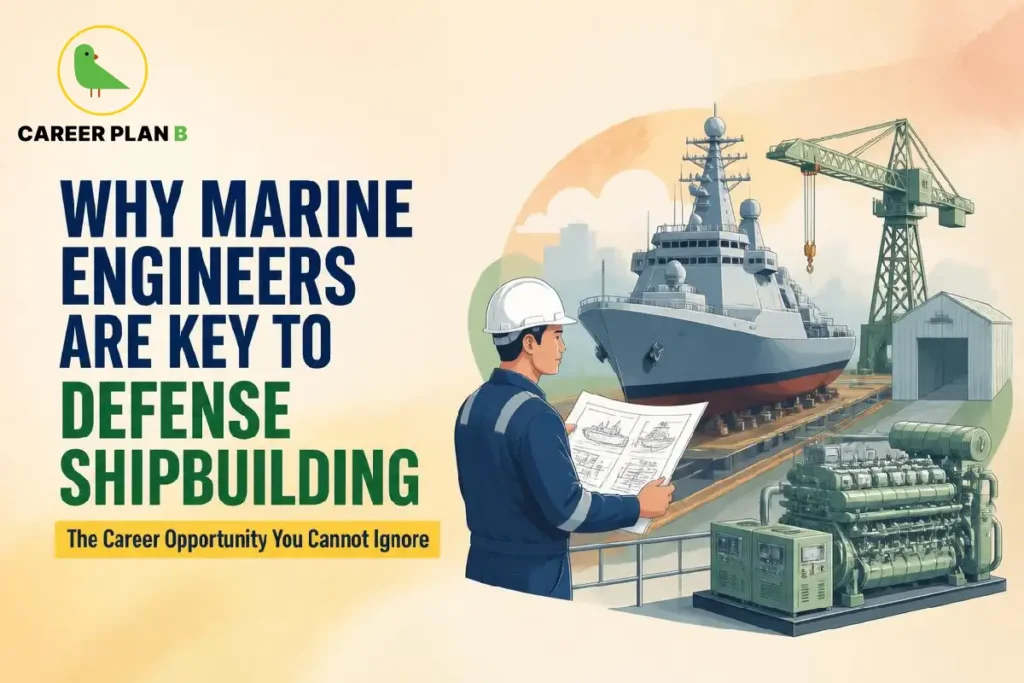
Introduction
A warship isn’t just a bigger, tougher version of a cargo vessel. It’s a floating combat platform designed to survive attacks and stay hidden from radar. It must also keep running under conditions no commercial ship would normally face. This is precisely why marine engineers are key to defense shipbuilding. They work on the critical systems that make a warship combat-ready and reliable. India’s naval ambitions have made this field more relevant than ever. New vessels are being commissioned at a striking pace. There is also a clear national push to build warships at home rather than import them. This blog explains what sets defense shipbuilding apart from commercial shipbuilding. It explores the role of marine engineers in warship projects and India’s growing focus on indigenous shipbuilding. It also looks at what a career in this space actually involves.
What Makes Defense Shipbuilding Different from Commercial Shipbuilding?
A cargo ship moves goods efficiently and safely. In contrast, a warship must survive combat, avoid detection, and continue fighting even after sustaining damage. That single difference changes almost everything about its engineering. Engineers integrate weapons systems directly into the ship’s structure and power supply. They also incorporate stealth features to reduce radar and acoustic signatures. In addition, they design critical systems with multiple layers of redundancy. These measures allow the ship to keep functioning even when an attack damages part of it. Commercial vessels rarely need this level of built-in survivability, which is exactly why marine engineering in naval ships demands a different level of precision and planning than standard shipbuilding.
What Do Marine Engineers Actually Do in Warship Construction?
On a warship, marine engineers are responsible for far more than just propulsion. They design and maintain engines capable of rapid speed changes for combat manoeuvring; manage power distribution systems that need to run weapons, radar, and communication equipment simultaneously; and build damage control systems that keep the ship operational after a hit. This is where warship engineering gets genuinely demanding. A marine engineer working on a naval vessel has to think about how every system interacts under stress, not just under normal operating conditions. It’s engineering built around the assumption that something could go wrong at any moment, and the ship still needs to function.
Why Is India Pushing for Indigenous Shipbuilding?
India’s naval strategy has shifted decisively toward building ships at home rather than relying on foreign suppliers. According to the Press Information Bureau, since 2014, Indian shipyards have delivered over 40 indigenous warships and submarines to the Navy, with a new vessel being inducted on average every 40 days over the past year. Government sources also confirm that nearly 67% of the Navy’s capital acquisitions have come from Indian industries over the last decade, with the Navy committed to becoming fully self-reliant by 2047.
This effort is backed by clear government policy. You can read more about India’s official defense self-reliance initiatives on the Department of Defence Production website, which coordinates the country’s push toward self-reliant defense manufacturing. This shift isn’t just a policy slogan; it directly translates into growing demand for marine engineers who can work within India’s own shipyards rather than depending on foreign expertise.
Skills Needed for a Career in Warship Engineering
Working in defense shipbuilding requires a specific blend of technical and procedural skills, including:
- A strong grounding in naval architecture and marine engineering fundamentals
- Understanding of systems integration between propulsion, weapons, and power supply
- Familiarity with survivability and damage-control engineering principles
- Willingness to undergo security clearance and background verification processes
- Attention to precision and documentation, since defense projects demand strict compliance standards
These requirements go well beyond what a typical commercial marine engineering role expects, which is part of why this specialization is so valued.
Have Any Doubts?
Career Paths: Where Do Marine Engineers Work in Defence?
Marine engineers in this space typically find roles at major public sector shipyards such as Mazagon Dock Shipbuilders, Garden Reach Shipbuilders, and Goa Shipyard, all of which build warships and submarines for the Indian Navy. Others work in technical roles directly within the Navy, supporting shipboard systems and maintenance. Private defense contractors are also expanding their shipbuilding capacity, creating additional openings alongside the traditional public sector route. For anyone interested in defense shipbuilding careers, this expanding ecosystem of public shipyards, private contractors, and naval technical roles means there’s genuine room to build a long-term, stable career in this field.
How Career Plan B Helps
Considering a path in marine engineering jobs in the navy or defense shipyards? Career Plan B offers personalized career counselling and PsycheIntel assessment tests to help you understand if this high-precision field suits your strengths, along with academic profile guidance and career roadmapping tailored to defense and naval engineering paths.
For Latest Information
Frequently Asked Questions
- Do marine engineers need special clearance to work on defense projects?
Yes, most defense shipbuilding roles require security clearance and background verification, given the sensitive nature of naval projects.
- Is defense shipbuilding only available through government jobs?
No, opportunities exist across public sector shipyards, private defense contractors, and direct technical roles within the Navy.
- What’s the difference between naval architecture and marine engineering in this context?
Naval architecture focuses more on hull design and ship structure, while marine engineering focuses on propulsion, power, and onboard systems. Defense projects need both working closely together.
- Is India’s defense shipbuilding sector actually growing, or is this a small niche?
It’s genuinely expanding. Government sources confirm a steady stream of new indigenous vessels being commissioned, with continued investment planned through 2047.
- Can a commercial marine engineer switch to defense shipbuilding later?
It’s possible, though it usually requires additional training in defence-specific systems and clearing security protocols required for such roles.
Conclusion
Building a warship takes far more than steel and ambition; it takes marine engineers who understand how to make complex systems survive conditions no commercial vessel would ever face. As India continues its push toward indigenous shipbuilding, this field is only growing in importance and opportunity. If this kind of high-stakes, high-precision engineering appeals to you, now is a strong time to start building the skills for it. The next generation of India’s warships will need engineers ready to meet that challenge.