Team6 · September 16, 2026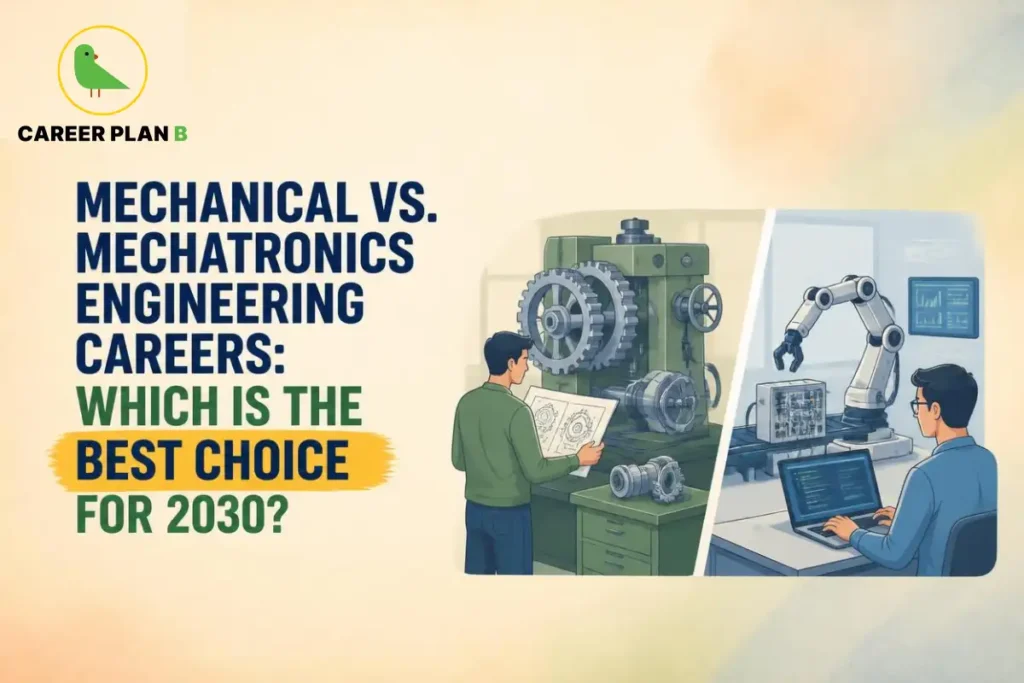
Introduction
By 2030, the average factory floor will look nothing like it does today. Collaborative robots will work alongside humans on assembly lines. Autonomous guided vehicles will move materials without a driver. AI-driven quality systems will detect defects invisible to the human eye. Electric vehicles will account for a significant share of every major automotive market. And at the centre of all of it are engineers who understand not just how machines work but also how machines think, sense, and act.
The mechanical vs mechatronics engineering career debate has never been more relevant than it is right now. Both fields are evolving rapidly. Both are in demand. But the trajectories heading into 2030 are meaningfully different, and choosing the right one today can make a significant difference to where you stand professionally five years from now.
According to the World Economic Forum’s Future of Jobs Report, over 85 million jobs will be displaced by automation by 2025, while 97 million new roles will emerge, most of them requiring skills at the intersection of mechanical systems, electronics, and digital technology. (Source: World Economic Forum – Future of Jobs)
This blog gives you a complete, honest comparison of mechanical vs. mechatronics engineering career paths, covering where each field is headed, what jobs will look like in 2030, salary expectations, and how to decide which branch is the smarter long-term bet for you.
What Is Mechanical Engineering, and Where Is It Headed?
Mechanical engineering is one of the oldest and broadest engineering disciplines, covering the design, analysis, manufacturing, and maintenance of physical systems. From turbines and engines to HVAC systems and robotic arms, mechanical engineers have historically been the backbone of the physical world.
But the mechanical engineering future in India is not standing still. The field is rapidly absorbing new technologies and expanding into domains that would have seemed foreign to mechanical engineers a generation ago:
- Electric vehicle powertrains replacing combustion engines
- Additive manufacturing and 3D printing are transforming production
- Digital twins and simulation are replacing physical prototyping
- Renewable energy systems demand new thermal and structural engineering
- Aerospace and defence are pushing materials and structural engineering to new limits
What Mechanical Engineers Will Be Doing in 2030
By 2030, the most in-demand mechanical engineering career in 2030 will look like this:
- EV powertrain and thermal management engineers designing next-generation battery and motor systems
- Additive manufacturing specialists are building complex aerospace and medical components layer by layer
- Simulation and digital twin engineers are replacing costly physical testing with virtual validation
- Sustainable energy engineers designing wind turbines, hydrogen fuel systems, and solar thermal plants
- Advanced materials engineers working with composites, smart materials, and nano-engineered structures
Mechanical engineering is not declining; it is transforming. The engineers who thrive in 2030 will be those who combine strong mechanical fundamentals with fluency in digital tools and cross-disciplinary thinking.
What Is Mechatronics Engineering, and Why Is It Growing So Fast?
Mechatronics engineering is the deliberate integration of mechanical engineering, electrical engineering, electronics, and computer science into a unified discipline. It was designed from the ground up to build systems that are simultaneously mechanical, electrical, and intelligent, which is precisely what Industry 4.0 demands.
A mechatronics engineer does not just design a robotic arm; they design the arm, the motors that drive it, the sensors that guide it, the control algorithms that make it precise, and the software that allows it to adapt to changing conditions. That full-stack thinking is what makes mechatronics engineering in India so compelling right now.
What Mechatronics Engineers Will Be Doing in 2030
Mechatronics engineer job roles in 2030 will be defined by the convergence of physical systems and digital intelligence:
- Autonomous systems engineers developing self-navigating robots, vehicles, and drones
- Industrial automation engineers designing smart production lines with integrated sensing and AI
- Medical robotics engineers building surgical robots, rehabilitation exoskeletons, and automated drug delivery systems
- EV systems integration engineers managing the complex interface between mechanical, electrical, and software subsystems
- Human-machine interface engineers are designing the systems through which people interact with intelligent machines
- Smart manufacturing engineers are embedding IoT, data analytics, and adaptive control into production systems
The bottom line is straightforward: mechatronics was built for the world that 2030 is becoming.
Core Difference Between Mechanical and Mechatronics Engineering
Understanding the difference between mechanical and mechatronics engineering at both an academic and professional level is essential before committing to either path.
| Aspect | Mechanical Engineering | Mechatronics Engineering |
|---|---|---|
| Core Disciplines | Mechanics, thermodynamics, materials, manufacturing | Mechanics + electronics + control systems + computing |
| Primary Focus | Physical systems, structures, and thermal processes | Integrated intelligent systems combining hardware and software |
| Key Subjects | Fluid mechanics, heat transfer, machine design, and manufacturing | Robotics, control systems, embedded programming, sensors |
| Key Tools | SolidWorks, ANSYS, MATLAB, AutoCAD | MATLAB/Simulink, Arduino, ROS, LabVIEW, Python |
| Industries | Automotive, aerospace, energy, defence, FMCG | Robotics, automation, EV systems, medical devices, smart manufacturing |
| Thinking Style | Deep analytical focus on physical systems | Integrative thinking across multiple technical domains |
| Government Sector | DRDO, ISRO, HAL, BHEL, NTPC | DRDO, ISRO, BEL, CAIR, Defence Robotics Labs |
| Convergence Zone | EV manufacturing, smart factories, defence robotics | EV systems, autonomous vehicles, Industry 4.0 |
The most important insight in this comparison is the convergence zone. In EVs, autonomous systems, and smart manufacturing, the fastest-growing sectors in India and globally, mechanical and mechatronics engineers are increasingly working on the same problems. The difference is the angle of approach and the depth of cross-disciplinary capability each brings.
Job Roles and Industry Scope in 2030
Mechanical Engineering: Where the Jobs Will Be
The mechanical engineering future in India in 2030 will be concentrated in these high-growth sectors:
- EV Manufacturing: Thermal management, structural design, and powertrain integration at Tata EV, Ola Electric, Ather Energy, and global OEMs
- Aerospace and Defence: Structural engineering, propulsion, and materials at ISRO, DRDO, HAL, and private aerospace firms (Source: ISRO) (Source: HAL)
- Renewable Energy: Wind turbine design, solar thermal systems, and hydrogen fuel infrastructure under India’s National Green Hydrogen Mission (Source: Ministry of New and Renewable Energy)
- Advanced Manufacturing: Additive manufacturing, precision engineering, and smart production under the PLI scheme (Source: Ministry of Heavy Industries)
- Infrastructure and Construction: High-speed rail, smart city infrastructure, and large-scale civil-mechanical systems
Mechatronics Engineering: Where the Jobs Will Be
Mechatronics engineer job roles in 2030 will dominate these sectors:
- Industrial Robotics and Automation: ABB India, Fanuc, Kuka, Siemens, all expanding their India operations
- EV Systems Integration: Managing the interface between mechanical, electrical, and software subsystems in next-generation EVs
- Medical Devices and Healthcare Robotics: A rapidly growing sector in India under the National Medical Devices Policy
- Defence Robotics: DRDO’s CAIR lab and private defence firms developing unmanned systems (Source: DRDO)
- Smart Manufacturing and Industry 4.0: Implementing IoT, AI-driven quality systems, and adaptive production lines across India’s manufacturing base
Emerging Roles That Will Define 2030
Regardless of branch, these roles will be among the most in-demand by 2030:
- Digital Twin Engineer building live virtual models of physical systems for real-time monitoring and optimisation
- Human-Robot Collaboration Specialist designing safe and efficient systems where humans and robots work side by side
- Autonomous Systems Validation Engineer, testing and certifying self-driving and autonomous robotic systems
- Sustainable Manufacturing Engineer reducing carbon footprint across entire product lifecycles
- AI-Integrated Mechanical Systems Engineer embedding machine learning into physical product behaviour
Have Any Doubts?
Mechatronics vs Mechanical Salary in India and Globally
The mechatronics vs mechanical salary in India comparison reveals an interesting and evolving picture.
Mechanical Engineering Salaries in India:
- Entry-level (0–2 years): ₹3.5–6 LPA at manufacturing firms; ₹5–8 LPA at top OEMs and PSUs
- Mid-level (3–6 years): ₹8–15 LPA with specialisation in EVs, aerospace, or advanced manufacturing
- Senior level (7+ years): ₹18–30 LPA at leading automotive, aerospace, and energy companies
- EV Specialists: 20–30% premium over traditional mechanical roles currently and growing
Mechatronics Engineering Salaries in India:
- Entry-level (0–2 years): ₹4–7 LPAs (slightly higher starting point due to cross-disciplinary demand)
- Mid-level (3–6 years): ₹9–18 LPA with robotics, automation, or EV systems specialisation
- Senior level (7+ years): ₹20–35 LPA in industrial automation, defence robotics, and medical devices
- Automation and Robotics Specialists: Among the fastest-growing salary bands in Indian engineering currently
Government Sector Pay: Both branches access government sector roles through GATE and PSU recruitment. Pay scales follow the 7th Pay Commission for central government roles and IDA patterns for PSUs. (Source: Ministry of Finance – Pay Commission) Key PSU employers for mechanical engineers include BHEL, NTPC, and ONGC. Mechatronics engineers find strong demand at BEL and DRDO’s robotics labs.
Global Salary Benchmarks:
According to the U.S. Bureau of Labour Statistics, mechanical engineers earn a median of $99,000 annually, while mechatronics and electro-mechanical engineering roles earn a median of $61,000–$103,000 depending on specialisation, with robotics and automation specialists at the top of the range. (Source: BLS – Mechanical Engineers) (Source: BLS – Electro-Mechanical Technologists)
In Germany, mechatronics engineers earn €48,000–€72,000 per year and are among the most actively recruited international engineering professionals under Germany’s Skilled Immigration Act. (Source: Make it in Germany)
Mechatronics Engineering Scope in India: Is the Market Ready?
The honest answer is that the market is not just ready; it is actively waiting for more qualified mechatronics engineers than India currently produces.
Here is what is driving the mechatronics engineering scope in India in the run-up to 2030:
Industry 4.0 Adoption: India’s manufacturing sector is undergoing rapid digital transformation. The National Policy for Advanced Manufacturing and the Smart Cities Mission are both driving the adoption of automation, robotics, and intelligent systems across industries.
EV Ecosystem Expansion: Every new EV Gigafactory being built in India by Tata, Ola, Ather, and international OEMs needs mechatronics engineers for production automation, battery assembly line integration, and quality systems.
Defence Modernisation: India’s iDEX (Innovations for Defence Excellence) The initiative is funding dozens of startups developing autonomous and robotic defence systems, all of which need mechatronics engineers at their core. (Source: iDEX)
Skilling Push: The National Skill Development Corporation (NSDC) under the Ministry of Skill Development is actively developing curriculum and training infrastructure for mechatronics and automation roles, recognising the structural talent gap. (Source: NSDC) (Source: MSDE)
The talent gap in mechatronics is real, and for engineers entering the workforce now, that gap represents a significant career opportunity.
Which Branch Should You Choose for 2030?
Here is a clear decision framework for the best engineering branch for the 2030 choice between mechanical and mechatronics:
Choose mechanical engineering if you:
- Are drawn to the physical depth of engineering, thermodynamics, materials, structural analysis, and fluid mechanics
- Want maximum industry breadth? Mechanical engineers are employable across more sectors than almost any other engineering discipline
- Are interested in energy, aerospace, defence, or advanced manufacturing as long-term career domains
- Prefer to develop deep expertise in one technical area and then broaden laterally over time
- Want clear, well-established pathways into PSUs through GATE and ESE
Choose Mechatronics Engineering if you:
- Are you energised by working at the intersection of multiple disciplines? The idea of designing a system that is simultaneously mechanical, electronic, and intelligent excites you
- Are drawn specifically to robotics, automation, autonomous vehicles, or smart manufacturing
- Are you comfortable with programming and electronics as part of your engineering identity, not just as supporting tools but as core skills
- Want to be positioned at the heart of Industry 4.0 and the automation economy heading into 2030
- Are open to a slightly narrower but higher-growth career trajectory
The 2030 verdict: Both branches will be valuable in 2030. Mechanical engineering will remain foundational and broad. Mechatronics will be the specialist branch most aligned with the technologies defining the next decade. The right answer depends entirely on how your mind works and what problems genuinely excite you.
How Career Plan B Helps
The mechanical vs mechatronics engineering career decision is one of the most consequential choices an engineering student can make, and it deserves more than a coin flip or family pressure. Career Plan B offers Psycheintel-based career assessment tests that evaluate whether your cognitive strengths, technical aptitude, and career values align better with the depth of mechanical engineering or the integrative demands of mechatronics. Through personalised career counselling, academic profile guidance for top engineering institutions, and structured career roadmapping focused on 2030-relevant roles, Career Plan B helps you make this decision with data, clarity, and long-term confidence.
For Latest Information
Frequently Asked Questions (FAQs)
1. What is the core difference between mechanical and mechatronics engineering as career paths?
Mechanical engineering focuses on physical systems, thermodynamics, materials, structural analysis, and manufacturing. Mechatronics engineering integrates mechanical systems with electronics, control systems, and computing to build intelligent, automated systems. Mechanical is broader and more foundational; mechatronics is more specialised and directly aligned with robotics, automation, and Industry 4.0 applications.
2. Which branch has better job opportunities in India by 2030, mechanical or mechatronics?
Both will have strong job markets, but for different reasons. Mechanical engineering will remain the largest employer by volume across more industries. Mechatronics will see faster growth in high-value, high-demand roles specifically in robotics, EV systems, automation, and defence technology. If growth rate and future alignment matter most to you, mechatronics has the edge heading into 2030.
3. Can a mechanical engineer transition into mechatronics roles?
Yes, and many do. Mechanical engineers who build supplementary skills in embedded systems, control theory, and robotics programming can transition into mechatronics-adjacent roles, particularly in EV systems integration and industrial automation. The foundation is strong; the transition requires deliberate upskilling rather than a full restart.
4. Are mechatronics engineering programmes available across India?
Mechatronics programmes are available at several IITs, NITs, and AICTE-approved private engineering institutions. Availability is growing as industry demand increases. You can search for AICTE-approved mechatronics programmes at the official AICTE approval dashboard.
Conclusion
The mechanical vs mechatronics engineering career is not a debate about which branch is superior; it is a question about which one is right for the way you think, the problems that excite you, and the future you want to build.
Mechanical engineering gives you depth, breadth, and a proven pathway across the world’s most important industries. Mechatronics offers integration, specialisation, and a direct ticket to the technologies of robotics, automation, autonomous systems, and smart manufacturing that will define the decade ahead.
The best engineering branch for 2030 is the one that aligns with your genuine strengths and long-term ambitions, not the one that sounds impressive at a family gathering.
Make that decision deliberately, with expert guidance and honest self-assessment. Visit Career Plan B today to map out the engineering career path that is genuinely built for your future and for 2030.