Team6 · July 22, 2026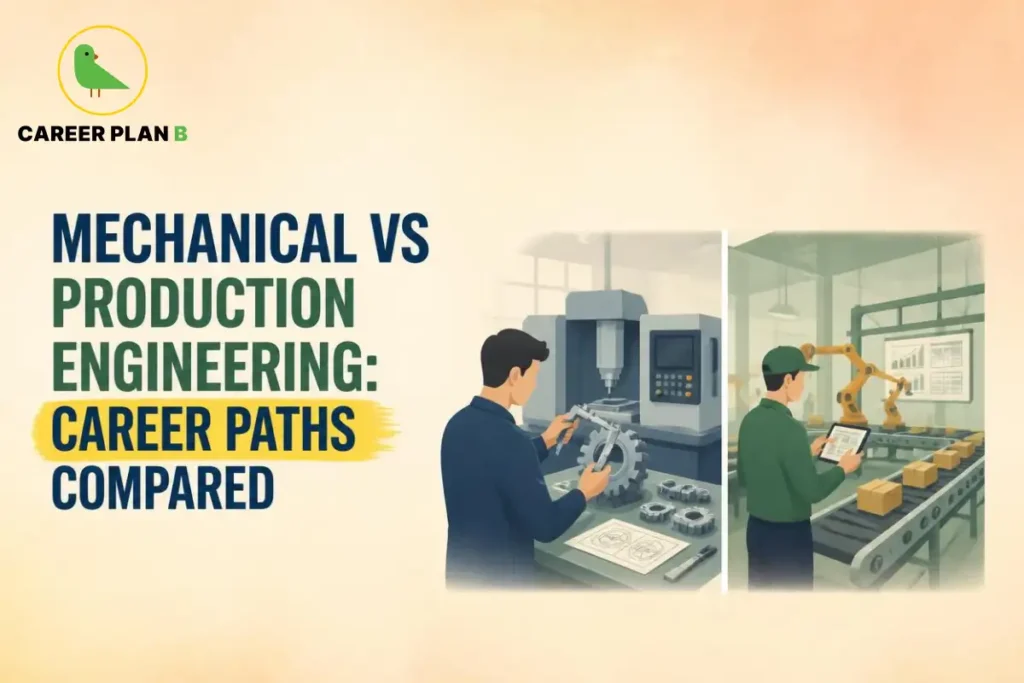
Introduction
Mechanical engineering remains one of India’s broadest and most established branches, covering thermal systems, design, fluids, and materials science all at once. However, production engineering exists as a distinct, closely related specialization that many students overlook while comparing mechanical vs production engineering career paths. Students often assume these two are essentially identical, without checking the real difference in daily work, scope, and long-term growth.
This blog breaks down that difference clearly, covering eligibility, career scope, and salary, so you can choose the path that genuinely fits your interests.
What’s the Core Difference Between Mechanical and Production Engineering?
Mechanical Engineering: A Broad, Multi-Disciplinary Foundation
Mechanical engineering covers an unusually wide range of subjects, including thermal engineering, fluid mechanics, design, materials science, and production. Because of this breadth, mechanical engineers can work across dozens of industries, from ISRO and DRDO to automotive and power plants. Additionally, this broad foundation lets graduates specialize later, moving into robotics, aerospace, or energy systems depending on their interests.
Production Engineering: A Focused Manufacturing Specialization
Production engineering, meanwhile, narrows in specifically on manufacturing processes, industrial engineering, quality control, and CAD/CAM systems. This branch focuses on how products get designed for mass production and how factories run efficiently at scale. Consequently, production engineers typically develop deeper expertise in a smaller set of manufacturing-specific tools and processes than their mechanical engineering counterparts.
Which Mechanical vs. Production Engineering Path Actually Suits You?
Is broader exposure better, or does specialization pay off faster? It depends entirely on your working style. If you enjoy variety and want the flexibility to explore thermal systems, robotics, or design work later, mechanical engineering offers that breadth naturally. If you’re specifically drawn to how factories and production lines operate, however, production engineering lets you build deep, focused expertise from day one.
Eligibility and GATE Routes for Both Branches
Entry Requirements After Class 12
Both branches require Class 12 with Physics, Chemistry, and Mathematics, followed by entrance exams like JEE Main or state-level equivalents. Programs in both fields need approval from the All India Council for Technical Education (AICTE), the Government of India’s apex technical education regulator, ensuring your degree carries proper recognition later.
Postgraduate and PSU Recruitment Through GATE
The Graduate Aptitude Test in Engineering, or GATE, remains the standard route into PSU roles and M.Tech programmes for both branches. Notably, the GATE Mechanical Engineering paper already covers production and industrial engineering topics, meaning production engineering graduates can appear for the same exam. You can check official exam details through the GATE official website, maintained by the IIT hosting the exam that year.
Career Scope: Where Each Mechanical Engineering Career Path Leads
Mechanical Engineering: Broad Industry and PSU Access
Mechanical engineers find opportunities across a genuinely wide base, including ISRO, DRDO, BHEL, Indian Railways, and Indian Oil, all of which run large mechanical engineering divisions. Furthermore, private sector demand spans automotive, aerospace, and energy companies, giving mechanical engineering scope real breadth across both government and private employers.
Production Engineering: Manufacturing-Focused Roles
Production engineering, by contrast, leads more directly into manufacturing-focused roles like process improvement, quality control, and machinery optimization. Government initiatives like Make in India and the Production Linked Incentive scheme have pushed significant investment into domestic manufacturing, therefore creating steady demand for production-focused engineers specifically. You can explore verified openings across both branches through the National Career Service, a Government of India job portal connecting seekers with confirmed vacancies.
Have Any Doubts?
Salary Comparison: Mechanical vs Production Engineering Salary in India
| Career Stage | Mechanical Engineering | Production Engineering |
|---|---|---|
| Entry-Level | INR 3–4.5 lakh (private), 6–8 lakh (GATE/PSU) | INR 3–5 lakh (private), 6–8 lakh (GATE/PSU) |
| Mid-Level | INR 7–12 lakh | INR 7–12 lakh |
| Senior-Level | INR 15–25+ lakh | INR 12–20+ lakh |
Interestingly, both branches show fairly similar pay bands at entry and mid-level, since GATE-based PSU recruitment tends to follow standardized government pay scales regardless of specialization. However, mechanical engineering shows a slightly wider senior-level ceiling, largely due to its broader industry access across aerospace, energy, and robotics-linked roles.
Career Roles and Growth Path
| Career Stage | Mechanical Engineer | Production Engineer |
|---|---|---|
| Entry-Level | Design/Production Engineer Trainee | Junior Production Engineer |
| Mid-Level | Senior Design Engineer / Project Lead | Manufacturing Engineer / Process Engineer |
| Senior-Level | Engineering Manager / R&D Lead | Plant Manager / Quality Head |
How Career Plan B Helps
Career Plan B helps students and professionals make informed career decisions between different engineering pathways through personalized guidance, assessments, and structured career planning.
Personalized Career Counselling: Provides expert guidance based on individual interests, skills, career goals, and understanding of different engineering specializations like mechanical and production engineering.
Psychometric & Career Assessment Tests: Helps identify strengths, personality traits, aptitude, and suitable career opportunities to choose the right engineering path.
Career Roadmapping: Creates a clear step-by-step plan covering education choices, skill development, certifications, internships, and long-term professional growth.
Admission & Academic Profile Guidance: Helps students select the right courses, colleges, and engineering branches while improving their academic profile for better career opportunities.
Get In Touch With Us
Frequently Asked Questions
1. Is production engineering a separate branch from mechanical engineering?
At most institutes, yes, it’s offered as its own specialized degree, though the two share significant overlap in core subjects and GATE recruitment.
2. Which pays more, mechanical or production engineering?
Both offer similar entry and mid-level pay, though mechanical engineering shows a slightly higher senior-level ceiling due to broader industry access.
3. Which has more government job opportunities via GATE?
Mechanical engineering generally has more PSU vacancies, since the GATE Mechanical paper covers both mechanical and production topics together.
4. Is production engineering only relevant to manufacturing plants?
No, production engineers also work in quality control, process improvement, and industrial engineering roles across multiple sectors, not just factory floors.
5. Which one should I choose if I want broader career flexibility?
Mechanical engineering offers more flexibility to pivot across industries later, while production engineering suits those who already know they want manufacturing-focused work.
Conclusion
Weighing mechanical vs. production engineering: career paths ultimately depends on your interests and career goals. Choose mechanical engineering if you want broad exposure across multiple industries. Choose production engineering if you prefer specialized expertise in manufacturing and production systems. Both branches offer strong GATE-based PSU opportunities and competitive salary growth. They also benefit from India’s expanding manufacturing sector. Instead of choosing based on tradition or popularity, think about the type of work you will enjoy every day.
If you’re still unsure which path fits you best, speaking with a Career Plan B counsellor can help. They can assess your interests, strengths, and aptitude before you finalize your entrance exam choices.