Careerplanb · August 13, 2026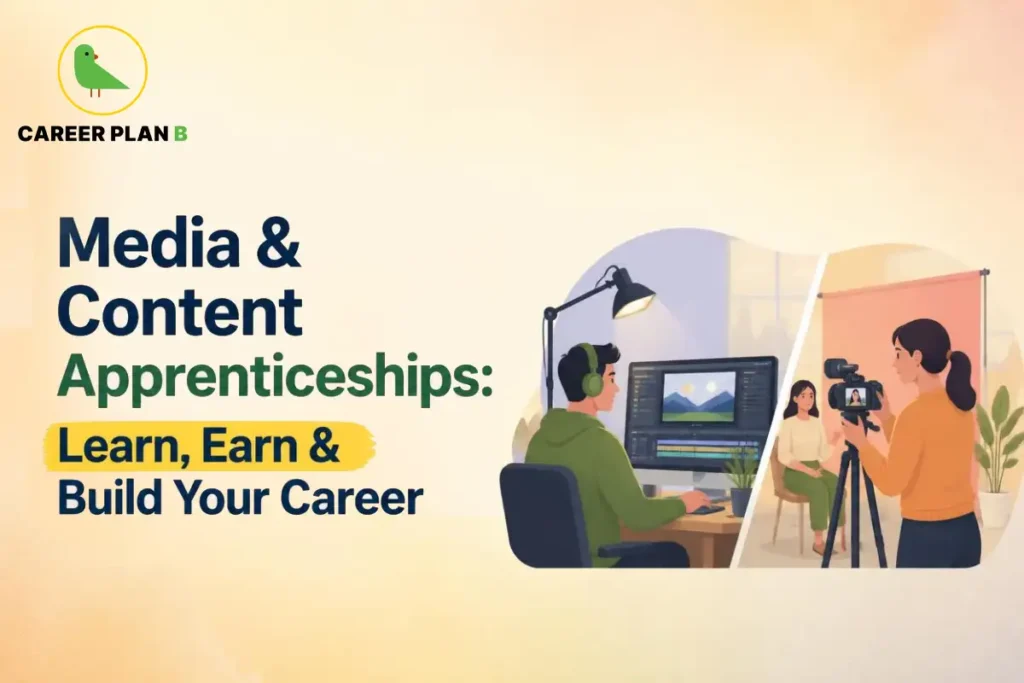
Introduction
While one eighteen-year-old is still filling out mass communication college applications, another is already inside a real animation studio, sketching alongside working professionals, and collecting a government-backed paycheck every month. Nobody warned the first one that this second path even existed. That gap in awareness is exactly what Media Apprenticeship Programs are quietly exploiting in 2026.
So does earning while you train actually beat spending three years, and a fair amount of money, on theory first? This guide breaks down real stipends, real participating studios, and honest career outcomes behind Media Apprenticeship Programs. Keep reading, because your media career might not need a classroom to start at all.
What Exactly Is a Media Apprenticeship Program?
A media apprenticeship combines structured on-the-job training at a real media, animation, or content company with formal, recognised skill certification, all under India’s National Apprenticeship Promotion Scheme. Consequently, apprentices genuinely work inside actual production houses and studios from early on, rather than only studying media theory in a classroom.
Furthermore, this is not a fringe or improvised arrangement. Named companies like Digitoonz Media & Entertainment, Toonz Animation India, and Green Gold Animation already actively participate in this scheme, engaging real apprentices under formal, government-supported contracts. Therefore, this pathway carries genuine institutional weight, not just informal internship-style promises.
Is This Different From a Regular Media Internship?
Yes, meaningfully so. Unlike most informal internships, apprenticeships under NAPS come with a partially government-funded monthly stipend, a formal training contract, and a nationally recognised certificate upon completion. Therefore, this model carries considerably more structure and long-term recognition than a typical unpaid or short-term internship arrangement.
Confused about your next steps? Get a personalized roadmap tailored to your career goals.
Content Creation Apprenticeship: How Does the Stipend Actually Work?
Understanding the real financial structure genuinely helps set expectations before you apply. Here is how compensation breaks down under the current 2026 scheme.
| Component | Detail | Why It Matters |
|---|---|---|
| Monthly Stipend | ₹5,000–₹9,000, depending on the apprentice’s qualification | Provides a genuine source of income during training rather than requiring unpaid work |
| Government Contribution | 25% of the stipend, up to ₹1,500 per month | Reduces the financial burden on employers, encouraging them to hire apprentices |
| Basic Training Cost Support | Up to ₹7,500 for a 500-hour foundational training programme | Helps cover the cost of formal skill development alongside practical workplace training |
| Certification | NCVT trade certificate awarded upon successful completion | Provides nationally recognised proof of practical skills and industry experience |
Notably, one of the key changes proposed in 2026 includes a thirty-six percent increase in stipend levels, alongside linking future stipends to the Consumer Price Index and expanding apprenticeship options to include modern technologies like AI-assisted content tools. Therefore, this scheme genuinely continues evolving alongside the industry itself.
Do I Need Prior Media Experience to Apply?
Not necessarily. The scheme covers ITI pass-outs, Class 10 and 12 pass candidates, diploma holders, and graduates, with a minimum age requirement of just fourteen years. Therefore, students genuinely do not need prior formal media training to begin this pathway.
Media Internship Programs vs Apprenticeships: Which Genuinely Suits Content Careers?
Both pathways offer real value, but they serve genuinely different purposes depending on your specific goal.
What Does a Journalism-Specific Apprenticeship Actually Look Like?
Structured journalism apprenticeships, modelled on frameworks like the content creator apprenticeship standard used internationally, are specifically designed for roles working in both creative and non-creative industries, in any organisation creating content to engage its audience. Therefore, this model genuinely extends beyond traditional news reporting into brand content, corporate communications, and digital media roles as well.
How Does This Compare to a Standard Media Internship?
Standard internships often remain unpaid or minimally compensated, with no formal certification requirement at the end. In contrast, apprenticeships under NAPS provide a structured stipend, employer accountability, and a nationally recognised trade certificate. Consequently, apprenticeships genuinely offer more long-term career documentation than a typical short-term internship.
Which Media and Content Sectors Actually Offer Apprenticeships?
This model genuinely spans a wider range of the content industry than most students initially assume.
- Animation and VFX Studios – hands-on training in production pipelines at real studios
- Digital Content and Social Media – structured training in content creation, editing, and platform strategy
- Journalism and Digital Publishing – practical newsroom or content-desk experience alongside formal training
- Broadcast and Production Houses – on-set and post-production experience under NAPS-registered employers
Notably, the Media and Entertainment Skills Development sector body actively lists numerous participating companies across animation and content production specifically. Therefore, students genuinely have a real, searchable list of legitimate employers to target, not just a vague promise of “media companies.”
What Career Value Does This Path Actually Add?
Beyond the stipend itself, apprenticeships offer several genuinely meaningful advantages for a media career specifically.
- Real studio or newsroom exposure, building a portfolio from actual professional work rather than only academic assignments
- A nationally recognised certificate, adding verifiable, documented experience to your resume
- A realistic pathway to permanent roles, since companies frequently absorb strong-performing apprentices into full-time positions
- Reduced financial pressure, since you are earning throughout training instead of paying tuition for purely theoretical coursework
A Word of Caution Before You Apply
Always verify a specific company’s genuine NAPS registration status before committing to an apprenticeship offer. Additionally, remember that apprentices are legally classified as trainees, so standard labour protections differ from those of regular full-time employees during this specific training period.
How Should You Actually Apply?
The application process genuinely runs through a centralised government portal, removing most traditional application friction.
- Register on the official Apprenticeship India Portal, creating your candidate profile with education and personal details
- Search specifically for media, animation, or content-focused trades among the over eight hundred designated and optional trade roles available
- Apply directly to registered employers, including named studios and content companies active in the scheme
- Sign your training contract digitally, typically verified through Aadhaar-based authentication
How Career Plan B Helps
Deciding whether Media Apprenticeship Programs genuinely fit better than a traditional media degree path takes more than comparing stipends alone.This is where Career Plan B can help by offering:
- Personalised Career Counselling: Provides expert guidance based on individual interests, skills, and career goals, helping you judge whether an apprenticeship genuinely fits your media career ambitions.
- Psychometric & Career Assessment Tests: Identifies strengths, personality traits, and suitable career opportunities, useful for confirming genuine readiness for hands-on, studio or newsroom-based learning.
- Career Roadmapping: Creates a clear step-by-step plan to achieve academic and professional goals, including which media sector and apprenticeship track to pursue.
- Admission & Academic Profile Guidance: Helps in selecting the right courses and colleges and improving academic profiles, so your apprenticeship application stays genuinely competitive.
Get In Touch With Us
Frequently Asked Questions
1. What is the eligibility for Media Apprenticeship Programs?
Candidates from Class 10, 12, ITI, diploma, or graduate backgrounds can apply, with a minimum age of fourteen years under the current NAPS framework.
2. How much stipend do media apprentices actually earn?
Stipends currently range between five thousand and nine thousand rupees monthly, depending on qualification, with a thirty-six percent increase proposed for 2026.
3. Which companies actually offer media apprenticeships in India?
Named participants include Digitoonz Media & Entertainment, Toonz Animation India, and Green Gold Animation, alongside numerous other registered content and animation companies.
4. Is a Media Apprenticeship better than a standard internship?
For long-term documentation, generally yes, since apprenticeships include a formal stipend, employer accountability, and a nationally recognised certificate, unlike most informal internships.
5. Can apprenticeships genuinely lead to permanent media jobs?
Yes, often. Companies frequently absorb strong-performing apprentices into permanent roles after training, since this reduces their hiring risk and onboarding cost.
Conclusion
Media Apprenticeship Programs genuinely offer a practical, paid alternative to jumping straight into a media degree or unpaid internship, letting you build real studio or newsroom experience while earning a government-backed stipend. For students drawn to animation, journalism, or content creation who value hands-on learning, this earn-while-you-train path offers genuine, structured opportunity across India’s growing media industry.
If this practical, paid path has been quietly tempting you, thoughtful guidance can help you evaluate it against a traditional media degree route. Sometimes the fastest way into a real media career is simply to start working inside one. Talk to a Career Plan B counsellor today to see if a media apprenticeship is the right path for you.