Careerplanb · July 20, 2026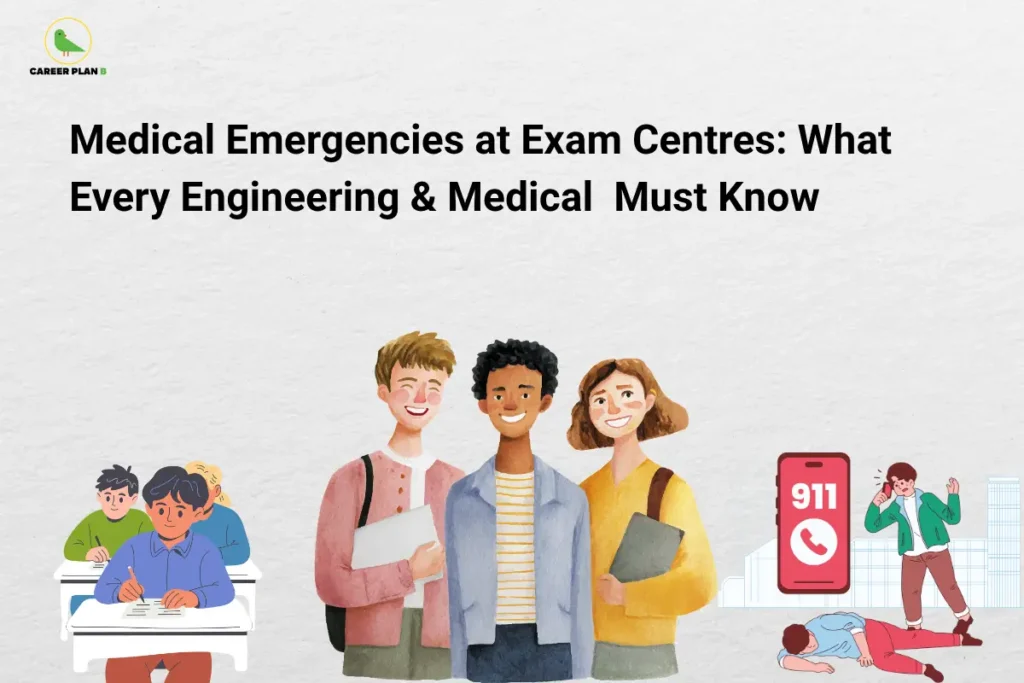
Introduction
Imagine this: You’ve prepared for months. The exam day finally arrives. But halfway through the paper, your hands start trembling, your vision blurs, or you feel a sharp pain in your chest. What do you do? Who do you turn to?
For lakhs of students appearing in JEE, NEET, and other competitive entrance exams every year, exam day health scares are more common than most people talk about. According to health experts, exam-related stress can trigger real physical symptoms — from anxiety attacks to sudden drops in blood pressure. Yet very few students know what support is actually available to them at an exam centre.
This blog breaks it all down — what qualifies as a medical emergency, what exam centres are supposed to provide, your rights as a candidate, and how to prepare smartly before exam day.
What Counts as a Medical Emergency at an Exam Centre?
Not every health issue on exam day is a full-blown emergency — but many are serious enough to affect your performance or safety. It helps to know the difference.
Mild health issues include headaches, nausea, dizziness, or an anxiety episode. These can often be managed with a short break, water, or basic first aid.
Serious emergencies include fainting, severe allergic reactions, asthma attacks, cardiac events, or uncontrolled panic disorder symptoms. These require immediate medical attention and may affect your ability to continue the exam.
Both types deserve proper support, and as a student, you have every right to ask for it.
What Are Your Rights as a Candidate?
Many students don’t realise that exam authorities like the National Testing Agency (NTA) have provisions for medical situations. Here’s what you should know:
- Medical documentation matters. If you experience a health emergency mid-exam, ensure the invigilator records it officially. Get a written acknowledgement if possible.
- Re-test requests can be made. In cases of serious medical emergencies, students can apply for a re-test or compensatory consideration. This typically requires a medical certificate from a registered doctor.
- Chronic conditions must be declared in advance. If you have a known condition like epilepsy, diabetes, or severe asthma, inform the exam authority beforehand. Most boards have an accommodation process for such candidates.
It’s always better to flag a condition early than to deal with a crisis on exam day without any official record.
For Personalized Guidance
What Do Exam Centres Typically Provide?
Exam centres are required to maintain basic student health services on exam day. In practice, this includes:
- A first aid kit accessible to invigilators
- A designated contact person (usually the centre superintendent) for health-related incidents
- Protocols to call emergency services if a student needs hospitalisation
- A rest area or quiet space in some centres for students feeling unwell
However, the quality of these provisions varies significantly from centre to centre. A well-equipped urban centre may have a nurse or doctor on standby. A smaller centre in a remote area may only offer basic first aid.
This is why personal preparation is just as important as relying on the system.
How to Prepare Yourself Before Exam Day
The best way to handle a medical emergency at an exam centre is to reduce the chances of one occurring and to be ready if it does.
Carry the Right Documents
Always bring your prescription or a doctor’s note if you take regular medication. Inform the invigilator before the exam starts so there’s no confusion during the paper.
Pack a Small Health Kit
A small pouch with your inhaler, glucose tablets, antihistamines, or any personal medication can make a big difference. Check the exam authority’s guidelines on what’s permitted inside the hall.
Inform the Centre in Advance
If you have a disability or a chronic health condition, apply for special accommodation through the official exam portal. Most authorities – including NTA – have a formal process for this. Don’t leave it for exam day.
Mental Health Counts Too
Exam stress and physical health are deeply connected. Anxiety, poor sleep, and skipping meals in the days before the exam can make you physically vulnerable. Prioritise sleep, eat well, and if you’re feeling overwhelmed, speak to someone — a counsellor, a parent, or a trusted mentor.
How Career Plan B Helps
A health setback on exam day can feel devastating — but it doesn’t have to define your future.
Career Plan B offers personalised career counselling to help students regroup, reassess, and move forward.
Whether you need guidance on re-attempts, alternative career pathways, or psychometric career assessments to explore new directions, Career Plan B is here to help you find your best next step.
Get In Touch With Us
Frequently Asked Questions
Q1. Can I leave the exam hall if I feel sick?
Yes. Inform the invigilator immediately. You may be allowed to step out briefly or access first aid. However, re-entry rules vary by exam — check the official guidelines in advance.
Q2. Will I get a re-test if I have a medical emergency during JEE or NEET?
It depends on the exam authority’s policy at the time. Typically, a formal application with a valid medical certificate is required. Outcomes vary case by case.
Q3. Can I carry my medication into the exam hall?
Yes, but you must declare it to the invigilator before the exam. Carry your doctor’s prescription as supporting documentation.
Q4. What if the exam centre doesn’t have a doctor?
Ask the centre superintendent to call emergency services immediately. All centres should have a protocol for this. Document everything in writing.
Q5. How can I reduce the risk of a health issue on exam day?
Sleep well the night before, eat a light but nutritious meal, stay hydrated, and avoid last-minute cramming. Arrive early to reduce stress.
Conclusion
Your health is not a distraction from your exam preparation — it is part of it. Understanding your rights, knowing what to expect at an exam centre, and preparing a simple health plan can make a real difference on the day that matters most.
If a health challenge does set you back, remember: one exam does not close all doors. With the right guidance and support, there is always a path forward.
Feeling unsure about your next step after a setback? Reach out to Career Plan B for a personalised counselling session and discover the right path for you.