Team6 · August 12, 2026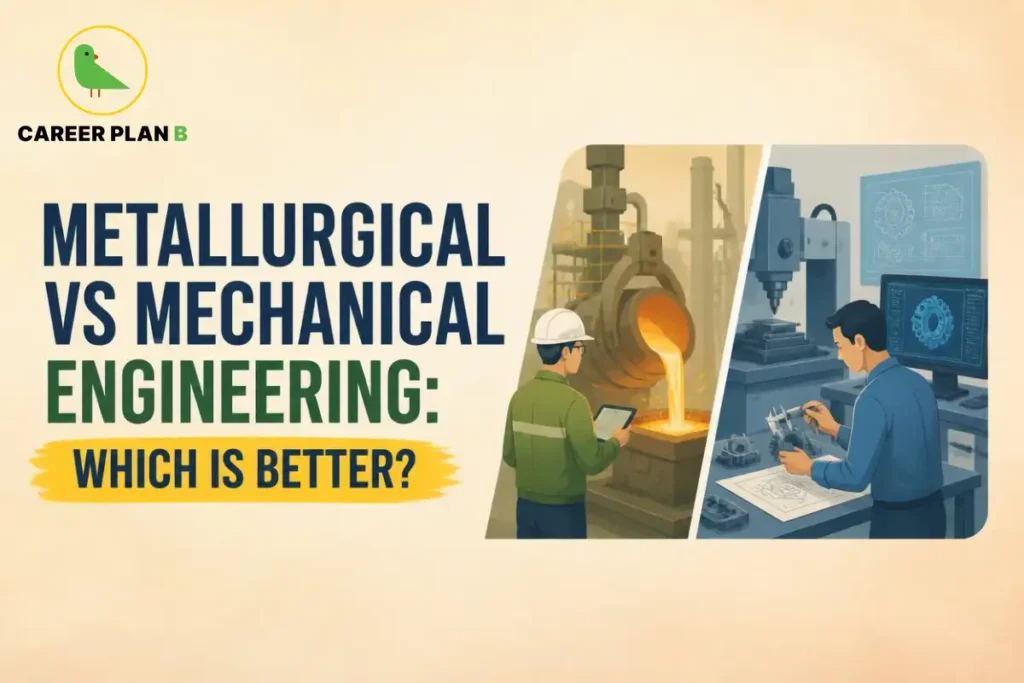
Introduction
Both of these fields sound similar to outsiders, materials and machines, but they attract very different kinds of engineering minds. Comparing metallurgical engineering vs mechanical engineering, which is better requires asking a more useful question: better for whom and doing what kind of work?
One field focuses on understanding and refining the materials themselves. The other focuses on designing the machines and systems built from them. Let’s break down what each path actually involves so you can decide which fits you.
Why This Comparison Doesn’t Have One Right Answer
Neither field is objectively superior. Instead, this comes down to genuinely different interests and working styles. Choosing an engineering branch based on job title alone often leads to a mismatch, so understanding daily work matters more than picking the “better” degree on paper.
What Does a Metallurgical Engineer Actually Do?
Metallurgical engineers work with metals, ceramics, and plastics, focusing on how these materials behave and how to improve them for specific applications.
Core Focus and Daily Work
According to the U.S. Bureau of Labour Statistics, materials engineers plan and evaluate new projects, often specializing in one type of material such as metals, ceramics, or composites (BLS Materials Engineers). This work happens largely in laboratories and offices, since metallurgical engineering careers centre on chemistry, material properties, and testing rather than assembling final machines. According to O*NET, this occupation typically requires a bachelor’s degree in materials science and engineering, along with strong coursework in chemistry and physics (O*NET OnLine Materials Engineers).
What Does a Mechanical Engineer Actually Do?
Mechanical engineers, by contrast, focus on designing and building the actual machines, systems, and devices that materials get turned into.
Core Focus and Daily Work
According to BLS, mechanical engineers analyze problems to see how a mechanical device might help solve them, often working in offices but occasionally visiting worksites where equipment needs attention (BLS Mechanical Engineers). This makes mechanical engineering careers genuinely broader in scope, spanning everything from automotive systems to HVAC design. O*NET data confirms mechanical engineers regularly read blueprints and specify system components to ensure designs meet performance requirements.
Comparing Pay, Job Outlook, and Career Scope
Both fields offer solid, competitive career paths, though the underlying numbers reveal some real differences worth understanding.
| Metric | Materials Engineers (Metallurgical) | Mechanical Engineers |
|---|---|---|
| Jobs Held (2024) | ~23,000 | ~293,100 |
| Median Annual Wage (2024) | $108,310 | $102,320 |
| Projected Growth (2024–2034) | 6% faster than average | 9% much faster than average |
| Typical Focus | Material properties, testing, refinement | Machine and system design |
This table reflects official BLS data (BLS Materials Engineers; BLS Mechanical Engineers). This metallurgical vs mechanical engineering salary comparison shows materials engineers earning a slightly higher median wage, though mechanical engineering offers dramatically more job openings overall. The mechanical engineer job outlook benefits from broader industry demand, since mechanical engineers are needed across nearly every manufacturing sector, adding an estimated 26,500 jobs through 2034 (BLS Economics Daily, Engineering Employment Projections). Meanwhile, the metallurgical engineer job outlook reflects a smaller but genuinely stable, specialized niche within the broader architecture and engineering field, which added about 186,500 openings annually across all disciplines combined (BLS Architecture and Engineering Occupations).
Which Field Actually Fits You Better?
So, which one is right for you? If you’re drawn to chemistry, material science, and understanding why substances behave the way they do, metallurgical engineering likely suits you better. On the other hand, if you enjoy designing machines, systems, and mechanical solutions to practical problems, mechanical engineering probably fits more naturally.
This engineering degree comparison ultimately comes down to depth versus breadth: metallurgy offers focused specialization in materials, while mechanical engineering offers broader applicability across countless industries and machine types.
How Career Plan B Helps
Career Plan B helps students make informed engineering career decisions through personalized guidance, assessments, and structured career planning. Choosing between metallurgical engineering and mechanical engineering requires understanding your interests, strengths, skills, and long-term career goals.
Personalized Career Counselling: Provides expert guidance to help students compare metallurgical engineering careers and mechanical engineering careers based on their interests, abilities, and preferred work environment.
Psychometric & Career Assessment Tests: Helps identify individual strengths, personality traits, technical interests, and suitable engineering career paths, making it easier to choose the right specialization.
Career Roadmapping: Creates a clear step-by-step plan covering degree selection, skill development, certifications, internships, and career opportunities in areas like manufacturing, automotive, aerospace, materials science, and research.
Admission & Academic Profile Guidance: Helps students select the right engineering courses, colleges, and specialization paths while improving their academic profile for better career opportunities.
Get In Touch With Us
Frequently Asked Questions
Q1. Is metallurgical engineering harder than mechanical engineering?
Neither is objectively harder; metallurgy leans more heavily into chemistry and materials science, while mechanical engineering emphasizes physics and systems design.
Q2. Which field has more job opportunities?
Mechanical engineering offers significantly more jobs overall, with about 293,100 positions compared to roughly 23,000 for materials engineers, according to BLS.
Q3. Can a metallurgical engineer switch to mechanical engineering later?
It’s possible with additional coursework or training, though the two fields require somewhat different technical foundations.
Q4. Which field pays more?
Materials engineers show a slightly higher median wage at $108,310, compared to $102,320 for mechanical engineers, according to BLS data.
Q5. Which degree is better for a career in manufacturing?
Both work well in manufacturing, though mechanical engineering offers broader entry points, while metallurgical engineering suits specialized materials-focused roles.
Conclusion
The question of metallurgical engineering vs mechanical engineering, which is better, doesn’t have a single answer because it depends entirely on what you enjoy. Metallurgical engineering rewards a fascination with materials and chemistry, while mechanical engineering rewards a passion for building and designing systems.
If you’re still deciding which path fits your strengths and interests, Career Plan B can help you explore both directions and build a realistic plan to get there. Whichever you choose, both fields offer genuine, lasting career opportunities backed by strong official growth projections.