Team Career Plan B · July 22, 2026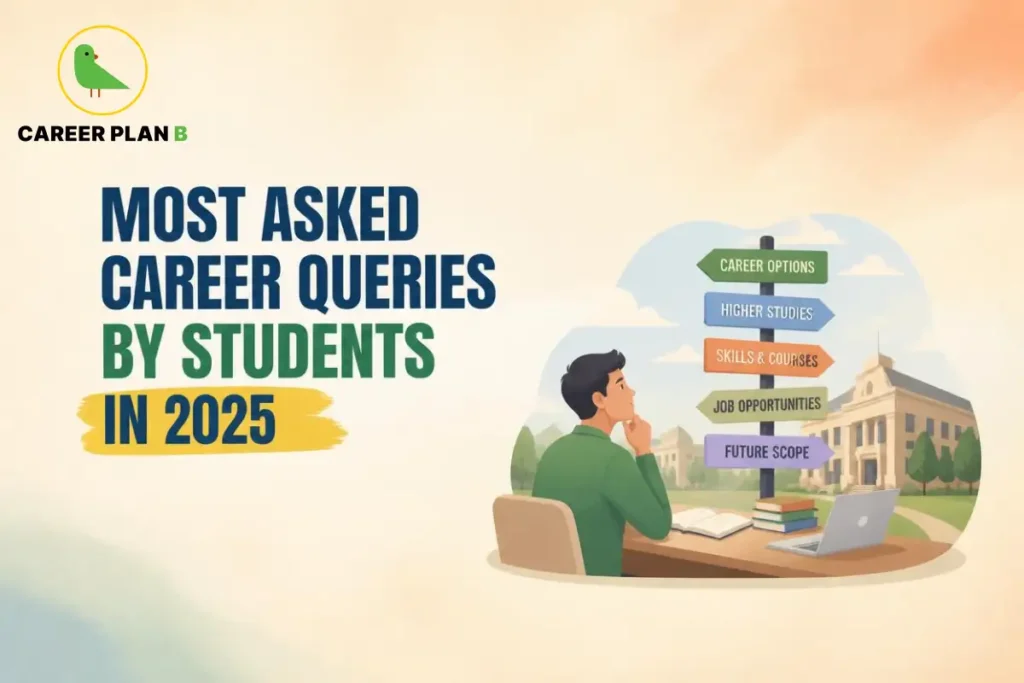
Introduction
Why does choosing a career still feel so confusing, even with endless information online?
Every year, millions of students ask the same handful of questions before making a decision. Some worry about picking the wrong stream. Others wonder if a degree still matters, or if certifications are enough on their own. Many simply feel stuck, unsure which direction fits their strengths.
This guide covers the most asked career queries by students in India for 2025, with clear, grounded answers. You will also learn where to find official guidance if you need more support.
Why Do These Career Queries by students Keep Coming Up?
Career confusion is not a personal failing. It reflects how fast career options are changing every year.
The National Career Service (NCS) is run by the Ministry of Labour and Employment. It has registered over 6.02 crore jobseekers on its platform. This scale shows just how many people actively seek career direction at any given time.
NCS also offers free career counselling, psychometric tests, and skill training links. This reflects a growing, government-backed push to make career guidance more accessible to students.
Which Career Path Actually Suits Me?
This is the single most common question students ask, and it rarely has one fixed answer.
The NCS portal addresses this directly through its psychometric and aptitude tests. These are designed to help students match their strengths to suitable career directions, rather than following trends blindly.
A useful approach is to separate three factors: your interests, your natural strengths, and current market demand. The right path usually sits where these three genuinely overlap.
Do I Still Need a Formal Degree?
This question has become more common as certification-based hiring grows. The honest answer depends heavily on your target field.
Some fields, like finance, have specific regulatory requirements. For example, NISM certification is mandatory for roles like investment advisers, regardless of your degree background.
Other fields, like UX/UI design or digital marketing, are different. These increasingly accept certifications and portfolios alongside or instead of a degree.
For students weighing a formal degree, the University Grants Commission (UGC) offers a useful option. It allows credit transfer from recognised online courses toward a degree. Always check your target role’s actual requirements before assuming either way.
How Do I Know If I’m Choosing the Right Stream After Class 10 or 12?
This question causes real anxiety for many students and their families. There is rarely a single right answer at this stage.
Career counselling services, including those available through NCS Model Career Centres, are designed specifically for this decision point. These centres offer face-to-face and online guidance from trained counsellors.
Choosing a stream is rarely irreversible. Many students successfully switch fields later through bridge courses, certifications, or further study.
Can I Switch Careers Later If I Choose Wrong Now?
Yes, and this happens more often than students expect. Career switching has become far more structured in recent years.
Government skilling platforms, including certification bootcamps and vocational programmes, exist specifically to support mid-path career changes. The Skill India Digital Hub hosts several such structured, short-format courses. These do not require restarting your education from scratch.
The key is building a bridge, not a full restart. Certifications, short courses, and project work can help you pivot without losing your existing progress.
Are Certifications Enough Without Work Experience?
Certifications prove knowledge, but most employers still value applied experience alongside them. This question comes up constantly among students building online skills.
Pairing a certification with real projects, internships, or freelance work significantly strengthens your profile. A certificate alone rarely tells the full story of your capability.
What If I Still Feel Confused After Researching Everything?
This is more common than most students admit, and it is not a sign of poor planning. Career decisions involve genuine uncertainty, even with good information.
Structured counselling exists precisely for this situation. Talking through your options with a trained counsellor often clarifies things faster than researching alone.
It also helps to accept that most career paths are not permanent. Treating your first choice as a strong starting point, rather than a final decision, reduces pressure significantly.
How to Approach Your Own Career Questions
Working through career confusion is easier with a structured approach.
-
Separate your questions.
Write down what you are actually unsure about, whether it is stream, skills, or direction.
-
Use official guidance first.
Explore NCS career counselling before relying only on informal advice.
-
Test your assumptions.
Take psychometric tests or talk to professionals already working in your target field.
-
Build in small steps.
Try a short course or project before committing fully to a new direction.
-
Revisit your plan regularly.
Career decisions are rarely final, and reviewing them periodically is healthy.
This approach works whether you are choosing a first career or considering a change.
What Does the Data Say About career queries by students?
Government platforms increasingly reflect just how many students actively seek structured guidance. The scale of NCS registrations alone points to widespread demand for reliable career support.
However, no single official dataset tracks exactly which questions students ask most often nationally. Instead of estimating this breakdown, this guide draws on commonly observed patterns across recognised career counselling services.
What is clear is that demand for structured, personalised guidance keeps rising each year, rather than declining.
Have Any Doubts?
The Future of Career Guidance for Students
Career guidance is becoming more personalised and technology-driven. The NCS portal itself has recently added AI-driven job matching to improve recommendation accuracy for users.
This points toward a future where career guidance combines official platforms, structured counselling, and smarter tools together. Students who engage with these resources early tend to make more confident decisions.
How Career Plan B Helps
Understanding which career questions matter most for your situation can feel overwhelming without guidance. Career Plan B simplifies this through:
- Personalised Career Counselling: working through your specific doubts around stream, skills, or direction
- Psycheintel Career Assessment Tests: identifying where your strengths genuinely align with career options
- Admission and Academic Profile Guidance: helping you evaluate degree, certification, or bridge-course routes
- Structured Career Roadmapping: a clear step-by-step plan addressing your specific career questions and goals
For Latest Information
Frequently Asked Questions
Q1.What is the most common career question students ask?
Which career path suits their strengths and interests is the most common question. This pattern shows up consistently across career counselling services.
Q2.Is it too late to switch careers after choosing a stream?
No. Bridge courses, certifications, and project work allow students to pivot without restarting their education.
Q3.Are government career counselling services free?
Yes. Services like the NCS Model Career Centres offer free counselling and psychometric testing to registered users.
Q4.Do I need work experience if I already have a certification?
Not always, but pairing certifications with real projects or internships strengthens your profile significantly.
Q5.How often should I revisit my career plan?
Reviewing your plan periodically, especially after major milestones, helps you adjust to new information and opportunities.
Q6.Where can I find reliable, official career guidance?
The NCS portal is a strong starting point, alongside recognised career counselling services suited to your specific stream.
Conclusion
Most career queries by students come down to a handful of recurring questions.Whether it is choosing a stream, switching careers, or relying on certifications, official resources like NCS offer structured, credible guidance. Working through your specific doubts step by step makes the process far less overwhelming.
Start by separating your real questions, testing your assumptions, and using trusted guidance resources.
Ready to work through your own career questions with expert support? Talk to a Career Plan B counsellor and get a personalised roadmap today.