Team Career Plan B · August 12, 2026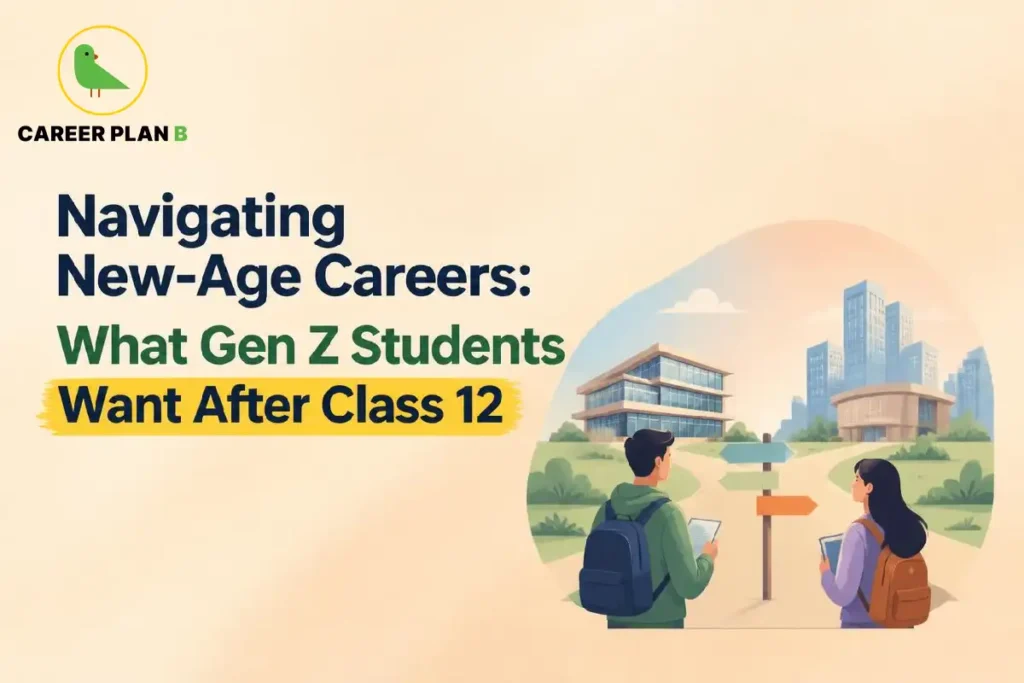
Introduction
New-age careers get discussed constantly, usually framed around which fields are trending or which skills are in demand. That framing misses something genuinely important: what Gen Z students actually want out of a career has shifted meaningfully, not just which jobs they’re chasing.
This guide covers what’s really driving Gen Z career decisions after Class 12, beyond the usual salary and prestige conversation. It looks at flexibility, purpose, mental health, and non-linear paths, and what these shifting priorities mean for how students should actually plan.
Why This Generational Shift Matters for Career Planning
Values Shape Choices More Than Most Families Realise
A career that pays well but conflicts with a student’s genuine values rarely sustains long-term satisfaction, regardless of the compensation. Understanding what actually matters to you before choosing a path leads to considerably better long-term decisions than chasing prestige alone.
Parents and Students Often Have Genuinely Different Priorities
Many families still default to stability and prestige as the primary career metrics, while students increasingly weigh flexibility and purpose just as heavily. This gap creates real friction during career conversations if neither side acknowledges the other’s genuine priorities.
Priority One: Flexibility Over Rigid Structure
What This Actually Looks Like
Gen Z students increasingly value roles offering genuine control over how and where they work, not necessarily fully remote work, but real flexibility within a structured job. This preference shows up in growing interest in freelancing, hybrid roles, and companies with genuinely flexible policies.
How This Affects Career Choice
This priority pushes many students toward fields like digital marketing, design, and technology, where flexible and remote work arrangements remain genuinely more common than in traditional corporate or government roles. It doesn’t mean traditional careers are off the table, just that flexibility now factors into the decision more explicitly.
Priority Two: Purpose and Genuine Impact
What This Actually Looks Like
Many Gen Z students want their work to connect to something they genuinely care about, whether that’s sustainability, social impact, or a specific cause, rather than treating work purely as a means to income. This shows up in growing interest in fields like sustainability consulting, social impact work, and mission-driven startups.
How This Affects Career Choice
Purpose-driven thinking doesn’t mean students reject traditional, well-paying fields entirely. It means they increasingly look for a specific angle within a field, choosing an employer or role that genuinely aligns with something they care about, rather than accepting any role within a broad career category.
Priority Three: Mental Health and Sustainable Work Pace
What This Actually Looks Like
Gen Z students show genuinely greater awareness of burnout and sustainable work pace than previous generations often did at the same career stage. This awareness shows up in more direct questions about work culture and expectations during interviews, not just compensation.
How This Affects Career Choice
This priority doesn’t mean avoiding demanding fields entirely, since many students still pursue genuinely intense paths like medicine or investment banking. It means entering these fields with clearer eyes about the trade-offs involved, rather than assuming intensity alone signals a worthwhile career.
Priority Four: Non-Linear, Multi-Track Careers
What This Actually Looks Like
Rather than committing to one single professional identity immediately, many Gen Z students build multiple skills or income streams in parallel, a core degree alongside freelancing, a certification, or a small independent venture. This reflects genuine comfort with career ambiguity that earlier generations often found more uncomfortable.
How This Affects Career Choice
This priority shows up directly in growing interest in dual-track education, combining a formal degree with independent skill-building or freelance work throughout the degree itself. Students increasingly treat their college years as a period for building several parallel capabilities, not committing to one narrow path immediately.
Priority Five: Transparency and Genuine Information
What This Actually Looks Like
Gen Z students research career paths far more thoroughly before committing than previous generations typically did, using structured assessments, real conversations with professionals, and direct research rather than relying solely on family opinion or general reputation.
How This Affects Career Choice
This priority pushes students toward genuinely informed decisions, verifying actual entry routes, real salary ranges, and honest day-to-day realities before committing years to a specific path. This reduces the number of students who commit to a field based purely on assumption or secondhand impression.
Gen Z Career Priorities at a Glance
| Priority | What It Looks Like | How It Shapes Career Choice |
|---|---|---|
| Flexibility over rigid structure | Preference for hybrid work, freelancing, flexible policies | Draws interest toward tech, design, and digital-first fields |
| Purpose and genuine impact | Wanting work connected to something genuinely valued | Students seek a specific angle or employer within a field |
| Mental health and sustainable pace | Greater awareness of burnout and work culture | Entering demanding fields with clearer expectations |
| Non-linear, multi-track careers | Building multiple skills or income streams in parallel | Growing interest in dual-track education and freelancing |
| Transparency and genuine research | Thorough research before committing to a path | More informed, less assumption-driven career decisions |
What This Means for Families Navigating This Shift
These Priorities Don’t Replace Practical Concerns
Wanting flexibility, purpose, or a sustainable pace doesn’t mean Gen Z students ignore financial stability or genuine career growth entirely. Most students weigh these newer priorities alongside practical concerns, not instead of them.
Understanding This Shift Reduces Real Family Friction
When families understand that a student’s interest in flexibility or purpose isn’t a rejection of hard work or ambition, career conversations tend to go considerably better. Framing these priorities as additional factors, not replacements for practical planning, helps bridge this generational gap.
For Personalized Guidance
How to Actually Plan Around These Priorities
Be Honest About Which Priorities Matter Most to You
Not every priority carries equal weight for every student. Rank flexibility, purpose, stability, and pace honestly for yourself, rather than assuming you should want all of them equally.
Research Specific Roles, Not Just Broad Fields
A “flexible” or “purpose-driven” career looks completely different depending on the specific role and employer within a broad field. Research actual companies and specific roles that match your genuine priorities, rather than assuming an entire industry aligns with what you want.
How Career Plan B Helps
Navigating new-age careers means balancing genuine personal values with practical, informed planning. Career Plan B helps you build that balance through:
- Personalized Career Counselling to clarify which career priorities genuinely matter most to you.
- PsycheIntel Career Assessment Tests to reveal your authentic strengths and working style preferences.
- Career Roadmapping to build a plan that honours your values without ignoring practical realities.
- Admission & Academic Profile Guidance to strengthen your path toward roles that genuinely fit what you want.
Get In Touch With Us
Frequently Asked Questions
1. Does wanting flexibility mean Gen Z students avoid demanding careers?
No. Many students still pursue genuinely intense fields like medicine or investment banking. The difference is entering these fields with clearer expectations about trade-offs, not avoiding demanding work altogether.
2. How do I convince my family that purpose matters alongside salary?
Bring a specific, researched case showing how a purpose-aligned role or employer still meets practical financial goals. Framing purpose as an addition to practical planning, not a replacement for it, generally lands better than presenting it as a trade-off.
3. Is building multiple skills in parallel actually better than focusing on one career path?
It depends on your genuine capacity and goals. Multi-track approaches work well for students who can sustain the added effort without weakening their core academic performance, but focus can serve students better if it’s genuinely where their interest lies.
4. How do I research a career thoroughly before committing, the way Gen Z students are described as doing?
Use structured assessments, speak directly with professionals in your field of interest, and verify actual entry routes and realistic outcomes rather than relying on general reputation or family opinion alone.
Conclusion
New-age careers reflect a genuine shift in what Gen Z students want, not just which fields are trending. Flexibility, purpose, sustainable pace, non-linear paths, and thorough research all shape how this generation approaches career decisions differently from those before it.
These priorities don’t replace practical planning. They add real, additional factors worth weighing honestly alongside financial stability and genuine growth potential.
Trying to navigate your own new-age career priorities after Class 12? Structured career counselling can help you balance what you want with what actually works.