Team6 · October 12, 2026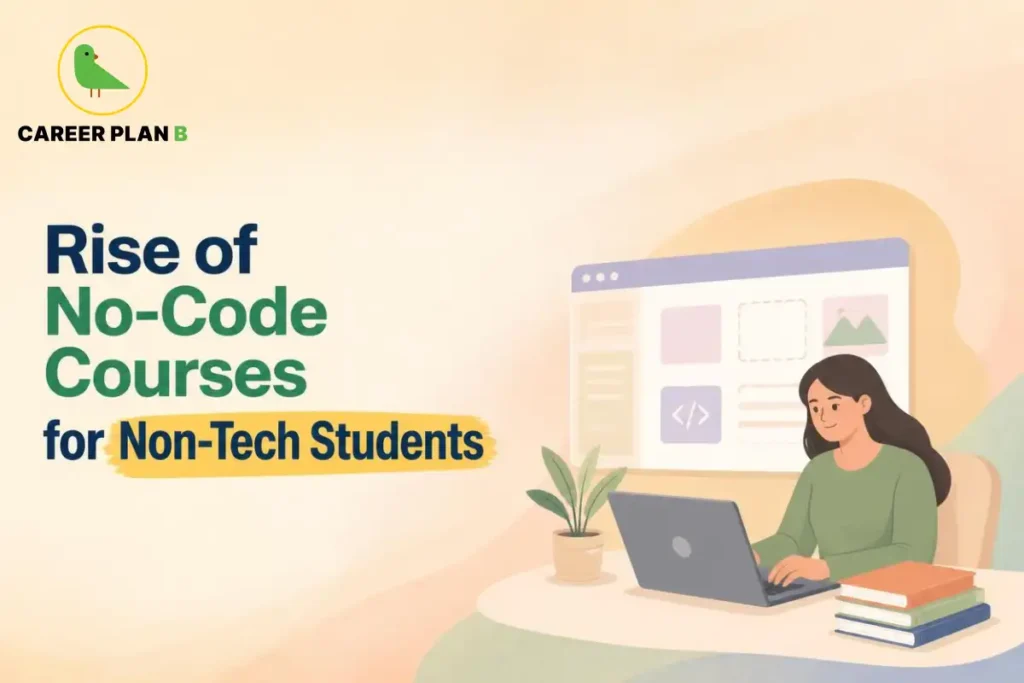
Introduction
Building an app or a website used to mean years of learning to code first. That barrier is genuinely crumbling now. No-code courses for non-tech students are growing fast. They let people from commerce, arts, and humanities backgrounds build real, working tools. No coding required.
This isn’t a gimmick or a shortcut around real skill. It’s a genuine shift in how software gets built. It opens doors for students who never saw themselves as “tech people” at all. This guide covers what no-code actually means. It covers why it’s rising now. It covers where real certification still matters, and what this skill set can and can’t do.
What “No-Code” Actually Means for a Non-Tech Student
No-code tools let you build apps, websites, and automated workflows through visual, drag-and-drop screens. You don’t write code in a programming language. Instead, you arrange blocks and rules. The platform turns these into working software behind the scenes.
This genuinely changes who can build things. A commerce student who understands a business problem deeply can now build a working prototype themselves. They don’t need to wait for a developer to translate their idea first.
Why This Is Rising Now, Not Five Years Ago
Digital skills in India have scaled up a lot in recent years. This makes this kind of learning far more accessible than before. The Skill India Digital Hub alone has onboarded over 1.5 crore candidates. It has also onboarded more than 68,000 employers since its 2023 launch.
This isn’t specific to no-code tools alone. But it reflects a much bigger shift. Digital skill-building, across many formats, has become genuinely normal for students well outside tech backgrounds.
Where Certification Still Matters, Even Without Code
Here’s something worth knowing clearly. Skipping code doesn’t mean skipping real, checkable proof of skill. Certifications tied to the National Credit Framework can still turn structured learning into real, usable credit later.
Recognition of Prior Learning matters here too. If you’ve already built real no-code projects on your own, this process can formally certify skills you already have. You won’t have to start from zero on paper.
Real Roles This Skill Set Opens Up
Business process automation is a genuine, growing use case for this skill. Someone who understands a business workflow, and a no-code tool, can automate real, repeat tasks. No developer needed at all.
Product management is another real fit. Non-tech product managers who can build ideas themselves, using no-code tools, talk far more clearly with tech teams. This beats only describing an idea in words.
The Honest Limits of No-Code Skills
No-code tools have real ceilings. Pretending otherwise would be dishonest. Complex, highly custom software still generally needs a developer and real code underneath it.
No-code skills work best as an add-on to your existing background. They aren’t a replacement for deep tech training, if you want a core engineering role. Treating it as a shortcut into full software engineering sets unrealistic hopes.
Step-by-Step Roadmap to Start
- Pick one no-code platform tied to your interest, whether app-building, automation, or websites.
- Build one small, real project tied to a problem you actually understand well.
- Check whether any course you finish offers a checkable, recognised certificate.
- If you already have informal project work, explore Recognition of Prior Learning for it.
- Add your no-code projects to a portfolio, showing real problems solved, not just tool use.
Have Any Doubts?
Benefits, Challenges, and What the Data Says
No-code learning genuinely lowers the wall to building real digital tools for non-tech students. India’s wider digital skilling push, including the Skill India Digital Hub’s real scale, backs this shift structurally.
However, no official source tracks exactly how many non-tech students land paid roles through no-code skills specifically. Claims about job outcomes tied to this trend usually come from platform marketing, not one checked government dataset. Treat such claims as indicative only.
A real challenge is that no-code skills alone rarely stand out on their own. Pairing them with real knowledge of a specific business or field matters far more than the tool itself.
How Career Plan B Helps
Figuring out if no-code courses for non-tech students genuinely fit your goals can feel unclear. Career Plan B makes this easier through:
- Personalised Career Counselling: helping you see how no-code skills could pair with your existing background
- Psycheintel Career Assessment Tests: checking whether product, automation, or founder-style roles suit you
- Admission and Academic Profile Guidance: helping you find structured, certified no-code learning paths
- Structured Career Roadmapping: a clear plan connecting your no-code skills to a genuine career direction
Get In Touch With Us
Frequently Asked Questions
Q1. Can a non-tech student really build a working app without coding?
Yes, for many use cases. No-code tools handle real app and website building through visual screens, not code.
Q2. Do no-code skills lead to real job roles?
Yes, especially in automation and product roles, though they work best paired with real domain knowledge.
Q3. Is there official certification for no-code skills specifically?
This varies by platform. Look for courses tied to recognised frameworks, or use Recognition of Prior Learning for informal skills.
Q4. Can no-code replace a computer science degree?
No. It’s a genuinely useful add-on, not a substitute for deep tech training in core engineering roles.
Q5. Is there official data on how many students find jobs through no-code skills?
No official dataset tracks this precisely. Treat any specific outcome claims as indicative only.
Q6. Which students benefit most from learning no-code tools?
Students who already understand a specific business or field well tend to benefit the most.
Conclusion
No-code courses for non-tech students mark a genuine shift, not just a trend riding on hype. The real wall around building digital tools has dropped in a meaningful way. India’s wider digital skilling system makes this kind of learning more open than ever before.
That said, the honest version of this story has real limits too. No-code tools won’t turn anyone into a software engineer overnight. They work best paired with real skill in a specific field, not as a standalone shortcut into tech.
If you come from a non-tech background, and a real problem keeps nagging at you, this is worth exploring. Maybe you wish you could just build a tool for it yourself. Start small. Build something real. Let the certification and career talk follow from actual, shown work.
Connect with Career Plan B today to figure out how no-code skills could genuinely fit into your own career path.