Team6 · August 13, 2026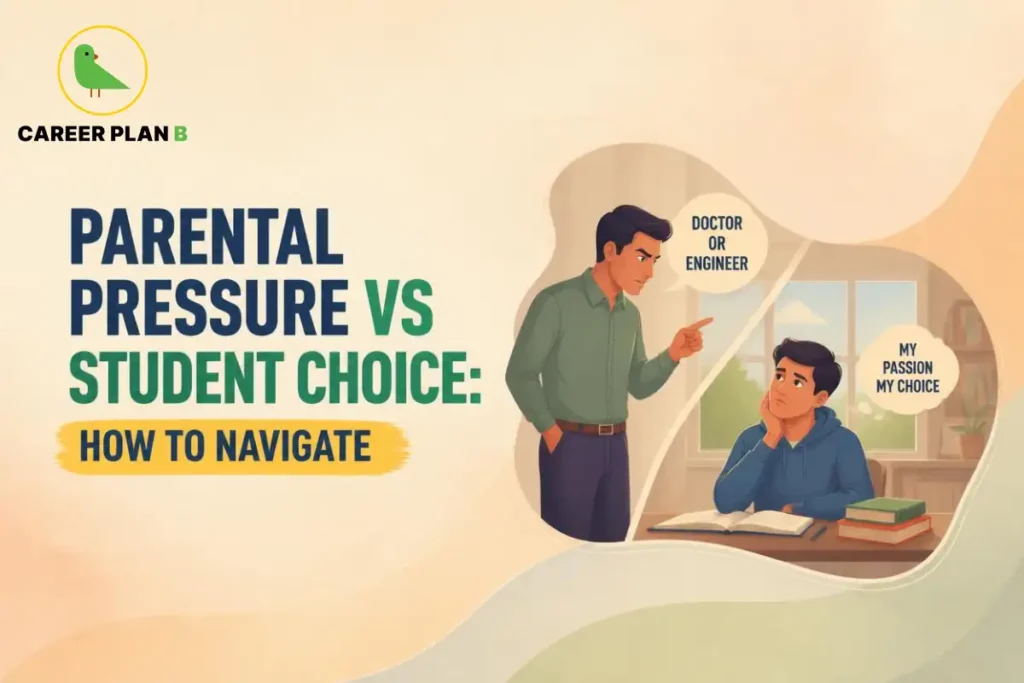
Introduction
Parental pressure vs student choice is one of the most common tensions in Indian households during stream and career decisions. This tension is common, not a personal failing on either side. This guide covers why this pressure exists, and practical ways to navigate it constructively.
Why Does This Tension Exist in Indian Households?
Much of this tension comes from a genuine generational gap in awareness. Many parents grew up with far fewer visible career paths than exist today. NEP 2020’s flexibility, along with newer sectors like AVGC-XR and language AI, are simply unfamiliar to an earlier generation.
Parental pressure vs student choice often reflects outdated information, not a lack of care. Bridging that information gap can ease much of the underlying conflict.
Understanding Where Parental Pressure Comes From
Parental pressure rarely comes from indifference. It usually comes from financial anxiety, unfamiliarity with newer career paths, or love expressed through risk-aversion.
Recognising this does not mean a student must simply comply. It means approaching the conversation with empathy, not treating parental pressure vs student choice as a battle to win. Most parents genuinely want their child to succeed; the disagreement is usually about how, not whether.
How to Bring Verified Information Into the Conversation
Arguments based on feelings alone rarely shift entrenched views. Verified information often works better. The NCERT-UNICEF Career Guidance Book documents 500 career cards covering requirements and entry pathways across 21 domains.
Bringing this documented, government-backed information into a conversation shifts it from opinion versus opinion to shared facts.
Building a Case, Not Just an Opinion
Parents often worry about instability more than the career itself. Addressing that worry directly, with a genuine plan, often works better than insisting on a preference alone.
Research your target career’s entry requirements, realistic timeline, and backup options if things do not go as planned. Presenting this as a considered plan, not just a wish, changes how the conversation lands.
When the Pressure Becomes Overwhelming
Sometimes this tension causes real, ongoing stress rather than everyday disagreement. The Ministry of Education’s Manodarpan initiative offers psychosocial support specifically for students navigating this kind of pressure.
Tele-MANAS, India’s national tele-mental-health programme, offers a toll-free helpline at 14416 or 1800-891-4416, available at any time. If this tension ever feels overwhelming, reaching out for support is a reasonable, healthy step.
Step-by-Step Roadmap for Productive Conversations
- Understand your own genuine interest before entering the conversation, using tools like the Career Guidance Book.
- Research your target career’s entry requirements and realistic outcomes using verified sources.
- Present a considered plan, including backup options, rather than a single preference alone.
- Approach the conversation with empathy, acknowledging your parents’ underlying concerns directly.
- Seek support through Mano Darpan or a counsellor if the pressure feels overwhelming at any point.
Have Any Doubts?
Benefits, Challenges, and What the Data Says
Bringing verified, government-backed information into these conversations genuinely helps shift them from opinion to shared understanding. Resources like the Career Guidance Book give both students and parents comparable facts to work from.
However, no official dataset precisely quantifies how many students experience career-related parental pressure, or its exact impact. Figures suggesting a specific percentage usually come from private surveys, not verified government data. Treat such numbers as indicative only.
Common challenges include entrenched family expectations and limited awareness of newer career paths among parents. Patience and repeated, calm conversations often work better than a single confrontation. New information takes time to sink in.
How Career Plan B Helps
Navigating parental pressure vs student choice without external support can feel isolating for students and parents alike. Career Plan B simplifies this through:
- Personalised Career Counselling: helping students and parents understand each other’s concerns using verified information
- Psycheintel Career Assessment Tests: identifying genuine student strengths to ground family conversations in real data
- Parent and Student Guidance Sessions: bridging generational gaps in awareness around new career paths and NEP 2020’s flexibility
- Structured Career Roadmapping: a clear step-by-step plan that addresses parental concerns about stability directly
For Latest Information
Frequently Asked Questions
Q1.How common is parental pressure around career choices in India?
It is a widely recognised tension, though no official dataset precisely quantifies its prevalence across Indian households.
Q2.How can I talk to my parents about a career they don’t understand?
Bring verified information, like the NCERT-UNICEF Career Guidance Book, to shift the conversation from opinion to shared facts.
Q3.Is it normal to feel stressed about family expectations around career choice?
Yes. This is a common experience, and support through Mano Darpan or a counsellor is a healthy, reasonable step.
Q4.What is Manodarpan, and how can it help?
Manodarpan is a Ministry of Education initiative offering psychosocial support for students navigating stress, including career-related pressure.
Q5. Is there a helpline for students under stress about career decisions?
Yes. Tele-MANAS offers a toll-free, round-the-clock helpline at 14416 or 1800-891-4416.
Q6.Can NEP 2020’s flexibility help ease parental pressure?
Yes. Its Choice-Based Credit System allows some course correction later, easing the stakes of an early decision.
Conclusion
Parental pressure vs student choice does not have to be a battle with a winner and a loser. Bringing verified information, empathy, and a considered plan into the conversation often shifts it toward genuine understanding.
If this tension ever becomes overwhelming, reaching out to Manodarpan, Tele-MANAS, or a counsellor is always a reasonable step.
Connect with Career Plan B today to navigate this conversation with guidance built on verified information.