Team6 · July 23, 2026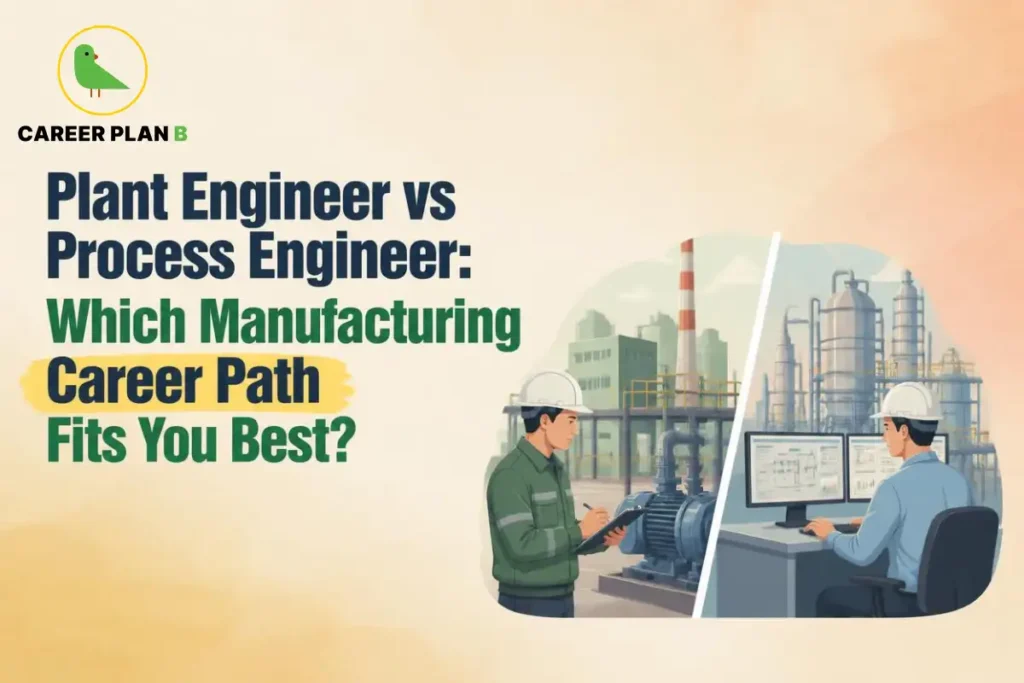
Introduction
These two job titles show up together constantly on employment sites, often described in nearly identical language, yet they represent genuinely different roles within a manufacturing operation. Understanding Plant Engineer vs Process Engineer: Career scope requires looking past this surface-level confusion, since choosing the wrong path based on a vague job description can leave you in a role that doesn’t actually match your interests. Students frequently mix these two titles up precisely because job postings and salary aggregators blend them together carelessly, without clearly explaining what each role actually does on a daily basis. This blog cuts through that confusion, comparing eligibility, scope, and honest salary data in real depth, so you can choose the right path with genuine clarity.
What’s the Core Difference Between a Plant Engineer and a Process Engineer?
Plant Engineer: Keeping the Entire Facility Running
A plant engineer takes responsibility for the physical infrastructure of an entire manufacturing facility, overseeing equipment maintenance, utility systems, and facility-wide operational efficiency. This role often blends engineering knowledge with facilities management, since plant engineers coordinate everything from HVAC systems and power supply to equipment breakdowns across an entire site. Consequently, a plant engineer career in India tends to be broad and reactive by nature, requiring someone comfortable troubleshooting whatever equipment or system issue arises on any given day.
Process Engineer: Designing and Optimizing How Products Get Made
A process engineer, by contrast, focuses specifically on designing, maintaining, and improving the actual manufacturing processes a facility uses to turn raw materials into finished products. This role leans heavily on chemical, mechanical, or production engineering fundamentals, evaluating efficiency, quality, and safety within specific production processes rather than facility-wide infrastructure. Therefore, a process engineer career India-wide tends to be more analytical and improvement-focused, centred on optimizing a defined process rather than maintaining an entire physical plant.
Why These Two Roles Get Confused So Often
Is this confusion just casual imprecision, or does it reflect something deeper about how these roles actually overlap? Genuine industry commentary confirms that these roles frequently get mixed up, confused, or conflated with production or manufacturing engineering titles across most employment websites and even AI tools. This happens partly because both roles work within the same manufacturing environment and partly because smaller companies sometimes combine both sets of responsibilities into a single position out of necessity. Consequently, when evaluating a specific job posting, it’s worth looking closely at the actual listed responsibilities rather than relying purely on the title itself.
Which of These Two Roles Actually Suits You Better?
So how do you decide between these two genuinely different working styles? If you enjoy variety, hands-on troubleshooting, and being responsible for keeping an entire physical facility running smoothly, plant engineering is likely the better fit. If you’re more drawn to analytical, improvement-focused work, evaluating specific processes and finding ways to make them more efficient, safer, or higher quality, process engineering probably suits you more naturally. Plant engineers tend to react to whatever breaks or needs attention across a facility, while process engineers proactively design and refine systems before problems even occur, a meaningful difference in daily rhythm worth considering honestly.
Eligibility and Educational Paths for Both Roles
Plant Engineer: Mechanical, Electrical, or Production Background
Plant engineering roles typically accept graduates from mechanical, electrical, or production engineering backgrounds, since the role demands broad technical familiarity across multiple systems rather than deep specialization in one area. This flexibility makes plant engineering accessible to a genuinely wide pool of engineering graduates, provided they build strong practical, hands-on experience alongside their degree.
Process Engineer: Chemical or Production Engineering Foundation
Process engineering roles, meanwhile, more commonly favour candidates with chemical engineering or manufacturing engineering degrees, since the work often involves evaluating chemical interactions, equipment design, and system performance in depth. Additionally, process engineers frequently need strong simulation software skills and mathematical grounding in fluid mechanics, making this role somewhat more specialized in its entry requirements. Programmes across both paths require approval from the All India Council for Technical Education (AICTE), the Government of India’s apex technical education regulator, ensuring your degree carries proper recognition regardless of which specific role you eventually pursue.
Have Any Doubts?
Career Scope: Where Each Path Leads in Indian Manufacturing
Industries That Hire Plant Engineers
Plant engineers find opportunities across paint manufacturing, metals and mining, engineering firms, and large industrial facilities that need dedicated on-site technical oversight. Companies like Asian Paints and Lloyds Metals and Energy regularly recruit for this role, reflecting how essential facility-wide technical management remains across heavy manufacturing sectors.
Industries That Hire Process Engineers
Process engineers, meanwhile, find strong demand across pharmaceuticals, speciality chemicals, and precision manufacturing, with companies like Piramal Pharma Solutions and Reliance Industries actively hiring for this specialization. This demand connects closely to India’s expanding manufacturing engineering jobs landscape, particularly as sectors under the government’s Production Linked Incentive scheme continue scaling production capacity and need process-focused expertise to maintain quality and efficiency standards.
Salary Comparison: Plant Engineer vs Process Engineer
| Career Stage | Plant Engineer | Process Engineer |
|---|---|---|
| Entry-Level | INR 4 – 5L Facility maintenance & equipment upkeep |
INR 3.5 – 5L Process flow & basic design support |
| Mid-Level | INR 5.5 – 7.5L Plant operations & reliability management |
INR 6.5 – 11L Workflow optimization & troubleshooting |
| Senior-Level | INR 8 – 14.8L Managing plant infrastructure & safety |
INR 12 – 19L+ Advanced system design & scaling |
It’s worth noting honestly that plant engineer salary in India and process engineer salary in India figures vary considerably across different salary platforms, since most rely on relatively small, self-reported sample sizes. That said, process engineering does appear to show a somewhat stronger senior-level ceiling across most sources, likely reflecting its more specialized, analytically demanding skill requirements.
Career Roles and Growth Path
| Career Stage | Plant Engineer | Process Engineer |
|---|---|---|
| Entry-Level | INR 4 – 5L Junior plant work and facility maintenance. |
INR 3.5 – 5L Trainee workflow and design support. |
| Mid-Level | INR 5.5 – 7.5L Facility operations and maintenance management. |
INR 6.5 – 11L Process optimization and system troubleshooting. |
| Senior-Level | INR 8 – 14.8L Plant management and safety oversight. |
INR 12 – 19L+ Advanced engineering management and consulting. |
How Career Plan B Helps
Career Plan B helps students and professionals make informed career decisions by providing personalized guidance, assessments, and structured career planning for choosing the right manufacturing and engineering career path.
Personalized Career Counselling: Provides expert guidance based on individual interests, skills, career goals, and understanding of different engineering roles such as plant engineering, process engineering, production, and manufacturing careers. It helps students identify the career path that best matches their strengths and professional aspirations.
Psychometric & Career Assessment Tests: Identify personality traits, technical abilities, problem-solving skills, and career preferences to help students understand whether they are better suited for facility management, process optimization, manufacturing operations, or other engineering specializations.
Career Roadmapping: Creates a step-by-step career plan covering academic choices, skill development, certifications, industry preparation, and career strategies needed for roles in plant engineering, process engineering, manufacturing engineering jobs, production systems, and industrial operations.
Admission & Academic Profile Guidance: Helps students select the right engineering branch, courses, and colleges while improving their academic profile to prepare for long-term opportunities in plant engineering, process engineering, chemical engineering, production engineering, and India’s growing manufacturing sector.
Get In Touch With Us
Frequently Asked Questions
1. Is a plant engineer the same as a process engineer?
No, though the titles often get confused, plant engineers manage entire facility infrastructure, while process engineers focus specifically on optimizing manufacturing processes.
2. Which role pays more in India?
Process engineering generally shows a stronger senior-level pay ceiling across most sources, likely due to its more specialized, analytically demanding skill set.
3. Do I need a chemical engineering degree to become a process engineer?
Not always mandatory, but chemical or production engineering backgrounds are the most common and strongly preferred qualifications for this role.
4. Which role involves more hands-on maintenance work?
Plant engineering typically involves more hands-on, reactive maintenance work across an entire facility, compared to process engineering’s more analytical, improvement-focused approach.
5. Can I switch between these two roles later in my career?
Yes, significant overlap exists between these roles, and professionals frequently transition between them as their interests and experience evolve over time.
Conclusion
Weighing Plant Engineer vs Process Engineer: Career scope ultimately comes down to whether you’re drawn to broad, hands-on facility management or focused, analytical process optimization within Indian manufacturing. Plant engineers keep entire physical operations running smoothly across mechanical, electrical, and utility systems, while process engineers design and refine the specific manufacturing processes that determine product quality and efficiency. Rather than choosing based on a vague job title alone, it’s worth looking closely at actual daily responsibilities and reflecting honestly on which working style genuinely energizes you.
If you’re still unsure which path fits you best, a conversation with a Career Plan B counsellor can help you weigh your genuine interests and aptitude clearly before you commit to either direction.