Team6 · July 20, 2026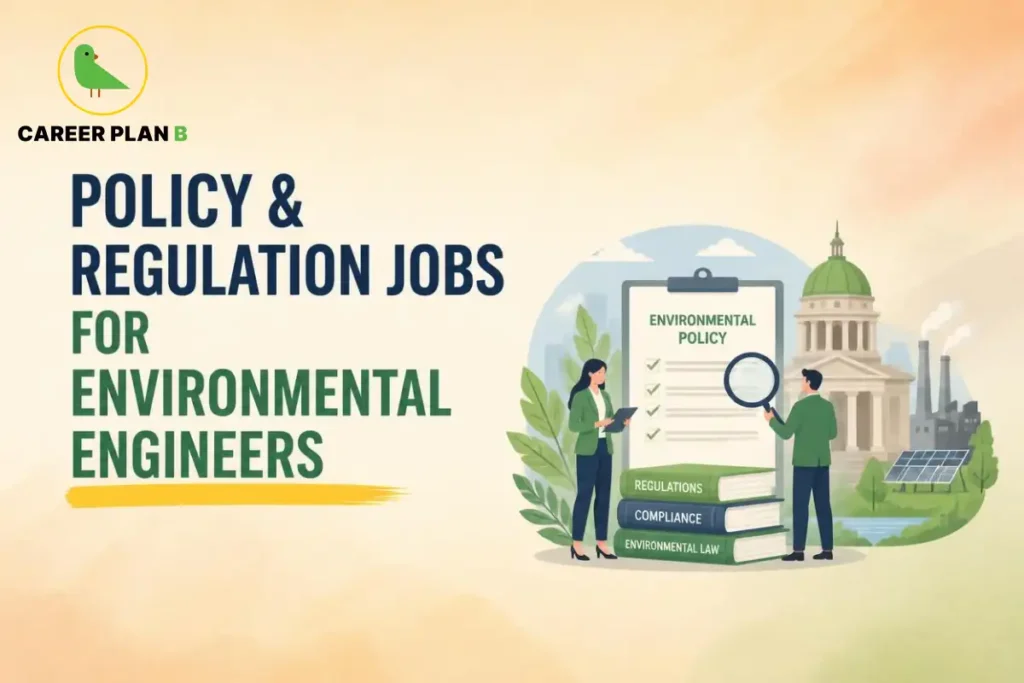
Introduction
Not every environmental engineer spends their career on-site or in a lab. A growing number end up in offices, reviewing regulations, writing permits, or advising lawmakers on the technical realities of environmental policy. Policy and regulation jobs for environmental engineers are a genuine career track, but a lot of students and early-career engineers don’t realize this path exists or aren’t sure how to break into it.
At the EPA, this kind of work spans multiple occupational categories, including engineers; environmental protection specialists who manage compliance with environmental laws; and even lawyers who work directly on regulatory issues, according to the agency’s own careers page (EPA Occupations). If you’ve got a technical background and an interest in how environmental decisions actually get made, this could be a more natural fit than you’d expect.
Why Environmental Engineers Move Into Policy and Regulation
Technical expertise and policymaking need each other more than people often assume. Regulators and lawmakers need to understand the real-world engineering behind environmental problems before they can write effective rules, and that’s exactly the gap environmental engineers are positioned to fill. This is the foundation of most environmental policy careers in this space. Instead of designing systems directly, these engineers help shape the rules that govern how those systems are built, monitored, and held accountable.
What Do These Roles Actually Look Like?
Day-to-day, this work can look quite different from traditional engineering. It might involve reviewing permit applications, interpreting how a specific regulation applies to a facility, or working directly with companies to bring them into compliance with environmental standards. These are the kinds of environmental compliance jobs that exist at federal agencies, state environmental departments, and increasingly within corporate sustainability and legal teams. The technical background still matters here, but the daily work leans more toward interpretation, documentation, and communication than hands-on engineering design.
Regulatory Affairs and Government Roles
Government agencies remain one of the biggest employers in this space. At the federal level, the EPA lists open positions through USAJOBS, the U.S. government’s official employment site, covering everything from engineering roles to specialist and analyst positions focused specifically on compliance and enforcement. This is where a lot of regulatory affairs environmental engineering work happens, often involving permitting processes, legislative review, and coordination between agencies. Environmental engineer government jobs aren’t limited to the federal level either; state environmental agencies, like the California Environmental Protection Agency, also maintain their own career pages for similar roles.
Where Environmental Law Meets Engineering
Some of the most interesting work in this field happens right at the intersection of environmental law and engineering. Major federal laws like the Clean Air Act give the EPA authority to set air quality standards and regulate emissions from both stationary and mobile sources, and implementing those standards requires people who understand the underlying technical detail just as much as the legal framework (EPA Clean Air Act Overview). Engineers who move into this space often end up collaborating closely with attorneys and policy staff, translating complex technical realities into language that supports sound, enforceable regulation.
Have Any Doubts?
Career Paths and Employers
There’s more variety in this space than people often expect, and the right fit really depends on whether you want to work inside government, alongside it, or on the compliance side of private industry.
| Employer Type | Typical Focus |
|---|---|
| Federal agencies (e.g., EPA) | Rule development, permitting, enforcement |
| State environmental agencies | State-level compliance and regulatory implementation |
| Consulting firms | Helping companies navigate and comply with regulations |
| Corporate compliance teams | In-house regulatory strategy and reporting |
Whether you end up as a policy analyst, an environmental engineering professional inside an agency or working in corporate compliance, all these are part of the broader landscape of environmental regulatory careers. According to the U.S. Bureau of Labour Statistics, environmental engineers overall held about 39,400 jobs in the U.S. in 2024, with steady growth projected through 2034, and policy-adjacent roles make up a meaningful slice of that broader employment picture.
How Career Plan B Helps
Career Plan B helps students explore environmental policy and regulatory career opportunities through personalized guidance, assessments, and career planning.
Personalized Career Counselling: Helps identify whether environmental policy, compliance, or regulatory roles match your career goals.
Psychometric & Career Assessment Tests: Evaluate strengths, skills, and interests to suggest suitable career paths.
Career Roadmapping: Provides a structured plan for education, skill development, and career growth.
Admission & Academic Profile Guidance: Supports students in selecting the right courses, colleges, and specialization options.
Get In Touch With Us
Frequently Asked Questions
1. Do I need a law degree to work in environmental policy?
Not necessarily. Many roles are open to engineers with a strong understanding of regulations, though some senior policy roles do involve legal training.
2. What’s the difference between a compliance role and a regulatory affairs role?
Compliance roles focus on ensuring a specific organization follows existing regulations, while regulatory affairs roles often involve helping shape or interpret those regulations more broadly.
3. Which government agencies hire environmental engineers for policy work?
The EPA and state environmental agencies, such as CalEPA, are major employers, though roles also exist across other federal and state departments.
4. Is this career path stable long-term?
Yes, broadly. Regulatory and compliance needs tend to persist even as specific rules evolve, keeping demand for this expertise fairly consistent.
5. Can I move between technical engineering and policy roles?
Yes, and it’s fairly common. Many professionals move between hands-on engineering and policy-focused roles over the course of their careers.
Conclusion
Policy and regulation jobs for environmental engineers offer a genuinely different way to make an impact in this field, one that leans on technical expertise without requiring day-to-day fieldwork or lab time. From federal agencies to state environmental departments to corporate compliance teams, there’s real variety in how this career path can unfold and real demand for people who can bridge the gap between engineering and policy.
If you’re curious whether this path fits your interests, Career Plan B can help you explore it and build a realistic plan to get there. Environmental regulation isn’t going away anytime soon, and there’s meaningful, lasting work for engineers who want to help shape it from the policy side.