Careerplanb · August 13, 2026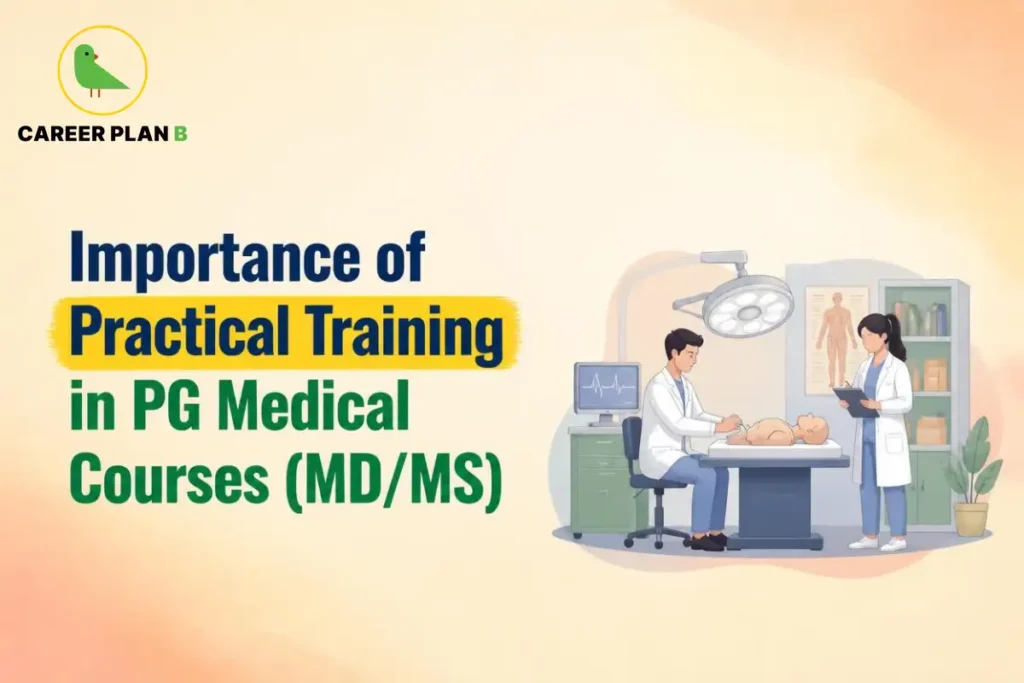
Introduction
Textbooks teach you what a disease looks like on paper. Only practical training PG medical courses teach you what it looks like in a real patient, at 2 AM, when things don’t go according to plan.
For every MD or MS resident, the value of a postgraduate degree isn’t just the letters after your name. It’s built through practical training PG medical courses provide, day after day, ward after ward. This piece looks at why that hands-on component matters so much, and what it actually involves.
What Practical Training Really Means in PG Medicine
Practical training in postgraduate medicine covers far more than watching a senior doctor work. It includes direct patient examination, assisting and eventually leading procedures, interpreting investigations, and making real-time clinical decisions under supervision.
As per NMC’s Post-Graduate Medical Education Regulations, postgraduate students work as full-time resident doctors, gaining structured exposure to outpatient, inpatient, and emergency care settings throughout their course. This isn’t a side activity alongside lectures. It is the core of PG medical training.
Practical Training MD MS: Why It Outweighs Classroom Learning
In MD and MS programs, practical training MD MS components typically outweigh theoretical coursework in terms of time and impact on skill development. A resident spends far more hours in wards, operation theatres, and outpatient departments than in seminar rooms.
This structure exists for a reason. Medicine is a skill-based profession. You cannot learn to suture, intubate, or manage a deteriorating patient purely from a textbook. Practical training MD MS builds muscle memory, clinical judgment, and the confidence to act decisively when it matters.
Postgraduate Medical Training: The Regulatory Backbone
Postgraduate medical training in India is structured under NMC’s Post-Graduate Medical Education Regulations and the accompanying Minimum Standards of Requirements for Postgraduate Courses. These regulations, available on the official NMC website, set out expectations around clinical material, faculty-to-student ratios, and infrastructure that colleges must maintain to run a PG program.
These standards exist precisely because postgraduate medical training without adequate patient exposure produces weaker specialists. Institutions are required to maintain sufficient bed occupancy, OPD volume, and clinical material relative to the number of PG seats they offer, ensuring residents actually get enough hands-on cases to learn from.
MD MS Training: What a Typical Residency Structure Looks Like
MD MS training generally follows a rotational structure, moving residents through different sub-units within their department and, in many cases, allied departments. A surgery resident, for example, rotates through general surgery, emergency surgery, and often related surgical sub-specialties during the three-year course.
Assessment isn’t limited to a final exam either. MD MS training typically includes internal assessments, log books documenting procedures performed, and a dissertation or thesis component, all designed to track how much hands-on competency a resident has actually built over time.
Hands On Training Medical: The Skills You Actually Walk Away With
Hands on training in medical education builds skills no lecture can replace: reading a patient’s condition at a glance, adapting a treatment plan mid-procedure, and staying calm during emergencies. These are the abilities that separate a confident specialist from someone who merely passed an exam.
Residents also build softer but equally critical skills through hands-on training medical rotations, including communicating difficult diagnoses to patients, working within a care team, and making decisions with incomplete information, something no simulation can fully replicate.
Have Any Doubts?
Clinical Exposure and Postgraduate Doctors: A Two-Way Relationship
Early clinical exposure in medical education shapes how confidently a doctor practices for the rest of their career. Clinical exposure postgraduate medical residents receive in their first year often determines how quickly they develop sound clinical instincts by their final year.
The importance of clinical exposure extends beyond just competence. Clinical skills postgraduate doctors build during residency directly influence patient safety outcomes once they begin independent practice, whether in a hospital, private clinic, or academic setting.
Read more:-NEET PG Marks vs Rank 2026: How Cutoffs and Percentile Really Work
Clinical Training in PG Medical Courses: Common Challenges
Clinical training in PG medical courses isn’t without its difficulties. Overcrowded departments, uneven patient load across colleges, and heavy administrative work can sometimes eat into the time residents actually spend learning hands-on.
NMC‘s more recent regulatory updates have tried to address some of these gaps by tying PG seat approvals to clinical material and infrastructure benchmarks, and by mandating minimum attendance requirements for residents to ensure they are actually present for training, not just enrolled on paper.
Importance of Internship PG Medicine: Building the Foundation Early
The importance of internship PG medicine cannot be overstated, since internship is where many future specialists first get comfortable with patient contact before their PG training even begins. A strong internship often makes the transition into postgraduate-level responsibility far smoother.
Residents who had limited hands-on exposure during internship sometimes find the jump into PG-level clinical training more demanding in the first few months, which is part of why continuous, structured exposure throughout the MD/MS course matters so much.
How Career Plan B Helps
Choosing a PG course isn’t just about the college’s name. It’s about the depth of hands-on training you will actually receive. Career Plan B helps you evaluate that before you commit.
- Personalized Career Counselling: Guidance on identifying colleges known for strong clinical exposure in your specialty of interest.
- Psychometric & Career Assessment Tests: Helps you understand whether you thrive in hands-on, high-intensity clinical settings.
- Career Roadmapping: A plan that accounts for training quality, not just admission rank.
- Admission & Academic Profile Guidance: Support in researching a college’s clinical material and infrastructure before you finalize your choices.
Get In Touch With Us
Frequently Asked Questions
Q1. Why is practical training so important in PG medical courses?
Practical training builds the real-world clinical judgment, procedural skill, and decision-making ability that textbooks and lectures cannot fully teach on their own.
Q2. How much of MD/MS training is hands-on versus theoretical?
Postgraduate medical training is heavily weighted toward ward-based, hands-on learning, with residents spending the majority of their time in clinical settings rather than classrooms.
Q3. What regulates the quality of clinical training in PG medical courses?
NMC’s Post-Graduate Medical Education Regulations and the Minimum Standards of Requirements for
Postgraduate Courses set benchmarks for clinical material, infrastructure, and faculty ratios that colleges must maintain.
Q4. Does internship really matter for later PG training?
Yes, A strong internship builds early clinical exposure and comfort with patient care, which makes the transition into PG-level responsibility considerably smoother.
Q5. How can I judge if a college offers strong hands-on training before joining?
Look at the college’s patient volume, bed occupancy, and faculty-to-student ratio, and where possible, speak with current residents about their actual day-to-day clinical exposure.
Conclusion
Practical training PG medical courses provide isn’t a supplementary part of the MD/MS journey. It is the foundation that turns a medical graduate into a confident, capable specialist.
If you want help evaluating which PG programs genuinely offer strong hands-on training for your specialty of choice, reach out to Career Plan B’s counsellors for personalized guidance.