Careerplanb · August 10, 2026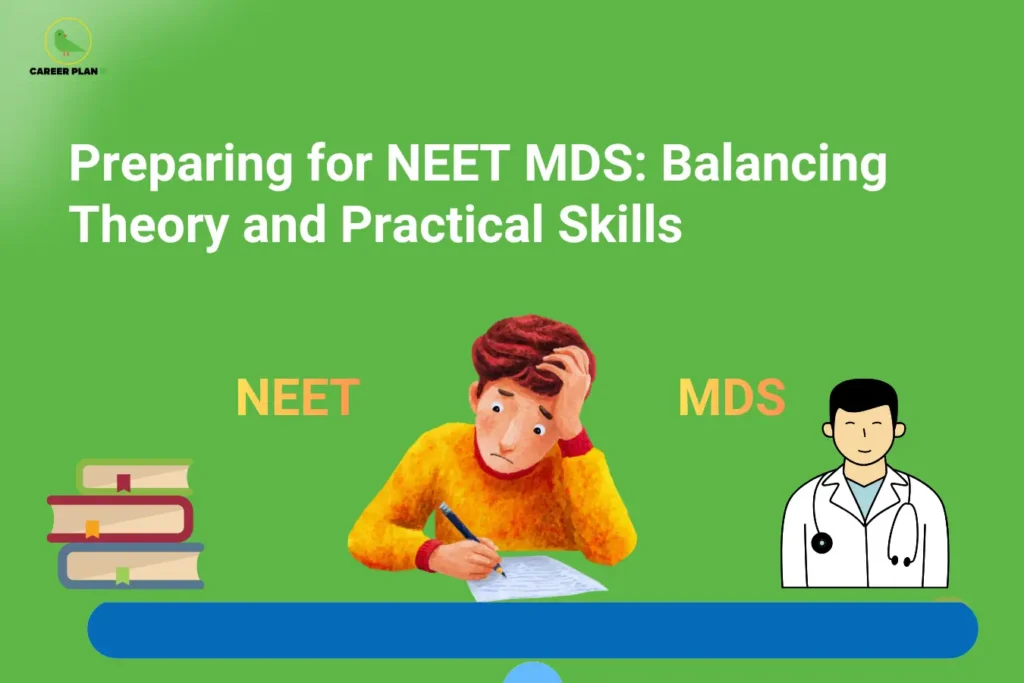
Introduction
As a final-year BDS student, you’re caught between heavy theory books and busy clinical postings. One side demands deep knowledge of dental materials, oral pathology, and pharmacology, while the other requires strong clinical skills, case diagnosis, and treatment planning.
Preparing for NEET MDS is challenging because the exam doesn’t test theory or practical skills in isolation — it demands both. Many students either focus too much on theory and neglect clinical understanding or spend excessive time in clinics but lack conceptual clarity.
The key to cracking NEET MDS lies in balancing theory and practical skills. This balanced approach not only helps you score higher but also prepares you to become a competent dental specialist.
In this comprehensive guide, you’ll learn practical strategies for NEET MDS preparation, how to manage theory and clinical skills effectively, and smart study techniques that toppers use.
Why Balancing Theory and Practical Skills is Crucial for NEET MDS
NEET MDS is a highly competitive exam that evaluates your ability to apply theoretical knowledge in clinical scenarios. Questions often combine concepts from multiple subjects with real-life case-based applications.
If you focus only on theory, you may struggle with image-based and clinical questions. On the other hand, ignoring theory leads to poor conceptual understanding, making it difficult to answer twisted MCQs. A balanced preparation ensures better retention, improved clinical decision-making, and higher confidence during the exam.
Understanding the NEET MDS Exam Pattern
NEET MDS consists of 240 multiple-choice questions to be solved in 3 hours. The paper heavily emphasizes:
- Clinical scenarios and case-based questions
- Image-based questions (radiographs, histopathology slides, clinical photographs)
- Applied dental knowledge
This pattern clearly shows why balancing academics and practicals in dentistry is essential for success.
Effective Strategies for Mastering Theory in NEET MDS Preparation
Theory forms the foundation of your preparation. Here’s how to study it efficiently:
- Build Strong Concepts: Focus on understanding rather than rote learning. Subjects like Oral Pathology, Dental Materials, and Pharmacology require deep conceptual clarity.
- Standard Resources: Use standard textbooks such as Shafers, Craig’s Restorative Dental Materials, and Phillips’ Science of Dental Materials for theory.
- Subject-wise Notes: Create concise, revised notes for every subject. Highlight high-yield topics like developmental disturbances, oral microbiology, and endodontics.
- Regular Revision: Theory needs multiple revisions. Plan at least 3–4 revisions of the entire syllabus before the exam.
How to Strengthen Practical and Clinical Skills for NEET MDS
Practical knowledge helps you tackle clinical and image-based questions effectively:
- Active Clinical Learning: During postings, don’t just observe — actively participate in diagnosis, treatment planning, and procedures.
- Case Discussions: Discuss interesting cases with your professors and peers. This improves clinical reasoning.
- Image Interpretation Practice: Regularly practice reading IOPA, OPG, CBCT, and histopathology slides.
- Clinical Quizzes: Create or join group discussions on diagnosis and differential diagnosis of common oral conditions.
- Record Keeping: Maintain a log of cases you have seen. This helps in quick revision later.
Strong clinical skills for MDS will give you an edge in solving applied questions.
Smart Ways to Balance Theory and Practical Preparation
Here’s a practical approach to integrating both aspects:
- Integrated Study Method: Study a topic theoretically and immediately relate it to clinical cases. For example, while studying Oral Pathology, correlate it with clinical photographs and radiographs.
- Daily Time Management: A sample daily schedule could be:
- 4–5 hours: Theory study + revision
- 2–3 hours: Clinical postings / practical application
- 1 hour: Solving MCQs (mixed theory + clinical)
- Weekly Plan: Dedicate 5 days to theory + clinical integration and 2 days to full-length mock tests and analysis.
- Use Clinical Cases for Theory Revision: Turn every clinical case into a theory revision opportunity. Ask yourself, “Why this treatment?” and “What is the underlying concept?”
- Mock Tests with Clinical Focus: Choose test series that include a good mix of theory and clinical/image-based questions. Analyze your performance thoroughly after every test.
- Group Discussions: Regular peer group discussions on clinical cases help reinforce both theory and practical understanding.
For Personalized Guidance
Common Mistakes Students Make While Preparing for NEET MDS
- Studying theory and practicals in complete isolation
- Focusing only on high-yield theory topics and ignoring clinical subjects
- Neglecting image-based preparation
- Poor time management between college duties and self-study
- Not revising clinical cases regularly
- Relying only on coaching notes without referring to standard textbooks
Avoiding these mistakes will significantly improve your NEET MDS preparation strategy.
How Career Plan B Helps
Balancing theory and practical skills while preparing for NEET MDS can become overwhelming.
Career Plan B offers Personalized Career Counselling and Psycheintel and Career Assessment Tests to help dental students understand their strengths and weaknesses.
Our expert Career Road mapping and Admission Guidance provide structured support so you can prepare more efficiently and make informed decisions about your MDS specialization.
Still Confused?
Get In Touch With Us
FAQ
- How much time should I give to practical preparation for NEET MDS?
At least 30–40% of your total preparation time should focus on clinical application, image interpretation, and case-based learning.
- Which is more important – theory or practical for NEET MDS?
Both are equally important. The exam tests your ability to apply theoretical knowledge in practical scenarios.
- Can I prepare for NEET MDS while doing an internship?
Yes. Use your clinical postings smartly for practical learning and dedicate early mornings or evenings to theory.
- How many revisions are needed for the theory?
At least 3–4 full revisions of the syllabus are recommended for good retention.
- Are image-based questions important in NEET MDS?
Yes. Image-based and clinical scenario questions carry significant weightage. Regular practice is essential.
Conclusion
Preparing for NEET MDS successfully requires a smart balance between theory and practical skills. While strong theoretical knowledge builds your foundation, practical and clinical understanding helps you apply that knowledge effectively.
Create a well-structured study plan that integrates both aspects. Stay consistent with theory revision while actively participating in clinical work. Use mock tests and performance analysis to track your progress.
Remember, NEET MDS is not just an entrance exam — it is the gateway to your future as a dental specialist. Invest time in balanced preparation today to become a confident and competent MDS student tomorrow.
Start implementing these strategies from today. Small, consistent efforts in balancing theory and practical skills will bring you closer to your dream MDS seat.