Team Career Plan B · July 22, 2026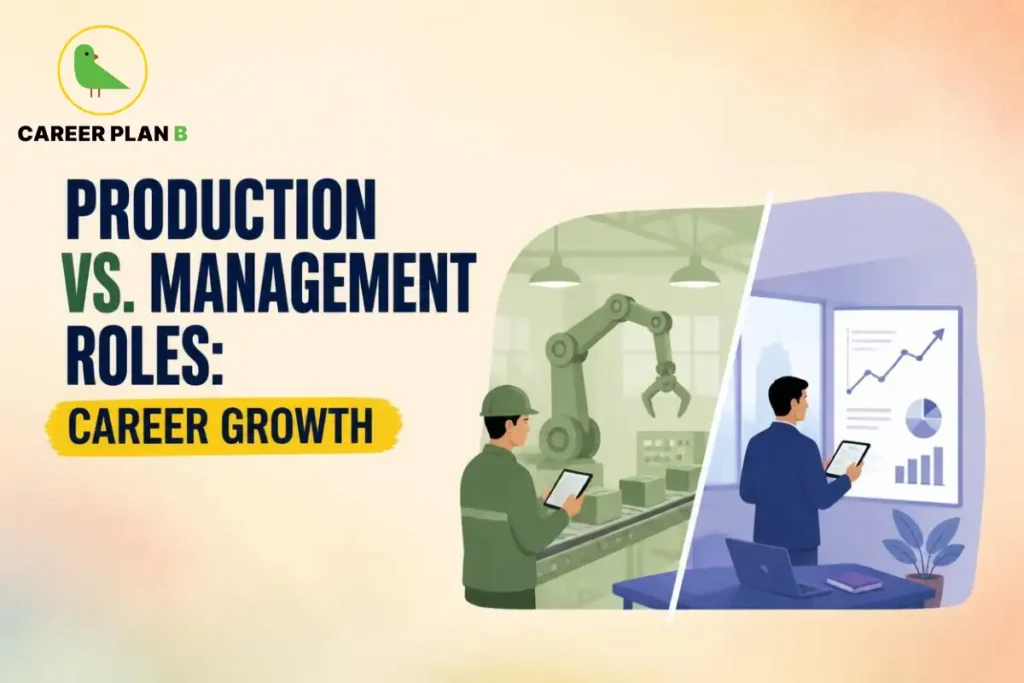
Introduction
At some point, every production engineer faces a fork in the road. Do you stay technical or move into management? Understanding production vs. management roles and career growth matters because this decision shapes not just your pay cheque but your daily work for years to come.
As established in earlier posts on this topic, “production engineer” maps most closely to the U.S. Department of Labour’s official “Industrial Engineers” occupational code (O*NET OnLine Industrial Engineers). Both paths from this starting point lead somewhere genuinely rewarding, but they look quite different. Let’s break down what each one actually involves.
Why This Choice Matters More Than It Seems
This isn’t just about salary. It’s about the kind of work that will fill your days for the next decade. The technical vs managerial career path decision affects everything from your daily responsibilities to the skills you’ll build going forward. Therefore, understanding both paths clearly before choosing matters more than most engineers realize early in their careers.
Staying on the Production Track: What It Looks Like
Many engineers choose to stay technical, and for good reason. This path lets you keep deepening your expertise rather than shifting toward people management.
Skills That Deepen Over Time
On the production track, your technical skills compound year after year. You become the person others turn to for complex process problems, advanced troubleshooting, or system optimization. Meanwhile, your value grows through specialized knowledge rather than through managing larger teams.
Where This Path Can Take You
Strong production engineer career growth on the technical track often leads toward senior engineer, lead engineer, or eventually principal engineer roles. This represents a genuine individual contributor vs. manager choice, not a consolation prize for those who “didn’t make it” into management. In fact, many senior technical engineers earn salaries comparable to mid-level managers while avoiding the administrative burden that comes with people management.
Moving Into Management: What Changes
For engineers who enjoy leading teams and shaping bigger-picture decisions, management offers a genuinely different kind of reward.
New Responsibilities, New Skills
Moving into management means a real shift in daily work. According to the U.S. Department of Labour’s O*NET database, industrial production managers typically handle budgeting, staffing decisions, and reviewing production schedules to resolve inventory and workflow issues (O*NET OnLine Industrial Production Managers). This management role transition requires developing skills in budgeting, conflict resolution, and cross-departmental coordination, skills that go well beyond pure engineering ability.
The Official Path from Engineer to Manager
According to the U.S. Bureau of Labour Statistics, industrial production managers earned a median annual wage of $121,440 in May 2024, with employers sometimes preferring candidates who hold an MBA or another graduate degree for these more senior roles (BLS Industrial Production Managers). This kind of production engineering promotion typically follows several years of hands-on engineering experience, since managers need credibility with the technical teams they oversee.
Comparing Pay and Growth Across Both Paths
Both tracks offer solid long-term prospects, though the numbers highlight some real differences worth understanding.
| Career Track | Median Annual Wage (BLS, 2024) | Core Focus | Growth Projection |
|---|---|---|---|
| Senior Production Engineer | $101,140 (Industrial Engineers) | Technical depth, process optimization | 11% growth through 2034 |
| Industrial Production Manager | $121,440 | Budgeting, staffing, operations oversight | Steady, tied to broader management growth |
| General & Operations Manager | $102,950 | Cross-functional business operations | Faster than average across management occupations |
This table reflects data from the Bureau of Labour Statistics on industrial engineers (BLS Industrial Engineers) and general and operations managers (BLS Top Executives). Both paths fall under the broader umbrella of engineering management careers, and neither is objectively the “better” choice financially.
Have Any Doubts?
How to Decide Which Path Is Right for You
So, how do you actually choose? Start by asking whether you’d rather solve complex technical problems yourself or coordinate other people solving them. If you enjoy staying hands-on with process design and optimization, the technical track likely suits you better. However, if you’re energized by team leadership, budgeting, and organizational strategy, management may be the more fulfilling direction.
This decision also shapes your broader career growth in manufacturing, since industrial engineers overall are projected to add an estimated 38,500 jobs through 2034, among the fastest-growing engineering disciplines tracked by BLS (BLS Economics Daily, Engineering Employment Projections). Both paths benefit from this underlying growth, so neither choice locks you out of opportunity.
How Career Plan B Helps
Career Plan B helps students and professionals make informed career decisions by providing personalized guidance, assessments, and structured career planning for different career growth paths in engineering and manufacturing.
Personalized Career Counselling: Provides expert guidance based on individual interests, skills, career goals, and understanding whether a technical production engineering path or a managerial career path aligns better with their strengths.
Psychometric & Career Assessment Tests: Helps identify strengths, personality traits, leadership abilities, and work preferences to determine suitable career opportunities as an individual contributor or future engineering manager.
Career Roadmapping: Creates a clear step-by-step plan covering skill development, certifications, professional experience, and career progression strategies for achieving technical or managerial career goals.
Admission & Academic Profile Guidance: Helps students choose the right engineering courses, colleges, and specialization pathways while improving their academic profile for better opportunities in production engineering and engineering management careers.
Get In Touch With Us
Frequently Asked Questions
- Is management always the “next step” after production engineering?
Not necessarily. Many engineers build long, successful careers on the technical track without ever moving into management.
- Do managers earn more than senior technical engineers?
On average, yes, though highly experienced senior technical engineers often earn salaries close to management-level pay.
- Can you switch from management back to a technical role?
Yes, though it’s less common. Some professionals do move back to hands-on technical work after gaining management experience.
- What skills matter most for moving into management?
Budgeting, staffing decisions, and cross-departmental communication tend to matter more than pure technical depth once you move into management.
- Is an MBA necessary to move into engineering management?
Not always required, though BLS notes that employers sometimes prefer candidates with an MBA or graduate degree for more senior management roles.
Conclusion
Weighing production vs management roles, career growth really comes down to what kind of work energizes you. The technical track rewards deep expertise and steady specialization, while management offers broader organizational influence and, often, higher pay. Both paths, when chosen deliberately rather than by default, lead to genuinely rewarding long-term careers.
If you’re still figuring out which direction fits you best, Career Plan B can help you explore both paths and build a realistic plan to get there. Whichever track you choose, there’s real, lasting opportunity ahead in this growing field.