Team2 · June 11, 2026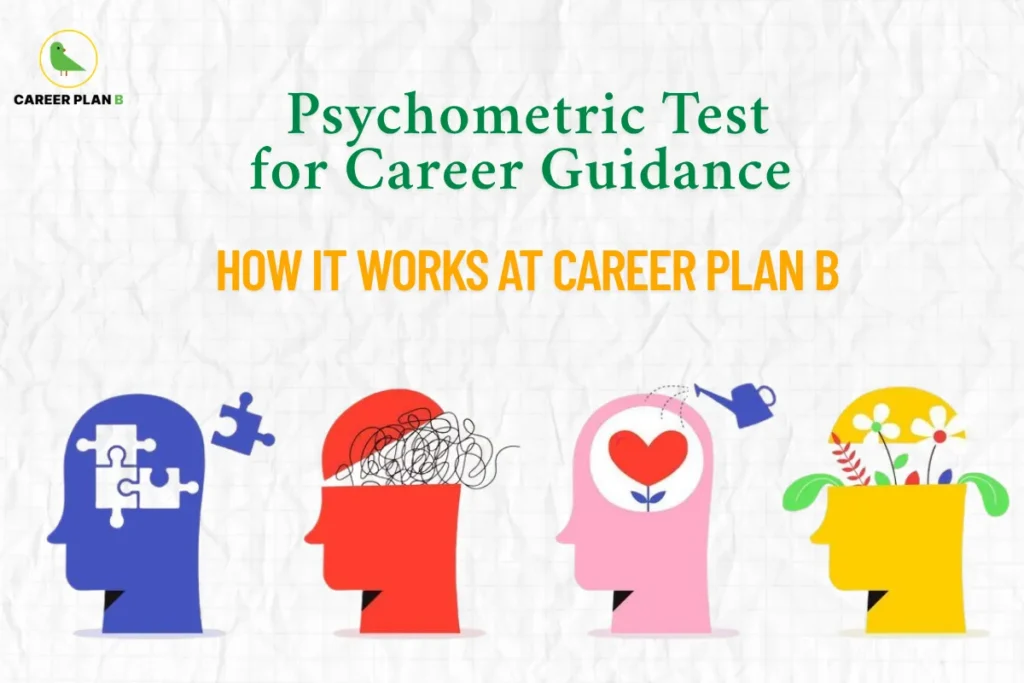
Introduction
Let’s start with a confession: Most people have no idea what a psychometric test actually is.
You’ve probably heard the term thrown around. Your school might have mentioned it. A career counsellor might have suggested it. And your immediate reaction was probably, “Uh… is that like a personality test? Or an IQ test? Or what?”
Here’s the thing: it’s not either of those, and it’s way more useful than you think.
A psychometric test for career guidance is basically a detailed assessment that figures out who you actually are — your strengths, your interests, how you think, what motivates you, how you handle pressure. And then it shows you which careers would actually be a good match for that person.
It’s neither magic nor your horoscope. It’s science. Real data about you that helps you make better decisions.
But here’s where it gets confusing: There are a LOT of psychometric tests out there. Some are good. Some are garbage while some are designed to make money, not to actually help you. Out there some use outdated psychology. Some are built for the American job market and don’t make sense in India.
At CareerPlanB, we use PsycheIntel — our own assessment tool built specifically for Indian students and professionals. And in this article, we’re going to walk you through exactly what it is, how it works, and why it’s different from the random online test you took that one time.
What Is a Psychometric Test for Career Guidance, Really?
Okay, let’s demystify this.
A psychometric test is basically a really detailed questionnaire designed by psychologists (hence “psycho” + “metric”). It asks you questions about yourself — not surface-level stuff like “Do you like math?” but deeper things like “When you’re under pressure, how do you typically react?” or “What kind of problems do you find yourself naturally drawn to solve?”
You answer honestly. There are no “right” or “wrong” answers (this is important). It’s not like a school exam where you’re trying to impress someone. It’s just you, being yourself on paper.
Then the test analyzes your responses and creates a profile. This profile shows:
- What you’re naturally good at: Are you logical? Verbal? Creative? Great with details? A big-picture thinker?
- What interests you: Not what you think you should be interested in. What actually captures your attention.
- Your personality traits: Are you someone who likes working with people or solo? Do you need structure or flexibility? How do you handle conflict?
- Your values: What matters to you in work? Money? Helping people? Creating something? Learning new things?
Once you have all this information, the test matches you with career fields and roles where people with your profile actually thrive.
That’s the basic idea. Pretty straightforward. But the magic is in the details.
Why This Matters (More Than You Think)
Here’s why a psychometric test is actually useful, not just another test to stress about:
You Can Be Good at Something and Hate It: This is huge. You might be naturally good at math. Genuinely. But maybe you hate sitting alone doing calculations. Maybe you want to work with people. Maybe you want to see the impact of your work immediately. A psychometric test catches this. You’re not just looking at “I’m good at math, so engineering” — you’re looking at “I’m good with analysis, but I need human interaction and immediate results, so maybe consulting or product management?”
Your Strengths Might Be Different From What You Think: Some people think they’re creative when they’re actually analytical. Some people think they’re bad at math when they’re actually just anxious about it. Some people don’t realize how good they are at connecting with people. A psychometric test shows you the actual data, not your perception.
Career Decisions Are Too Big to Guess: You’re about to spend 2-4-6 years of your life studying something. You’re about to enter a field you’ll spend 40 years in. That decision deserves more than a guess. It deserves actual information about who you are.
It Removes the Noise: Parents have opinions. Friends are choosing things. Social media is pushing certain careers. A psychometric test cuts through all that and says: “Here’s what the data shows about you. Here are careers where people like you actually thrive.”
PsycheIntel vs. Every Other Test You’ve Taken
Okay, so you’re convinced psychometric tests are useful. But you’re still wondering: Why should I trust this one? Why not just take a free test online?
Fair question. Let’s talk about the difference.
The Problem With Generic Online Tests
If you Google “psychometric test for career,” you’ll find approximately one billion options. Most of them are free. Most of them are also… not very good.
Here’s why:
They’re Built for a Different Job Market: A lot of popular tests are designed for the American or European job market. They ask about careers that don’t really exist in India. They don’t understand Indian education systems (board exams, merit-based culture, family expectations) moreover They don’t account for the specific industries that are actually hiring in India. So you end up with advice like “You should be a forest ranger” when you’re sitting in Gurgaon and you’ve never been camping.
They’re Designed to Make Money, Not Help You: The free tests you find online? They’re fishing. They give you a basic result and then try to sell you the “premium version” or a coaching package or a college degree. The goal isn’t to help you — it’s to get you to buy something. Your actual career fit? That’s secondary.
They’re Often Outdated: Some tests are based on psychological frameworks from the 1980s. Job markets have changed. Industries have changed. What it means to be “analytical” has completely changed in the age of AI and automation. Yet some tests are still using old data.
They’re Generic: They might assess your interests (which is good). But they don’t account for your actual learning style, how you handle real-world pressure, what your personal values are, or what kind of work environment actually makes you happy. You get a career match without understanding why that career matches you.
There’s No Follow-Up: You take a test. You get results. And then… what? You’re on your own. No counsellor to interpret the results. No one to explain what the data means for your specific situation. You’re left staring at a report wondering, “Okay, but what do I actually do with this?”
How PsycheIntel Is Different
PsycheIntel is built differently. Here’s what makes it actually valuable:
It’s Built for Indian Students and Professionals: We designed this test specifically for India. We account for board exams, competitive exams, the Indian education system, Indian job markets, and Indian cultural factors (yes, family expectations are a real factor, and we acknowledge that). When the test recommends careers, it’s recommending actual jobs that are being created in India right now.
It Measures What Actually Matters: PsycheIntel doesn’t just ask “Do you like science?” It goes deeper:
- How do you actually think? (Logic, verbal skills, spatial thinking, numerical ability)
- What genuinely interests you? (Not what you think you should like)
- How do you work best? (Alone or with people? Structured or flexible? Fast-paced or slow and steady?)
- What’s important to you in a career? (Money? Impact? Learning? Creativity? Security?)
- How do you handle real-world situations? (Pressure, failure, ambiguity, change)
It’s not checking boxes. It is building a real picture of you.
It’s Validated and Tested: We didn’t just make this up. PsycheIntel is based on established psychological frameworks and has been tested with thousands of Indian students and professionals. We continuously refine it based on actual outcomes — whether people who took the test and followed the recommendations actually ended up happy in their careers.
You Don’t Get Lost After the Test: Here’s the key: The test is step one. Step two is having an actual conversation with a counsellor who understands your results, can explain what they mean, and can help you figure out what to do with that information. The test is just data. The counsellor is the person who turns that data into an actual plan.
It’s Not Trying to Sell You Anything: Career Plan B is not-for-profit. We don’t get commission if you choose engineering vs. arts. We don’t have partnerships with colleges to push or own a coaching centre that benefits from your choices. Career Plan B genuinely just want to help you find the right path. The test results aren’t a sales tool for us — they’re a guideline for you.
What PsycheIntel Actually Measures
Let’s get specific. When you take PsycheIntel, what are you actually being assessed on?
Your Cognitive Abilities (How You Think)
This isn’t an IQ test. It’s not testing whether you’re “smart” or “dumb.” (Those are useless categories, by the way.) Instead, it’s identifying your thinking style:
Logical-Mathematical Thinking: Can you break down complex problems into steps? Do you naturally think in systems and patterns? Do you enjoy working with data and numbers? This matters for careers in engineering, data science, finance, research.
Verbal-Linguistic Thinking: Are you naturally good with words? Do you express yourself clearly? Do you enjoy reading and writing? and Do you like playing with language? This matters for careers in writing, law, teaching, journalism, communications.
Spatial Thinking: Can you visualize things in 3D? Do you naturally think about how things fit together physically? Are you good with maps or directions? This matters for careers in architecture, design, surgery, engineering, animation.
Numerical Thinking: Do you enjoy working with numbers? Do you spot patterns quickly? Can you do mental math? This matters for accounting, actuarial work, trading, data analysis.
Most people are a combination. You might be strong in verbal and logical thinking but weak in spatial thinking. That combination points to different careers than someone who’s strong in spatial and numerical thinking.
Your Interests (What You Actually Care About)
PsycheIntel digs into what genuinely captures your interest, separate from what your parents think you should like:
People-Oriented Interests: Do you like working with people? Do you enjoy helping, teaching, coaching? Do you care about how others feel? This might point toward psychology, HR, teaching, social work, counselling.
Data-Oriented Interests: Do you find yourself naturally drawn to organizing information? Do you enjoy analysis? Do you like seeing patterns? This might point toward finance, data science, research, business analytics.
Creative Interests: Do you want to make things? Do you enjoy solving problems in novel ways? Do you like expression? This might point toward design, writing, marketing, product development.
Hands-On Interests: Do you want to work with your hands? Do you prefer practical problems over theoretical ones? Do you learn by doing? This might point toward skilled trades, engineering, medicine, veterinary work.
Systems and Organization: Do you like understanding how things work together? Do you enjoy logistics and planning? This might point toward operations, supply chain, project management, business.
Again, you’re usually a mix. Maybe you’re 60% people-oriented and 40% data-oriented. That’s different from someone who’s 80% people-oriented and 20% creative. And it points to different careers.
Your Work Style Preferences
This is where it gets practical. How do you actually work best?
Solo vs. Collaborative: Do you get more done working alone? Or do you thrive in a team? This matters a lot. Some careers are heavily collaborative. Others are mostly solo. Knowing your preference helps you avoid picking a career path that goes against your natural style.
Structure vs. Flexibility: Do you need clear guidelines and processes? Or do you go crazy with too many rules and need freedom to experiment? This affects where you’d actually be happy.
Pace: Do you want fast-paced, constantly changing work? Or slower, more deliberate work? Do you want novelty or routine?
Pressure: How do you handle deadlines and high-pressure situations? Some people thrive under pressure. Others crumble. This affects which roles and industries you’d actually enjoy.
Leadership vs. Individual Contribution: Do you want to manage people? Or would you rather be really good at your individual role? Neither is better — they’re just different.
Your Values (What Matters to You)
Here’s something a lot of career tests miss: What do you actually value?
Some people value financial security above all else. Some people want to help others, even if it pays less while some people want creative expression. There are people who want stability and predictability. Some people want to be the best at what they do.
PsycheIntel asks about these values and matches them to careers where people with those same values typically find satisfaction.
Impact: Do you want your work to help people? Does social impact matter to you?
Financial Success: How important is money? Is it your top priority or just one factor?
Learning: Do you want to constantly be learning new things? Or do you prefer mastering one area deeply?
Autonomy: How important is independence? Do you want to call your own shots?
Prestige: Do you care about status and recognition?
Work-Life Balance: Is flexibility and time outside work important to you?
Again, everyone cares about all of these to some degree. But the mix is different for everyone. And knowing what you actually value helps you choose a career where you won’t wake up in 10 years feeling like you sold out.
What You Actually Get: The Career Report
Okay, so you take PsycheIntel. Then what? What does the output actually look like?
You get a comprehensive report. Here’s what’s in it:
Your Profile Summary
A clear breakdown of your strengths, interests, work preferences, and values. Not in psychobabble. In plain English. “You’re naturally analytical and logical, you’re interested in solving complex problems, you work best with clear guidelines and deadlines, and you value financial success and learning.”
That’s the kind of clarity you get.
Your Top Career Matches
3-5 specific career fields where people with your profile actually thrive. Not generic. Specific. Like: “Data Scientist,” “Management Consultant,” “Business Analyst,” “Product Manager,” “Financial Analyst.” With brief descriptions of what each role actually involves.
Career Clusters
Beyond just specific roles, you see the broader career families where you’d fit. Maybe that’s “Technology and Analysis” or “Business and Finance” or “Creative and Communication.” This helps you understand patterns.
Detailed Career Breakdowns
For each recommended career, the report includes:
- What the role actually involves: Not the job posting version. The real day-to-day.
- Skills you already have: What from your natural abilities you can immediately apply.
- Skills you need to develop: What you’d need to learn to be successful.
- Education pathways: Which college programs, courses, or certifications make sense.
- Job market outlook: Is this field growing? Are jobs being created? What’s the salary range?
- Typical work environment: Do you work in an office? From home? With people or data? Fast-paced or steady?
Things to Avoid
This is actually valuable. The report also tells you which careers would likely frustrate you based on your profile. Not because you couldn’t do them. But because they’d go against your nature. Like if you’re someone who needs autonomy and people-interaction, a job in solitary data-entry wouldn’t be fulfilling, even if you were technically capable of doing it.
Next Steps
A clear pathway forward. If you’re in Class 10, what should you be thinking about? If you’re a graduate, what kind of roles should you target? Instead If you’re already working, how should you think about your next move?
Who Should Actually Take This Test?
You might be wondering: Is this for everyone? Or just certain people?
Here’s the honest answer: It’s useful for anyone who’s confused about their career. But it’s especially valuable at certain life stages:
Class 10 Students (Stream Selection)
This is the golden moment for a psychometric test. You’re about to make a decision that’ll affect your next two years of academic life. Getting actual data about your strengths and interests before you choose is way smarter than guessing.
The test shows you whether you’re actually suited for science, or whether you’d thrive more in commerce or arts. And it does this based on your actual abilities and interests, not what your parents expect or what “sounds smart.”
Class 12 Students (College Planning)
By Class 12, you have more specific choices. Do you want engineering? Medicine? Defence? Law? Commerce? Arts? The test helps you understand which of these actually match your profile and which ones you’re only considering because of external pressure.
Recent Graduates (Job Hunting)
You have a degree. You’re job hunting. You’re not sure what roles actually make sense for you. A psychometric test cuts through the confusion and shows you which career paths would actually be satisfying, not just which ones you’re “qualified” for technically.
Career-Changers (Mid-Career Professionals)
You’re 5, 10, 15 years into a career and you’re realizing it’s not right. A psychometric test helps you understand what you’ve actually been good at in your current role, what you’ve actually enjoyed, and which other fields would leverage those strengths.
Anyone Feeling Stuck
You don’t have to fit into a specific age category. If you’re confused, stuck, or feeling like you made the wrong choice, a psychometric test is genuinely useful. It gives you data instead of guessing.
How Career Aptitude Tests Compare
You might be wondering: Is a psychometric test the same as a “career aptitude test” or a “career interest test”?
Not exactly. They’re related but different:
Career Aptitude Test: Tests your abilities. What are you good at? What comes naturally? This is valuable, but it’s only part of the picture.
Career Interest Test: Tests what you enjoy. What captures your interest? This is valuable, but someone might enjoy something they’re terrible at.
Psychometric Test: Tests abilities, interests, personality, work style, and values all together. It’s more comprehensive. It’s asking: “What are you good at? What do you enjoy? How do you work best? What matters to you? What will actually make you happy?” That’s a more complete picture.
So when we talk about PsycheIntel, it’s pulling from all three approaches. You get your abilities, your interests, and your personality profile. That’s why it’s more useful than any single test alone.
The Big Question: Free Online Tests vs. Professional Assessment
Here’s what we hear a lot: “Why should I pay for a psychometric test when I can take a free one online?”
Fair question. Let’s be honest about the trade-offs:
Free Online Tests: What You Get
- Quick results. Sometimes within minutes.
- You can take it in your pajamas.
- No commitment. No one calling you to follow up.
- You might get some useful insights.
Free Online Tests: What You Lose
- Generic results. The test doesn’t know your actual situation.
- No guidance on what to do with the results. You’re staring at a report wondering, “Okay, but what now?”
- Low accuracy for Indian contexts. Most are built for other countries.
- No follow-up. If you have questions or the results don’t make sense, there’s no one to ask.
- You might end up more confused. If the results tell you five different things, how do you decide?
Professional Psychometric Assessment With a Counsellor
- Personalized results. The test is designed for India. The counsellor understands your specific situation.
- Expert interpretation. Someone explains what the results mean, why they matter, and what you should do about them.
- Real conversation. You can ask questions. You can clarify. You can get guidance that goes beyond the test.
- Next-step clarity. You walk out with an actual plan, not just a report.
- Accuracy. You’re paying for a validated tool, not a free quiz.
The Real Difference
A free online test might tell you, “You should be in engineering.” A professional psychometric assessment with CareerPlanB tells you, “Based on your analytical strengths, creative interests, preference for independent work, and values around learning, here are five specific career paths that would be fulfilling. Here’s why each one matches your profile. Here’s how to actually pursue each one.”
See the difference?
The first is a guess. The second is a plan.
Have Any Doubts?
How to Book Your Psychometric Assessment in Gurgaon
Okay, so you’re thinking: “Alright, I want to actually take this test and understand my career options.”
Here’s how it works:
Step 1: Free Initial Chat
First, book your free 20-minute discovery session. We just talk. What’s your situation? What’s confusing you? Do you think a psychometric assessment would actually help? No commitment. No payment.
Step 2: Decide If Assessment Makes Sense
Based on that conversation, we either recommend a psychometric assessment, or we tell you that you might need something different. (Sometimes the answer isn’t a test — it’s just having the right career conversation with a counsellor. We’re honest about this.)
Step 3: Take PsycheIntel
If we agree an assessment makes sense, we set you up with PsycheIntel. It’s online. Takes about 45 minutes. You can do it whenever.
Step 4: Results Interpretation Session
Once you complete the assessment, we sit down (in-person or online, your choice) and go through your results. We explain what they mean. We talk about what careers match your profile and answer all your questions.
Step 5: Career Roadmap (If You Want It)
Based on your assessment results, we can then create a full career roadmap — specific next steps, education pathways, skill development, timeline, everything.
FAQs: Questions People Usually Ask
- Is a free online psychometric test accurate enough?
Depends on what you want it for. If you want to satisfy your curiosity, sure. If you want to make a major life decision, probably not. A free test gives you a rough idea. A professional assessment gives you data you can actually build a plan on.
- Do I need this test to figure out my career?
Not necessarily. Some people know exactly what they want without a test. But if you’re confused — which is most people — it’s genuinely useful. It’s not magic. It’s just data about yourself that helps you decide.
- How long does the assessment take?
About 45 minutes to take the test. Then you schedule an interpretation session where we go through the results together. That’s another 1-2 hours depending on how deep you want to go.
- Can this test tell me for sure what career to choose?
Not “for sure.” But it narrows down your options significantly based on your actual profile. Instead of 100 possible careers, you’re looking at 5-10 that actually match who you are. That’s way more useful.
- What if the results don’t match what I expected?
That happens. Sometimes the data shows you something you didn’t expect about yourself. That’s actually valuable. That’s the point — to see something real about yourself that you might have missed.
- How much does this cost?
We’re transparent about pricing. Your free discovery session is truly free. The assessment itself has a fee. We’ll tell you exactly what it costs when you book.
- Can my parents be in the session?
You can choose. Some people prefer just the counsellor while some want their parents there for context. Some people have a private session and then bring parents to a separate conversation. It’s up to you.
Ready to Understand Yourself Better?
Career confusion is real. And the stakes feel high. But here’s the thing: You don’t have to guess.
A psychometric assessment like PsycheIntel gives you actual data about who you are, what you’re good at, what interests you, and what would actually make you happy in a career. Not what your parents want. Not what society expects. What would actually work for you.
And then you have someone who understands that data and can help you figure out what to do with it.
That’s how you move from confused to confident. From guessing to planning.
Book Your Free Discovery Session
Find clarity. Make informed decisions. Plan your actual future – not just hope for one.