Team Career Plan B · July 22, 2026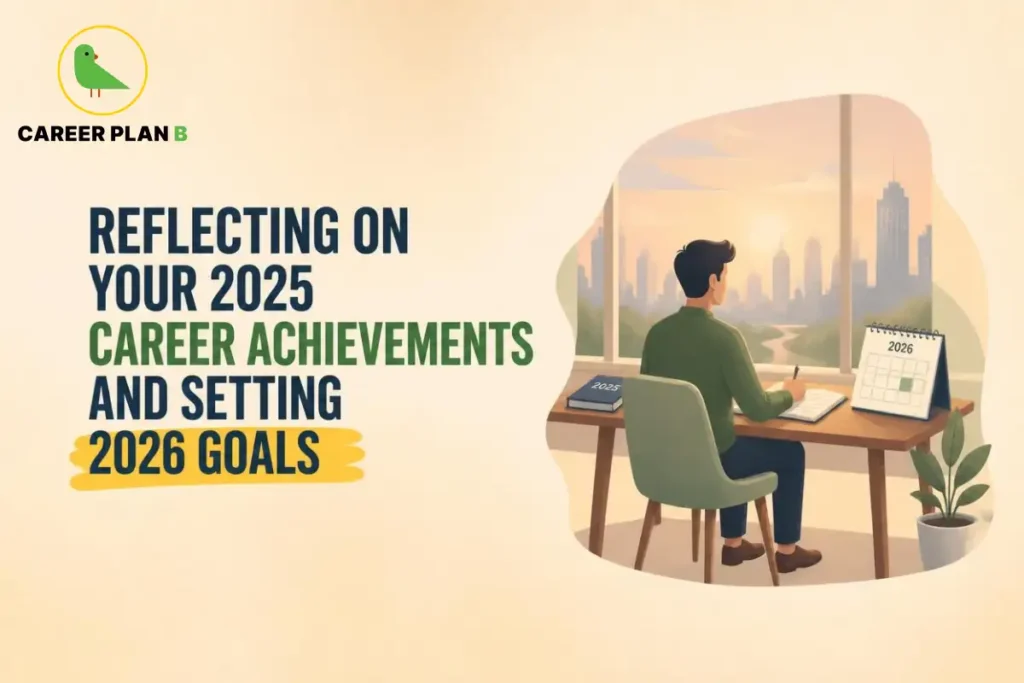
Introduction
What did you actually achieve this year, beyond just staying busy?
Most students move from one deadline to the next without pausing to reflect. Yet reflection is often what separates steady progress from random effort.
This guide covers how to review your 2025 Career Achievements and Goals and set 2026 Career Achievements and Goals with real structure. You will learn a simple reflection process, and how to turn it into a clear, actionable plan.
Why Reflection Matters Before Setting 2026 Goals?
Setting goals without reflection often means repeating the same gaps from the previous year. Reflection helps you notice patterns you might otherwise miss.
This does not require a formal framework. It simply means reviewing what you did, what worked, and what did not, before deciding what comes next.
Step 1: Review What You Actually Completed in 2025
Start by listing concrete outcomes, not just intentions. This includes courses finished, certifications earned, internships completed, or projects built.
If you used platforms like the Skill India Digital Hub or SWAYAM, check your certification history there directly. This gives you an accurate, verified record rather than relying on memory alone.
Include smaller wins too, like consistent study habits or improved skills. These often matter more than they feel like at the moment.
It also helps to note what you started but did not finish. Half-completed courses or abandoned projects often reveal where your motivation or planning broke down.
Step 2: Identify Gaps Between Your Goals and Your Results
Compare what you planned at the start of 2025 with what you actually achieved. Be honest rather than critical during this step.
Common gaps include unfinished certifications, skipped internships, or unclear career direction. Identifying these clearly is more useful than vague statements like “I could have done more.”
If you registered on the National Career Service (NCS) portal, its psychometric tools can help here. They clarify whether your goals matched your actual strengths. This adds an objective check to your self-review.
Step 3: Set Specific, Trackable Goals for 2026
Vague goals like “get a good job” rarely lead to consistent action. Specific goals work far better.
Instead, try goals like “complete one recognised certification by June.” Another example is “apply to two apprenticeship programmes by March.”
The National Apprenticeship Promotion Scheme (NAPS) is a useful, structured option here. It lets you combine earning with learning in 2026.
Write down two to three goals maximum. Too many goals at once usually reduces follow-through rather than improving it.
Step 4: Choose the Right Certification or Skilling Path
Once your goals are clear, match them to a specific, credible learning route. Avoid choosing a path just because it is popular online.
Government-backed platforms like Skill India Digital Hub and SWAYAM offer structured, recognised options. Sector-specific bodies, like NISM for finance roles, do too. Choosing based on your target field matters more than choosing based on trends.
Step 5: Build a Simple Tracking System
Goals without tracking often quietly disappear by mid-year. A simple system prevents this.
This can be as basic as a monthly checklist or a shared document with milestones. The goal is visibility, not complexity.
Reviewing this tracker at the same time each month makes the habit easier to sustain. Consistency matters more than the specific tool or format you choose.
Common Mistakes Students Make During This Process
A few patterns tend to undermine reflection and goal setting, even with good intentions.
Comparing your progress to others online is one common trap. Social media often shows curated highlights, not the full, messy reality of someone’s career journey.
Another mistake is setting goals based on trends rather than genuine interest or verified demand. A field that looks exciting online may not match your actual strengths or long-term plans.
Finally, many students skip the reflection step entirely and jump straight to new goals. Without reviewing what actually happened in 2025, new goals often repeat old mistakes.
How to Apply This Process Practically
Turning reflection into action works best with a clear, repeatable structure.
- Block time for review. Set aside a dedicated hour to honestly review your 2025 progress.
- Write down real outcomes. List completed courses, certifications, and projects, not just plans.
- Set two to three 2026 goals. Keep them specific, measurable, and realistic.
- Match goals to official platforms. Use NCS, Skill India Digital Hub, SWAYAM, or NAPS based on your field.
- Review progress monthly. Short, regular check-ins work better than a single year-end review.
This process works whether you are focused on academics, certifications, or early career steps.
Benefits, Challenges, and What the Data Says
Structured reflection and goal setting consistently improve follow-through compared to vague planning. Official platforms like NCS and Skill India Digital Hub also provide measurable ways to track real progress.
However, no single official dataset tracks how goal setting specifically affects individual student outcomes. Instead of estimating this impact, this guide focuses on structured practices supported by these platforms’ own design.
Challenges include staying consistent past the first few weeks, and avoiding goals that sound good but lack real specificity.
Have Any Doubts?
The Outlook for Student Career Planning in 2026
Government platforms are expected to keep expanding structured pathways through 2026. Apprenticeships, certifications, and AI-supported career guidance all point toward more measurable, trackable progress.
This makes 2026 a strong year to move from informal planning to a more structured, platform-supported approach.
How Career Plan B Helps
Understanding how to turn your 2025 reflection into a real 2026 plan can feel overwhelming without guidance. Career Plan B simplifies this through:
- Personalised Career Counselling: reviewing your 2025 progress and translating it into realistic 2026 goals
- Psycheintel Career Assessment Tests: confirming whether your goals genuinely align with your strengths
- Admission and Academic Profile Guidance: matching your goals to recognised certification or degree pathways
- Structured Career Roadmapping: a clear, trackable plan connecting your reflection to concrete 2026 milestones
For Latest Information
Frequently Asked Questions
Q1.How do I start reflecting on my 2025 career progress?
Begin by listing concrete outcomes, like completed courses or certifications, rather than general impressions.
Q2.What if I did not achieve much in 2025?
That is still useful information. Identifying gaps honestly helps you set more realistic, achievable goals for 2026.
Q3.How many goals should I set for 2026?
Two to three specific, trackable goals usually work better than a long, unfocused list.
Q4.Which official platforms can help me track progress?
NCS, Skill India Digital Hub, SWAYAM, and NAPS all offer structured, verifiable ways to build and track skills.
Q5.Should my 2026 goals focus only on certifications?
Not necessarily. Goals can include internships, apprenticeships, or specific skill-building milestones as well.
Q6.How often should I review my progress in 2026?
Monthly check-ins tend to work better than waiting until the end of the year to reflect again.
Conclusion
Reflecting honestly on your 2025 career achievements makes your 2026 goals far more realistic.
Reviewing real outcomes, identifying gaps, and setting specific goals creates a clear, trackable path forward. Platforms like NCS, Skill India Digital Hub, and NAPS give you structured ways to act on these goals.
Start by reviewing what you actually completed, then set two to three clear priorities for 2026.
Ready to turn your 2025 reflection into a structured 2026 plan? Talk to a Career Plan B counsellor and get a personalised roadmap today.