Team6 · October 12, 2026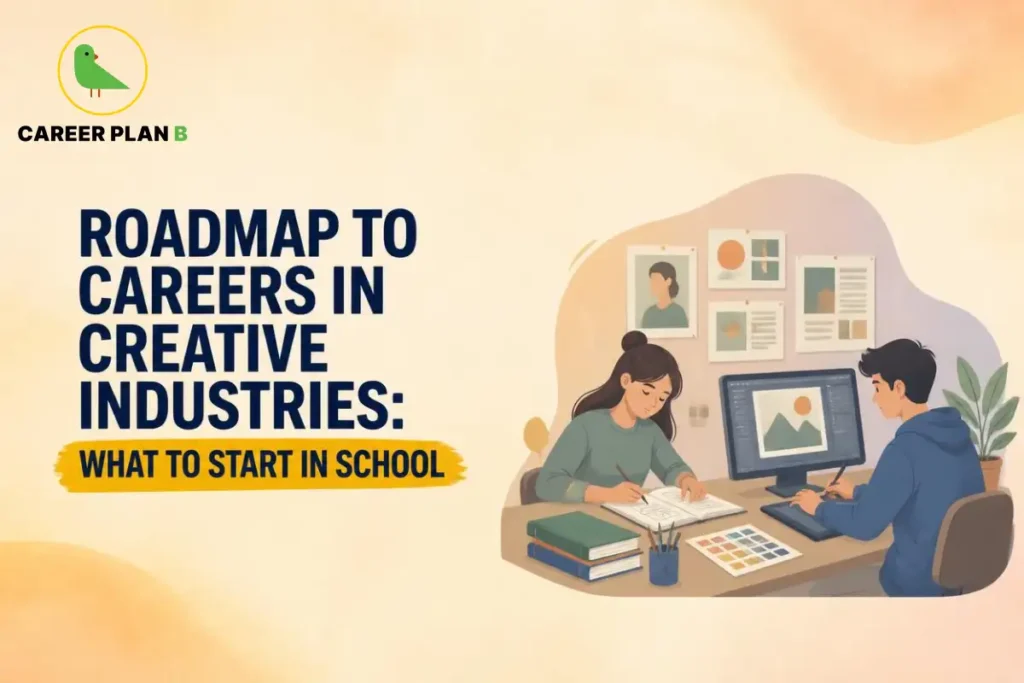
Introduction
Careers in creative industries often get treated as something to figure out later, well after board exams and stream selection are settled. That instinct works against students, since creative fields reward early, sustained skill-building far more than a last-minute portfolio scramble.
This guide covers a real, practical roadmap for careers in creative industries, starting from school itself. It walks through what to build at each stage, across writing, visual design, film and media, and music, so your school years become genuine preparation rather than time spent waiting to start.
Why Creative Industries Reward Starting Early
Portfolios Take Real Time to Build
Unlike fields where a strong final year of preparation can compensate for a slow start, creative industries evaluate you primarily on demonstrated work. A portfolio built over several years reads as genuinely stronger than one assembled in a rushed final term.
India’s Creative Sector Has Real Institutional Backing Now
The Union Cabinet approved the National Centre of Excellence for AVGC-XR in September 2024, per an official Press Information Bureau release, backing animation, gaming, comics, and extended reality as a formally recognised growth sector. This kind of institutional support signals genuine, structural momentum behind creative careers, not just informal enthusiasm.
Stage One: Middle to Early High School, Building Broad Exposure
Try Multiple Creative Formats Before Narrowing
Resist specialising too early. Sample writing, sketching, photography, basic video editing, and music if any of these genuinely interest you, since broad exposure now helps you identify real aptitude rather than a passing interest.
Build a Genuine Reading and Viewing Habit
Regardless of which creative field eventually interests you, exposure to strong writing, film, and design broadens your creative instincts significantly. Read widely, watch films critically rather than passively, and pay attention to what specifically makes certain work stand out to you.
Stage Two: Class 9 to 10, Narrowing Toward Genuine Interest
Identify What You Return to Without Being Asked
By this stage, notice which creative activity you consistently return to on your own, without a teacher or parent prompting you. This voluntary pattern tells you far more about genuine interest than any single assignment grade ever could.
Start Building Small, Complete Projects
Move from casual practice toward finishing small, complete pieces: a short story, a finished illustration, a simple edited video, or an original piece of music. Completing work, even imperfectly, teaches skills that endless unfinished practice never quite builds.
Stage Three: Class 11 to 12, Building a Genuine Portfolio
Quality Over Quantity, Consistently
Focus on three to five strong, well-developed pieces rather than a large volume of mediocre work. Admissions committees and employers in creative fields consistently value depth and clear personal voice over sheer volume.
Seek Out Real, Small-Scale Projects
Offer to design a poster for a school event, write for a student publication, or edit video for a college society. Real projects, even small unpaid ones, teach you to work within actual constraints, which classroom exercises rarely replicate.
Stage Four: Researching Your Actual Entry Route
Understanding Your Field’s Specific Path
Different creative industries have genuinely different formal entry routes. Design typically runs through dedicated entrance exams like NID’s Design Aptitude Test. Film and media often value a strong portfolio and short courses more than a single dominant entrance exam. Research your specific target field’s actual route rather than assuming one path applies universally.
Building Technical Fluency Alongside Creative Skill
Most creative industries now expect some comfort with relevant software, whether that’s design tools, editing software, or basic AI-assisted creative tools. Building this technical fluency during school removes a real barrier later, when you’re competing against peers who started earlier.
Roadmap to Creative Industries Careers at a Glance
| Stage | Core Focus | What to Actually Do | Estimated Earning Potential (Freelance/Side Hustle) |
|---|---|---|---|
| Middle to early high school | Broad exposure across formats | Try writing, sketching, photography, video, and music casually | Skill building (Non-monetary) |
| Class 9 to 10 | Narrowing toward genuine interest | Notice what you return to voluntarily; complete small projects | ₹5,000 – ₹15,000 / project |
| Class 11 to 12 | Building a real portfolio | Focus on 3-5 strong pieces; seek small real-world projects | ₹15,000 – ₹40,000 / month |
| Ongoing from Class 11 | Researching your entry route | Study your specific field’s actual admission or entry process | ₹40,000 – ₹1,00,000+ / month (Pro Side Hustle) |
What Creative Industries Actually Look For
Genuine Voice Over Technical Polish Alone
Employers and admissions committees in creative fields consistently value a distinctive personal perspective over purely technical polish. A slightly rougher piece with genuine originality often stands out more than a technically flawless but generic one.
Evidence of Real, Sustained Commitment
A portfolio built steadily over several years signals genuine commitment in a way a rushed, recent collection cannot replicate. This is exactly why starting in school, rather than waiting until college applications loom, matters so much.
Have Any Doubts?
Common Mistakes Students Make
Waiting for “Good Enough” Before Starting
Many students delay building a portfolio because their early work doesn’t feel impressive yet. Early work is supposed to look rough. The improvement between your first and fifth project is itself valuable evidence of genuine growth.
Chasing Trends Instead of Genuine Interest
Building a portfolio purely around whatever creative field seems trendiest, rather than genuine interest, tends to produce shallow, uninspired work. Sustained, high-quality output almost always comes from real curiosity, not trend-chasing.
How Career Plan B Helps
Building a genuine roadmap toward careers in creative industries takes more than casual practice alone. Career Plan B helps you plan this properly through:
- Personalized Career Counselling to identify which specific creative field genuinely fits your interests.
- PsycheIntel Career Assessment Tests to confirm your creative aptitude and working style early.
- Career Roadmapping to sequence your skill-building and portfolio work from school through college applications.
- Admission & Academic Profile Guidance to help you navigate your chosen field’s specific entrance route.
Get In Touch With Us
Frequently Asked Questions
1. Is it too late to start building a creative portfolio if I’m already in Class 11?
No, though starting earlier genuinely helps. Focus on building a few strong, complete pieces quickly rather than trying to compress years of broad exploration into a short window.
2. Do I need to pick one specific creative field early, like design or film, or keep options open?
Keep options broadly open through middle and early high school, then narrow gradually as genuine interest becomes clearer. Forcing early specialisation before you’ve explored enough often leads to a less genuine, less sustained portfolio.
3. What if my school doesn’t offer any creative subjects or clubs?
Build independently outside school through personal projects, online tutorials, and small real-world opportunities like helping a local business or student organisation. Formal school support helps, but it isn’t strictly necessary to build genuine skill.
4. How important are technical skills like software compared to raw creative talent?
Both matter, but raw creative talent without technical fluency struggles to translate into finished, shareable work. Build genuine creative instinct first, then layer in the specific technical skills your target field expects.
Conclusion
Careers in creative industries reward students who start building real, demonstrated skill early, not those who wait until college applications force the question. Broad exploration in early school years, genuine narrowing by Class 10, and focused portfolio-building through Class 11 and 12 together create a foundation most students only start building far too late.
Start with whatever genuinely interests you now, complete small real projects consistently, and research your specific field’s actual entry route well before you need it.
Curious which creative field and roadmap genuinely fits you? Structured career counselling at Career Plan B can help you build a clear, staged plan starting today.