Team6 · September 22, 2026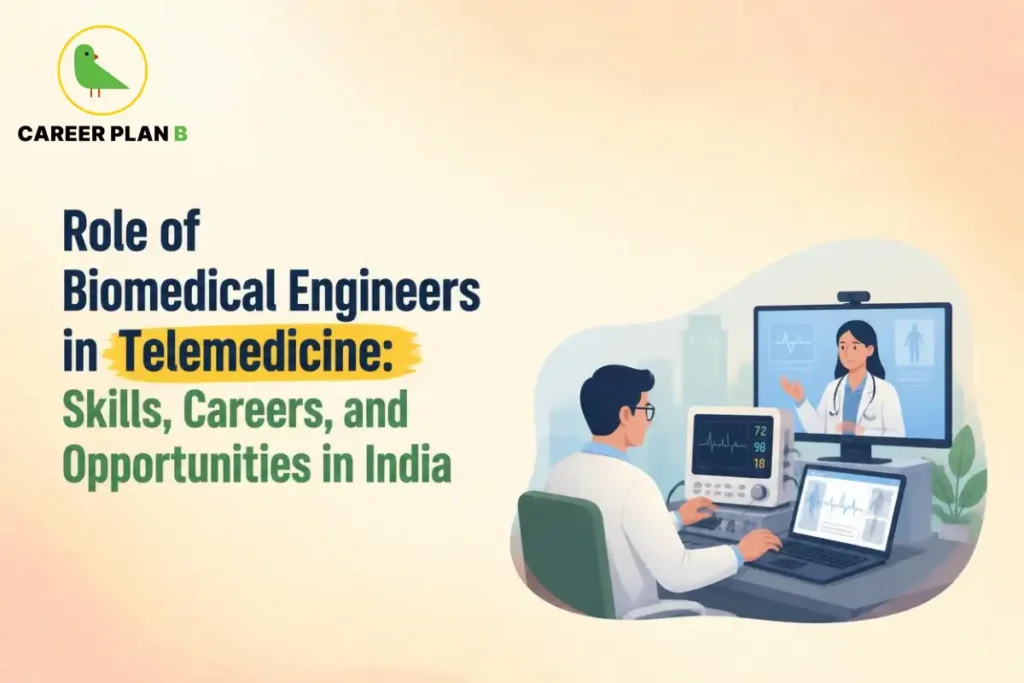
Introduction
A patient in a remote village in Rajasthan consults a specialist cardiologist in Mumbai without leaving home. A diabetic in rural Assam has their blood glucose levels monitored in real time by a platform that alerts their doctor automatically when readings cross a threshold. A pregnant woman in a Tier-3 town receives prenatal care through a video consultation backed by a wearable device that tracks her vitals and transmits data securely to a hospital system hundreds of kilometres away.
None of this is science fiction. It is happening across India today, and the role of biomedical engineers in telemedicine is what makes it possible. The role of biomedical engineers in telemedicine spans device design, platform integration, data security, remote diagnostics, and the regulatory compliance that ensures every system is safe for patients and clinicians alike. Without biomedical engineers, telemedicine is just a video call. With them, it becomes a functioning healthcare delivery system.
India’s telemedicine sector has grown at an extraordinary pace since the Telemedicine Practice Guidelines were introduced in 2020. The eSanjeevani platform alone has logged tens of millions of consultations. The National Digital Health Mission is building the data infrastructure for a connected health ecosystem across the country. And at the engineering layer of all of this, designing the devices, integrating the systems, and solving the technical problems that separate a concept from a working clinical tool are biomedical engineers.
This blog breaks down exactly how biomedical engineers contribute to telemedicine, what skills they need, where the career opportunities lie, and how to position yourself for one of India’s fastest-growing engineering career segments.
What Is Telemedicine and Why Does It Need Engineers?
Telemedicine is the delivery of healthcare services, consultations, diagnostics, monitoring, and treatment guidance using telecommunications and digital technology, without requiring the patient and clinician to be physically present in the same location.
At its simplest, telemedicine is a video call between a patient and a doctor. At its most sophisticated, it is a real-time ecosystem of connected devices, secure data platforms, AI-powered diagnostic tools, and interoperable health records that allow a specialist in a metropolitan hospital to make clinical decisions about a patient in a remote district with the same confidence as an in-person consultation.
Telemedicine technology in India has evolved rapidly from basic teleconsultation to complex remote care systems. And every layer of that complexity is an engineering challenge.
Biomedical engineers are the professionals specifically trained to sit at the intersection of medicine and engineering, making them the natural architects of India’s telemedicine future.
How Biomedical Engineers Contribute to Telemedicine Systems
The contribution of biomedical engineers to telemedicine is not limited to a single role or function. It spans the entire technology stack that makes remote healthcare delivery possible from the device in the patient’s hand to the platform on the clinician’s screen.
Designing Remote Diagnostic Devices The foundation of any telemedicine system is the ability to measure something meaningful about a patient’s health remotely. Biomedical engineers design and develop the devices that make this possible: pulse oximeters that measure blood oxygen saturation, portable ECG monitors that capture cardiac rhythms, glucometers that track blood sugar, digital stethoscopes that transmit auscultation sounds over the internet, and thermometers that sync readings to health platforms automatically.
Designing these devices for telemedicine contexts is more demanding than designing for hospital settings. They must be accurate, durable, affordable, easy to use by non-clinical users, and capable of operating reliably in environments with limited power and connectivity. These are core biomedical engineering and digital health challenges.
Integrating Medical Devices with Telehealth Software One of the most technically demanding aspects of telemedicine infrastructure and devices is interoperability, ensuring that devices from different manufacturers communicate seamlessly with telehealth platforms and electronic health record systems. Biomedical engineers develop the middleware, APIs, and data standards that make this integration possible, using frameworks like HL7 and FHIR (Fast Healthcare Interoperability Resources) that govern how health data is structured and exchanged.
Ensuring Device Safety and Regulatory Compliance Every medical device used in a telemedicine system must meet the safety and performance standards set by regulatory bodies. In India, the Central Drugs Standard Control Organisation (CDSCO) regulates medical devices under the Medical Devices Rules, 2017. Biomedical engineers navigate this regulatory framework, conducting testing, preparing technical documentation, and ensuring that devices meet the standards required for clinical use.
India’s Telemedicine Landscape Policy and Infrastructure
Understanding the policy and infrastructure context of telemedicine technology in India is essential for biomedical engineers who want to build careers in this sector. The landscape has been transformed over the past five years through a series of landmark government initiatives.
Telemedicine Practice Guidelines 2020 In March 2020, the Ministry of Health and Family Welfare (MoHFW) released India’s Telemedicine Practice Guidelines, the first formal regulatory framework governing the practice of telemedicine in the country. These guidelines define the standards for teleconsultation, the responsibilities of clinicians, and the technology requirements for telemedicine platforms. For biomedical engineers, these guidelines set the technical and compliance context within which all telemedicine systems must operate.
eSanjeevani, India’s National Telemedicine Platform, is the government’s flagship telemedicine platform, developed by C-DAC (Centre for Development of Advanced Computing) and deployed under MoHFW. It has facilitated millions of teleconsultations across the country, making it one of the largest government-run telemedicine systems in the world. Biomedical engineers contribute to the platform’s continuous development, device integration, and technical maintenance.
Ayushman Bharat Digital Mission (ABDM) The Ayushman Bharat Digital Mission, overseen by the National Health Authority (NHA), is building India’s national digital health infrastructure, including the Ayushman Bharat Health Account (ABHA), a unique health ID for every citizen that links all their medical records across providers and platforms. This infrastructure is the backbone of India’s long-term telemedicine ecosystem, and biomedical engineers are central to its technical implementation.
This policy and infrastructure landscape means that digital health career opportunities India offers are backed by substantial and sustained government investment, making this one of the most stable and growth-orientated sectors for biomedical engineers to enter.
Key Skills Biomedical Engineers Need for Telemedicine Roles
The biomedical engineer skills in telehealth that employers in India and globally are looking for go beyond traditional device design. Telemedicine demands a broader and more integrated skill set that spans engineering, data science, regulatory knowledge, and clinical understanding.
Medical Device Design and IoT Integration The ability to design medical-grade sensors and integrate them with IoT (Internet of Things) platforms is foundational for telemedicine engineering roles. Engineers must understand wireless communication protocols Bluetooth, Wi-Fi, Zigbee, and cellular and how to optimise device performance across different connectivity environments.
Health Data Analytics and AI in Diagnostics Telemedicine generates enormous volumes of patient data: vital signs, ECG waveforms, imaging files, and consultation records. Biomedical engineers who can build and deploy machine learning models to analyse this data, detecting anomalies, predicting deterioration, and supporting clinical decision-making, are among the most sought-after professionals in biomedical engineering in digital health today.
Cybersecurity for Medical Data Patient health data is among the most sensitive personal information that exists. Telemedicine platforms are attractive targets for cyberattacks, and breaches can have direct consequences for patient safety and privacy. Biomedical engineers working in telemedicine must understand health data encryption, secure transmission protocols, and the cybersecurity standards that govern medical device software.
Clinical Communication Skills Biomedical engineers in telemedicine work daily with doctors, nurses, and healthcare administrators. The ability to translate clinical needs into engineering requirements and to explain engineering constraints to clinical users is a skill that distinguishes excellent telemedicine engineers from technically competent but professionally limited ones.
NPTEL offers free online courses in health informatics, biomedical signal processing, and related subjects that biomedical engineers can use to build these competencies.
Career Opportunities for Biomedical Engineers in Telemedicine
Healthcare technology jobs for engineers in the telemedicine sector are growing across government organisations, private medical technology companies, and healthcare startups. Here is a breakdown of the specific roles available and who is hiring.
Remote Patient Monitoring Engineer designs and deploys the systems that continuously track patient health data outside clinical settings, including wearable devices, home monitoring kits, and the data platforms that aggregate and analyse the readings. Remote patient monitoring careers are among the fastest-growing in the healthcare technology sector globally and in India.
A telehealth platform developer works on the software and hardware integration layer of telemedicine platforms, building the interfaces through which patients and clinicians interact, integrating medical devices with platform back-ends, and ensuring system reliability and security. This role combines biomedical engineering knowledge with software development and systems integration expertise.
A clinical informatics specialist manages the flow, storage, and analysis of clinical data within telemedicine and electronic health record systems. Clinical informatics specialists work at the intersection of biomedical engineering, data science, and healthcare operations, helping organisations extract meaningful insights from patient data to improve care quality.
Medical IoT and Wearables Engineer designs, tests, and deploys the connected health devices that form the hardware layer of telemedicine systems: smartwatches with health monitoring capability, connected glucose monitors, portable diagnostic devices, and implantable sensors. This is one of the most technically demanding and rapidly evolving roles in biomedical engineering in digital health.
Regulatory Affairs Specialist, Medical Devices: Manages the regulatory approval process for medical devices used in telemedicine systems under CDSCO guidelines. With India’s medical device regulatory framework maturing rapidly, this is a high-growth specialisation that commands strong compensation and significant professional responsibility.
Key employers in India:
- National Health Authority (NHA): the government body overseeing ABDM and digital health infrastructure.
- C-DAC develops health technology systems and platforms for government deployment:
- The Ministry of Health and Family Welfare governs national health programmes and funds telemedicine infrastructure.
- DRDO develops biomedical and health technology solutions for defence and civilian applications.
- Private sector Philips Healthcare, GE Healthcare, Siemens Healthineers, Apollo TeleHealth, and a growing ecosystem of Indian digital health startups are all active employers of biomedical engineers in telemedicine roles
Have Any Doubts?
Challenges Biomedical Engineers Solve in Telemedicine
The role of biomedical engineers in telemedicine is defined as much by the problems they solve as by the systems they build. Understanding these challenges gives you a realistic picture of the work and the skills it demands.
Device Accuracy in Remote and Low-Resource Settings Medical-grade accuracy is non-negotiable in telemedicine. A pulse oximeter that reads 97% when the true value is 91% could lead to a missed diagnosis. But achieving clinical-grade accuracy in a low-cost device designed for home use in a setting with variable lighting, temperature, and user technique is a genuine engineering challenge that biomedical engineers work on continuously.
Interoperability Between Devices and Platforms India’s telemedicine ecosystem includes devices from hundreds of manufacturers and platforms from dozens of developers, and they frequently do not speak the same technical language. Biomedical engineers who specialise in interoperability, building the integration layers and data standards that allow different systems to communicate, are solving one of the most practically important problems in India’s digital health infrastructure.
Data Privacy and Cybersecurity Protecting patient data in a telemedicine environment requires continuous engineering vigilance. As telemedicine infrastructure and devices become more connected, the attack surface for cyber threats expands. Biomedical engineers who understand both the medical device layer and the cybersecurity layer are exceptionally valuable in building systems that patients and clinicians can trust.
Connectivity in Rural and Remote Areas A significant portion of India’s telemedicine opportunity lies in reaching patients in areas with limited or unreliable internet connectivity. Biomedical engineers are developing low-bandwidth device protocols, offline data synchronisation systems, and store-and-forward telemedicine solutions that function effectively in areas where real-time video consultation is not possible.
Future of Telemedicine and Biomedical Engineering in India
The trajectory of digital health career opportunities India offers is steeply upward, driven by technology advances, government investment, and a healthcare system that increasingly relies on digital infrastructure to extend its reach.
AI-Driven Diagnostics Artificial intelligence is transforming telemedicine from a communication tool into a diagnostic one. AI models that analyse ECG waveforms, retinal images, skin lesions, and chest X-rays with clinical-grade accuracy are being deployed in telemedicine platforms globally, and biomedical engineers are building and validating these systems. India’s IITs and national research institutions are investing heavily in AI in healthcare, with DST funding available for research in this area.
5G-Enabled Remote Procedures The rollout of 5G networks in India will enable telemedicine applications that are currently constrained by bandwidth, including high-resolution medical imaging transmission, augmented reality-assisted remote procedures, and real-time robotic surgery guidance. These applications will create entirely new categories of healthcare technology jobs for engineers with expertise in both biomedical systems and high-speed communication technology.
Wearable Health Ecosystems The next generation of telemedicine will be continuous rather than episodic wearable devices that monitor patients around the clock and alert clinicians to changes before they become emergencies. Biomedical engineers are building these wearable health ecosystems from the sensors and hardware to the algorithms and platforms that turn continuous data into clinical insight.
NITI Aayog’s digital health strategy and India’s long-term healthcare technology roadmap provide the policy framework within which these advances are being built:
How Career Plan B Helps
The telemedicine and digital health sector offers biomedical engineers an extraordinary range of career opportunities, but navigating them requires more than technical knowledge. It requires a clear understanding of your strengths, your preferred work environment, and the specific career path that aligns with your long-term goals. Career Plan B offers personalised career counselling, psychometric and career assessment tests, and structured career roadmapping specifically designed to help biomedical engineering students identify where they fit in India’s rapidly evolving digital health landscape. Whether you are targeting remote patient monitoring careers, regulatory affairs roles, or healthcare technology jobs for engineers at government organisations like NHA or C-DAC, Career Plan B helps you build a focused, realistic plan to get there.
Get In Touch With Us
Frequently Asked Questions
1. What qualifications do biomedical engineers need to work in telemedicine in India?
A BTech or BE in Biomedical Engineering is the standard entry qualification for most telemedicine engineering roles. An M.Tech in Biomedical Engineering or specialised postgraduate programmes in health informatics, medical device design, or digital health strengthens your profile significantly for senior technical and regulatory roles.
2. Are there government jobs for biomedical engineers in telemedicine in India?
Yes. Key government employers include the National Health Authority (NHA), C-DAC, and DRDO. Biomedical engineers can also find opportunities in institutions under the Ministry of Health and Family Welfare.
Government organisations are expanding digital health initiatives. These include eSanjeevani and the Ayushman Bharat Digital Mission. This expansion is creating new opportunities for biomedical and health technology engineers.
3. What is the salary for biomedical engineers working in telemedicine roles in India?
Entry-level biomedical engineers in telemedicine and digital health roles in India typically earn between Rs. 5–10 lakh per annum, depending on the employer and location. Engineers with specialisations in AI-driven diagnostics, medical IoT, and regulatory affairs command higher starting salaries, often Rs. 8–15 lakh at established medical technology companies.
4. How is telemedicine engineering different from traditional hospital biomedical engineering?
Traditional hospital biomedical engineering focuses on managing medical equipment within clinical facilities. Biomedical engineers calibrate devices, manage preventive maintenance schedules, and ensure regulatory compliance for hospital equipment.
Conclusion</h2>
The role of biomedical engineers in telemedicine is not peripheral; it is foundational. Remote consultations, connected monitoring devices, secure data platforms, and AI-powered diagnostic tools all rely on engineering expertise to function safely and effectively.
India is investing heavily in its digital health future through eSanjeevani, the Ayushman Bharat Digital Mission, and initiatives supporting domestic medical device manufacturing. As these technologies expand, healthcare systems need engineers who understand both medical applications and advanced technology.
For biomedical engineers, telemedicine offers opportunities to apply skills in medical devices, healthcare data, AI, connectivity, and clinical technology. Building the right technical skills, identifying suitable roles, and developing a clear career plan can help professionals prepare for opportunities in this growing field.
Start building your digital health career roadmap today at Career Plan B