Team6 · July 22, 2026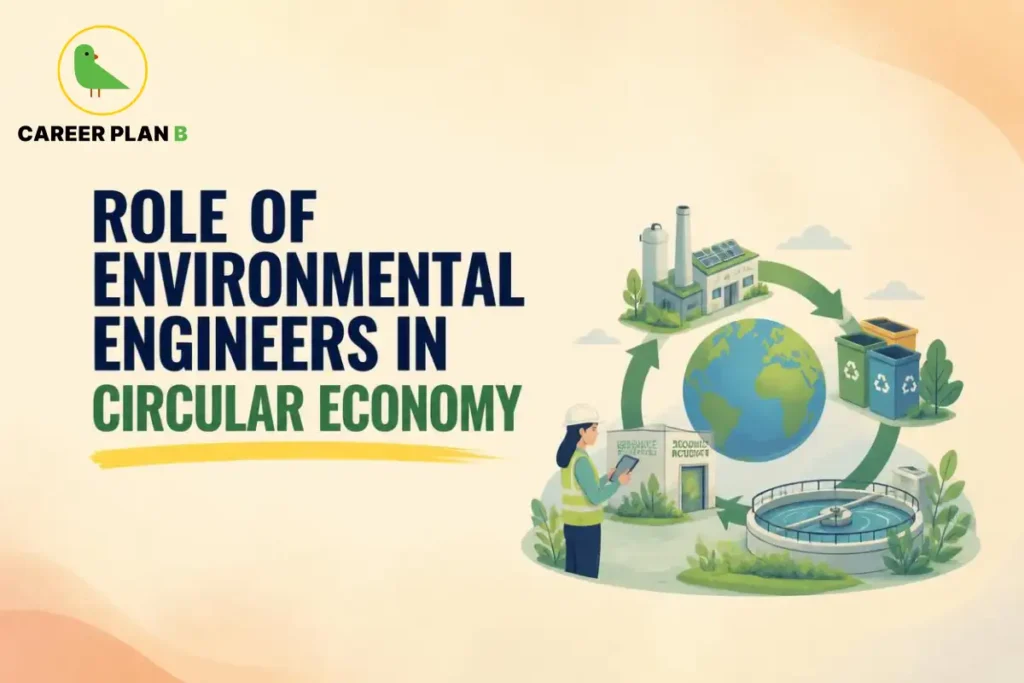
Introduction
The old model of “take, make, dispose” is starting to show its limits. Americans generated about 292 million tonnes of municipal solid waste in the most recent year the EPA has published complete data for, and while a meaningful share gets recycled or composted, a large portion still ends up in landfills (EPA Facts and Figures about Materials, Waste and Recycling). This is exactly why the role of environmental engineers in circular economy systems has become so important. Instead of just managing waste after it’s created, these engineers are helping redesign entire systems so materials get reused, recovered, and kept in circulation for as long as possible.
Let’s look at what this work actually involves and where it’s headed.
What Is a Circular Economy, and Why Does Engineering Matter Here?
A circular economy focuses on keeping materials in use for as long as possible. Instead of following a “take, make, dispose” model, it promotes reuse, recycling, and recovery. Achieving this requires strong engineering solutions. Circular economy engineering involves designing manufacturing processes and waste management systems with material recovery in mind from the start. It focuses on reducing waste before it is created rather than treating it later. The EPA’s materials management hierarchy also supports this approach. It ranks source reduction, reuse, recycling, and composting above disposal. This framework guides many circular economy engineering practices(EPA Non-Hazardous Materials and Waste Management Hierarchy).
Designing Waste-to-Resource Systems
One of the most important ways environmental engineers contribute is by designing waste-to-resource systems. These systems convert waste into valuable resources instead of sending it to landfills. For example, engineers design facilities that capture methane from landfills to generate electricity. They also create industrial processes where one company’s byproduct becomes another company’s raw material. This systems-based approach reduces waste and improves resource efficiency. Treating waste as a valuable resource, rather than an endpoint, is at the core of the circular economy.
Sustainable Material Recovery in Practice
Recovering usable materials from the waste stream, whether that’s metals, plastics, or organic matter, sits at the centre of this field. The EPA’s Advancing Sustainable Materials Management reporting tracks generation, recycling, and disposal trends for materials across the country, providing the data that helps engineers understand where recovery efforts are working and where they’re falling short (EPA Advancing Sustainable Materials Management). Sustainable material recovery work often involves improving sorting technology, designing better collection systems, or finding new industrial uses for materials that were previously considered too difficult or expensive to recycle.
Environmental Engineering Sustainability Beyond Waste
This work extends well beyond solid waste. Water reuse is a major and growing part of the picture, with the EPA’s Water Reuse Action Plan actively working to expand water recycling for industry, agriculture, and municipal use across the country (EPA Water Reuse and Recycling). In practice, this looks like real industrial projects, such as one California utility that supplies roughly 7.5 million gallons of recycled water daily to a refinery’s cooling towers and boilers, reducing the need for fresh water sourcing entirely (EPA Basic Information about Water Reuse). This broader approach, connecting water, energy, and material flows across a system, is often described as industrial ecology, and it represents where a lot of environmental engineering sustainability work is headed next.
Have Any Doubts?
Career Opportunities: Circular Economy Jobs
If this sounds like meaningful work, the career landscape here is genuinely growing. Circular economy jobs show up across manufacturers redesigning their supply chains, waste management companies expanding recovery operations, and consulting firms helping clients transition toward more sustainable material use. These roles fall under the broader umbrella of environmental engineering, a field where the U.S. Bureau of Labour Statistics reports roughly 39,400 jobs nationally, with steady growth projected through 2034 (BLS). Within that field, resource efficiency careers are becoming an increasingly distinct speciality, as more companies look for engineers who understand how to reduce waste and maximize material recovery from the ground up.
How Career Plan B Helps
Career Plan B helps students explore circular economy and sustainability-focused engineering careers through personalized guidance, assessments, and career planning.
Personalized Career Counselling: Helps identify suitable circular economy and environmental engineering career paths based on interests and goals.
Psychometric & Career Assessment Tests: Evaluate skills, strengths, and preferences to find the right career direction.
Career Roadmapping: Provides a structured plan for education, skill development, and career growth.
Admission & Academic Profile Guidance: Supports students in selecting the right courses, colleges, and specialization options.
Get In Touch With Us
Frequently Asked Questions
1. What does “circular economy” actually mean in practice?
It means designing systems where materials are reused, recovered, and kept in circulation, rather than used once and discarded.
2. Is circular economy engineering a growing career field?
Yes. As more industries look to reduce waste and improve material recovery, demand for this kind of specialized engineering continues to grow.
3. Do I need a specialized degree for this kind of work?
A general environmental or civil engineering degree is usually the starting point, with circular economy expertise often built through experience or additional specialization.
4. Which industries are adopting circular economy principles fastest?
Manufacturing, waste management, and industries with heavy water or material use, like oil and gas or food production, are leading much of this shift.
5. How is this different from traditional waste management?
Traditional waste management focuses on disposal after the fact, while circular economy work focuses on designing systems that prevent waste and recover value from the start.
Conclusion
The role of environmental engineers in circular economy systems is really about rethinking how materials move through our economy from the very beginning, rather than just managing the waste that comes out the other end. From waste-to-resource infrastructure to industrial water reuse, this work touches nearly every part of how goods are made, used, and eventually recovered.
If this kind of forward-looking engineering work appeals to you, Career Plan B can help you figure out whether it’s the right fit and map out a realistic path to get there. As more industries move toward circular thinking, there’s genuine room for engineers who want to help build the systems that make it possible.