Team6 · August 13, 2026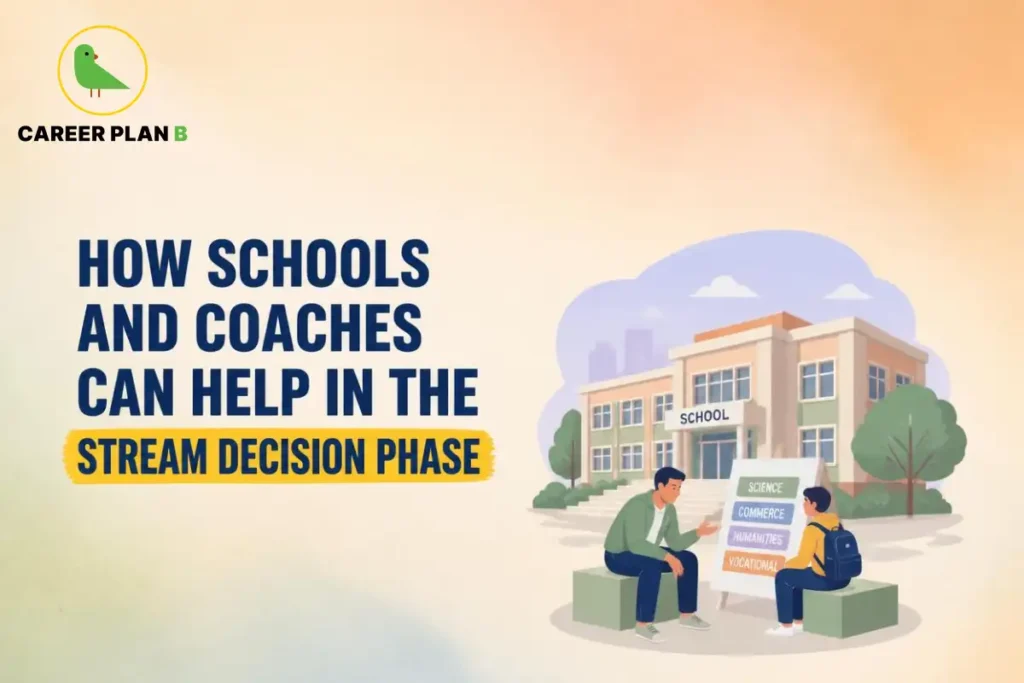
Introduction
The stream decision after Class 10 still shapes years of a student’s life. Yet most students face it with little real support. This guide covers how schools and coaches can help in the stream decision phase. It looks at what the system already offers, and where a coach or counsellor adds real value.
Why the Stream Decision Phase Needs More Structured Support
For decades, Indian students picked between Science, Commerce, and Humanities right after Class 10. The choice often came down to marks, not interest or aptitude. The National Education Policy (NEP) 2020 pushes back on this. It calls for no rigid separation between streams. Students can now combine subjects like Physics and Economics, or Computer Science and Statistics, based on their goals.
This flexibility is a genuine improvement. But it also means students now need more guidance, not less. A wider set of subject combinations without informed advice is just more ways to make the same uninformed choice. This is exactly where schools and coaches step in.
What Schools Are Already Meant to Provide
Career guidance in Indian schools isn’t a new idea on paper. Career guidance and counselling is a funded activity area under Samagra Shiksha, the Ministry of Education’s school scheme. States can also access an Academic Resource Person for Career Counselling at the block level. Salary support is built into the scheme’s norms.
In practice, implementation varies a lot by state and school. Some schools have a functioning counsellor. Many rely on teachers taking on the role informally, without training in aptitude assessment or labour-market awareness. This gap is precisely where schools need to lift their game, and where outside coaching support often fills in.
Where Schools Can Genuinely Help
Schools have an advantage that no outside coach has: continuous, first-hand data on the student. A school can track:
- Subject-wise performance trends across two or three years, not just one exam.
- Classroom behaviour, like which subjects a student engages with unprompted.
- Peer and teacher observations that reveal aptitude a student may not recognise themselves.
Schools are best placed to run structured aptitude tests early, in Class 9 or 10. This is well before board results narrow a student’s thinking. NEP 2020’s own guidance materials name aptitude tests and structured counselling as flexi-fund activities schools can use.
Have Any Doubts?
Where Coaches and Career Counsellors Add Value
A coach or private career counsellor brings something schools often can’t. That’s distance from the daily classroom relationship, plus specialised tools schools don’t always have.
Coaches typically bring:
- Psychometric assessments designed specifically for stream and career decisions, not general academic testing.
- Up-to-date knowledge of subject combinations that map to newer career paths, like data science or design.
- A space where a student can talk honestly about doubts, away from parental or peer pressure inside the school.
This isn’t a replacement for school-based guidance. It works best as a second layer. Bring it in around Class 9 or 10, when the decision is close but not yet made.
How Schools and Coaches Can Work Together
The two roles work best when they share information instead of operating separately. A useful division looks like this:
| Responsibility | Best Placed With |
|---|---|
| Ongoing academic performance tracking | School |
| Early aptitude testing (Class 9-10) | School, using Samagra Shiksha-funded resources |
| Specialised psychometric assessment | External coach or counsellor |
| Subject-combination advice under NEP 2020 | Coach, in coordination with the school’s academic team |
| Parent conversations and expectation-setting | Joint — school for academic context, coach for objective framing |
| Final decision support | Student, informed by focus and all stakeholders |
Schools that share performance data with an external counsellor, with parental consent, get a more complete picture. Neither party sees the full one alone.
Common Mistakes to Avoid
Marks alone shouldn’t decide a stream. A student scoring well in Maths and Science may still suit Commerce or Humanities better. It depends on genuine interest, not just marks.
Peer pressure is another common trap. Students often follow a friend’s choice, or a stream seen as more “prestigious,” without checking if it actually fits them. Schools and coaches both have a role in surfacing this pattern before a decision is locked in, not after.
Finally, don’t wait until board results arrive. By then, the decision window shrinks to days. Starting the process in Class 9 gives everyone, student, school, and coach, room to actually think it through.
Benefits, Challenges, and What the Data Says
The benefit of combining school and coach support is straightforward: better-informed decisions, made earlier, with less last-minute panic. Schools bring continuity. Coaches bring specialised tools and outside perspective. Used together, they cover real gaps in India’s underfunded school counselling system.
To be transparent about a limitation: there’s no official, India-wide dataset here. It doesn’t track how many schools have a functioning career counsellor, or how outcomes differ for counselled students. Implementation of the Samagra Shiksha counselling provision varies by state. Much of what’s written about its reach comes from individual reports, not a government audit. Treat specific coverage numbers you find online with caution.
How Career Plan B Helps
Making the stream decision well takes more than one conversation. Career Plan B supports students and schools through:
Personalised Career Counselling: working through a student’s interests and options, beyond just their latest marks. Psychometric and Career Assessment Tests: structured tools built specifically for stream and career decisions. Career Roadmapping: a clear plan connecting today’s subject choice to tomorrow’s career goals. Admission and Academic Profile Guidance: help building a profile that matches the student’s chosen direction.
Looking for external support during the stream decision phase? Career Plan B is a reasonable place to start.
For Latest Information
Frequently Asked Questions
Q1. When should the stream decision process start?
Ideally in Class 9, well before board results arrive. This leaves enough time for aptitude testing and honest conversations, without exam-result pressure clouding the choice.
Q2. Do schools in India have official career counselors?
Some do. Samagra Shiksha funds career guidance activities and counsellor support at the block level. Actual coverage still varies widely by state and school.
Q3. Does NEP 2020 mean streams don’t exist anymore?
Not exactly. NEP 2020 removes the rigid separation between streams. Students can combine subjects across Science, Commerce, and Humanities, based on interest, not one fixed track.
Q4. Can a private career coach replace school guidance?
No, and it shouldn’t try to. Coaches add specialised tools and outside perspective. Schools bring continuous academic data. The two work best together.
Q5. What’s the biggest mistake families make during the stream decision?
Deciding purely on marks or peer choices, without checking whether the stream fits the student’s actual interests and working style.
Conclusion
The stream decision phase deserves more than a rushed choice after board results. Schools bring continuity and real academic data. Coaches bring specialised tools and outside perspectives. Used together, and under the flexibility NEP 2020 now allows, students get a genuinely informed start. It’s a real career path, not just a stream label.
Connect with Career Plan B today to support your school’s stream decision process, or your own child’s.