Team6 · November 4, 2026
Introduction
Every bridge India builds, every metro tunnel it bores, and every dam it raises starts with one important question: what can the ground beneath it support?
A geotechnical engineer answers this question. This professional studies soil, rock, and groundwater to help make infrastructure safe and stable.
Despite its importance, geotechnical engineering remains one of the least understood specialisations in civil engineering. Many students do not know what this career involves or where it can lead.
If you are considering becoming a geotechnical engineer in India, this blog will help you understand the field. Here are seven important things to know before choosing this career. We cover the actual work, qualifications, career opportunities, salaries, and the steps you need to take.
1. Geotechnical Engineering Is More Critical Than Most People Realise
Many people think geotechnical engineers only test soil. However, their responsibilities go far beyond soil testing.
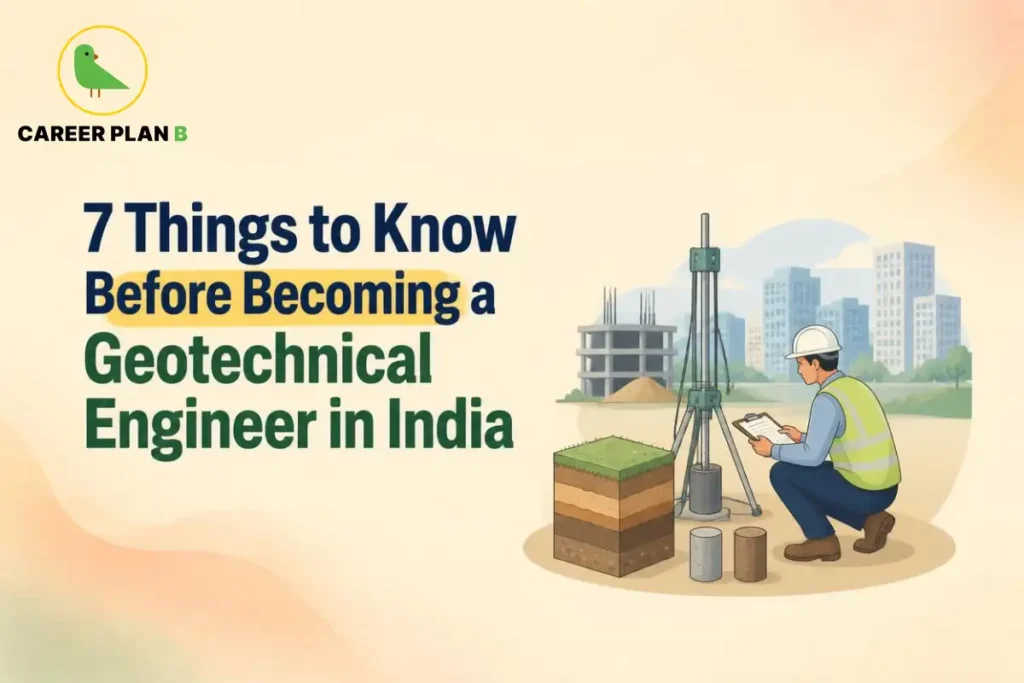
Geotechnical engineering connects public safety with infrastructure development. Before construction begins, engineers study the ground conditions. They assess soil-bearing capacity, groundwater levels, and slope stability.
They also evaluate the risk of liquefaction during earthquakes. These assessments help engineers select safe foundations and construction methods.
Why Is Geotechnical Engineering Important?
Poor ground assessments can lead to serious problems, including:
- Foundation failures
- Building collapses
- Landslides near highways
- Dam failures
- Ground settlement and structural damage
India’s infrastructure projects need reliable ground assessments. Geotechnical engineers help identify these risks before construction begins.
Their work directly supports public safety. That responsibility makes this profession both challenging and meaningful.
2. Your Academic Foundation Needs to Be Strong in Soil Mechanics
Before choosing a specialisation, focus on your civil engineering fundamentals. Geotechnical engineer qualifications in India usually begin with a B.Tech or BE in Civil Engineering from an AICTE-approved institution.
However, some undergraduate subjects matter more than others for this career.
Important Subjects to Focus On
Pay particular attention to these subjects:
- Soil Mechanics
- Rock Mechanics
- Foundation Engineering
- Geology
- Hydrology
- Applied Mathematics
These subjects form the scientific foundation of geotechnical engineering.
Many students focus more on structural or transportation engineering. They sometimes treat soil mechanics as a secondary subject.
That approach can create difficulties later. Concepts such as shear strength, consolidation, permeability, and effective stress are essential in professional practice.
You will use these concepts throughout your career. Build a strong understanding of them during your undergraduate studies. This will make postgraduate specialisation and professional work much easier.
3. A Postgraduate Degree Significantly Improves Your Prospects
A B.Tech in Civil Engineering can help you enter the field. However, an M.Tech in Geotechnical Engineering can improve your career prospects.
The difference often appears in starting salaries, project responsibilities, and eligibility for specialised roles. Postgraduate qualifications can also help you enter research and senior technical positions.
Why Should You Consider an M.Tech?
GATE is an important route to M.Tech admissions at IITs and NITs. These institutions offer some of India’s leading programmes in geotechnical engineering and geomechanics.
Some prominent institutions include:
- IIT Bombay
- IIT Delhi
- IIT Madras
- IIT Kharagpur
- IIT Roorkee
- IIT Gandhinagar
Students can explore their admission requirements through the official GATE portal.
An M.Tech from a leading IIT can strengthen your profile. It may also improve access to research opportunities, senior technical roles, and international consulting firms.
Institutions such as DRDO and various public-sector organisations also offer opportunities for specialised engineers.
If you want to build a long-term career in this field, consider the benefits of postgraduate education.
4. Fieldwork Is a Non-Negotiable Part of This Career
Geotechnical engineering is not just a desk job. It involves software, technical reports, laboratory work, and regular site visits.
You develop many essential skills through practical field experience. Site investigation is one of the most important responsibilities in this profession.
What Does a Geotechnical Engineer Do on Site?
Depending on the project, your responsibilities may include:
- Supervising borehole drilling
- Conducting Standard Penetration Tests (SPT)
- Collecting soil and rock samples
- Studying laboratory test results
- Installing piezometers to monitor groundwater
- Assessing ground conditions
Software models cannot fully replace physical site investigations. Engineers must understand actual ground conditions before making important decisions.
Are You Comfortable Working Outdoors?
Geotechnical engineers often work in remote locations. Some projects involve difficult terrain and challenging weather conditions.
For example, highway projects in hilly regions require regular site investigations. Dam construction involves work in river valleys. Tunnel projects also require detailed ground assessments.
If you enjoy practical investigation and outdoor work, this career may suit you. However, consider these working conditions before choosing this specialisation.
5. The Scope Is Wider Than You Think
Many students believe geotechnical engineering only involves designing building foundations. In reality, geotechnical engineering scope in India covers several major industries.
The country’s infrastructure development creates demand for professionals who understand soil, rock, and ground conditions.
Major Industries That Hire Geotechnical Engineers
Roads and Highways
Projects under NHAI require geotechnical investigations during alignment planning and construction. Engineers assess soil conditions, slopes, and foundation requirements.
Metro Rail and Tunnels
Metro projects in Delhi, Mumbai, Bengaluru, and Hyderabad involve complex underground construction. Geotechnical engineers study tunnel conditions and monitor ground movement.
Dams and Reservoirs
Projects under the Central Water Commission require detailed geotechnical and seismic assessments. These studies help ensure the stability of dams and related structures.
Railways and Freight Corridors
Indian Railways and dedicated freight corridors need geotechnical support. Engineers assess embankment stability and bridge foundations.
Oil and Gas
ONGC uses geotechnical expertise for offshore projects. Engineers help assess seabed conditions for infrastructure and exploration activities.
Space and Defence
ISRO and DRDO also need geotechnical expertise. Projects may involve launch pad foundations and underground facility design.
Geotechnical engineering therefore offers opportunities across infrastructure, energy, transport, research, and strategic sectors.
6. Government and PSU Opportunities Are Substantial
Government departments and public-sector organisations offer valuable opportunities for geotechnical engineers.
These roles can provide job security, structured career growth, and exposure to large infrastructure projects.
Major Government and PSU Employers
Some organisations where geotechnical engineers may find opportunities include:
- Central Public Works Department (CPWD): Works on government infrastructure projects and recruits civil engineering professionals.
- National Highways Authority of India (NHAI): Requires geotechnical expertise for national highway development.
- RITES: Provides consultancy services for transport infrastructure projects.
- Central Water Commission (CWC): Works on water resource projects that require geotechnical assessments.
- National Hydroelectric Power Corporation (NHPC): Needs technical expertise for dam and hydropower projects.
- State Public Works Departments: Offer opportunities through state-level infrastructure programmes.
How Can You Enter These Organisations?
GATE can help you access postgraduate programmes and certain government or PSU recruitment opportunities.
A strong GATE score in Civil Engineering can improve your chances. Some organisations also conduct their own recruitment examinations and interviews.
An M.Tech from an IIT or NIT can further strengthen your technical profile. Practical experience and a clear understanding of geotechnical concepts also help during selection.
Always check the latest recruitment notification for eligibility, selection methods, and available positions.
Have Any Doubts?
7. Salary Growth Is Steady but Tied to Specialisation
A geotechnical engineer’s salary in India depends on qualifications, experience, technical skills, and the employer.
Professionals with specialised knowledge and strong project experience can access better-paying opportunities.
Entry-Level Salary
B.Tech graduates joining private geotechnical consultancies or construction firms can expect approximately ₹3.5 lakh to ₹6 lakh per annum.
M.Tech graduates from IITs entering technical roles may start between ₹7 lakh and ₹12 lakh per annum in the private sector.
Government positions at CPWD, NHAI, or CWC may offer starting basic pay between ₹35,000 and ₹56,100 per month, depending on the post and applicable pay structure. Additional allowances may include housing, transport, and location-based benefits.
Mid-Level and Senior-Level Salary
With five to eight years of experience, geotechnical engineers in private firms and consultancies may earn between ₹12 lakh and ₹25 lakh per annum.
Senior engineers and project leads can earn ₹30 lakh to ₹50 lakh or more. This is particularly possible in specialised areas such as:
- Ground improvement
- Tunnelling
- Offshore geotechnics
International consulting firms and multinational EPC contractors may also offer higher-paying positions.
What Influences Salary Growth?
Your salary growth depends on how deeply you develop your technical expertise. Practical project experience also plays an important role.
Learn to document your work and communicate technical findings clearly. These skills can help you progress into senior engineering and project leadership roles.
How Career Plan B Helps
Becoming a geotechnical engineer involves several important decisions. You need to choose whether to pursue an M.Tech, identify suitable IITs or NITs, and prepare for GATE.
You must also decide whether the government or private sector suits your goals. Choosing the right specialisation is another important step.
Career Plan B helps civil engineering students and professionals navigate these decisions through personalised career support.
Its services include:
- One-on-one career counselling: Get guidance based on your academic background, interests, and career goals.
- Psycheintel assessments: Understand your strengths and work preferences through psychometric and career assessments.
- Structured career roadmapping: Build a step-by-step plan from your current academic stage to your target geotechnical engineering role.
With the right guidance, you can make more informed decisions about your education and professional future.
For Latest Information
Frequently Asked Questions (FAQs)
1. What is the minimum qualification to start a geotechnical engineering career in India?
The minimum qualification is a B.Tech or BE in Civil Engineering from an AICTE-approved institution.
However, an M.Tech in Geotechnical Engineering from an IIT or NIT can help you access specialised roles. Postgraduate qualifications and site investigation experience can strengthen your profile for mid-level and senior positions.
2. Is GATE necessary for a geotechnical engineering career?
GATE is not mandatory for every private-sector role. However, it is important for two major career pathways.
First, it helps students apply for M.Tech admissions at IITs and NITs. Second, some government departments and PSUs use GATE scores during recruitment.
A strong GATE score in Civil Engineering can improve your access to academic and government opportunities.
3. What software should a geotechnical engineer learn?
Geotechnical engineers use several software tools for analysis and design. Some commonly used options include:
- PLAXIS: Used for finite element analysis of soil and rock.
- GeoStudio: Supports slope stability and seepage analysis.
- AutoCAD: Helps prepare technical drawings.
- RocScience: Provides tools for rock engineering applications.
NPTEL also offers free courses in geotechnical engineering fundamentals and numerical methods. These courses can support your technical learning.
4. What is the scope of geotechnical engineering in India going forward?
Geotechnical engineering scope in India remains closely connected to infrastructure development.
The National Infrastructure Pipeline involves investment of over ₹111 lakh crore across roads, railways, ports, urban infrastructure, and energy. These projects require geotechnical investigations and technical expertise.
India’s focus on disaster risk reduction, seismic safety, and climate-resilient infrastructure also creates demand for specialised professionals.
5. Can a geotechnical engineer work internationally?
Yes. Geotechnical engineers can explore international opportunities with the right qualifications and experience.
Professionals with strong academic credentials and site investigation experience can find opportunities in the Middle East and Southeast Asia. Specialisations such as ground improvement and offshore geotechnics can also improve career prospects.
An M.Tech from an IIT, combined with Indian infrastructure project experience, can provide a strong foundation for international career mobility.
Conclusion
Becoming a geotechnical engineer in India requires technical knowledge, practical experience, and a long-term approach to career growth.
It may not be the most visible engineering specialisation. However, it plays a critical role in making infrastructure safe and stable.
The field offers opportunities across construction, transportation, energy, government, research, and international consulting. Demand for geotechnical expertise also connects with India’s growing infrastructure requirements.
If these seven points have strengthened your interest in this field, start building your foundation today. Focus on soil mechanics, gain practical experience, and explore postgraduate opportunities.
For help planning your next steps, visit Career Plan B. You can explore expert career counselling, psychometric assessments, and personalised roadmaps for specialised civil engineering careers in India.