Team Career Plan B · July 17, 2026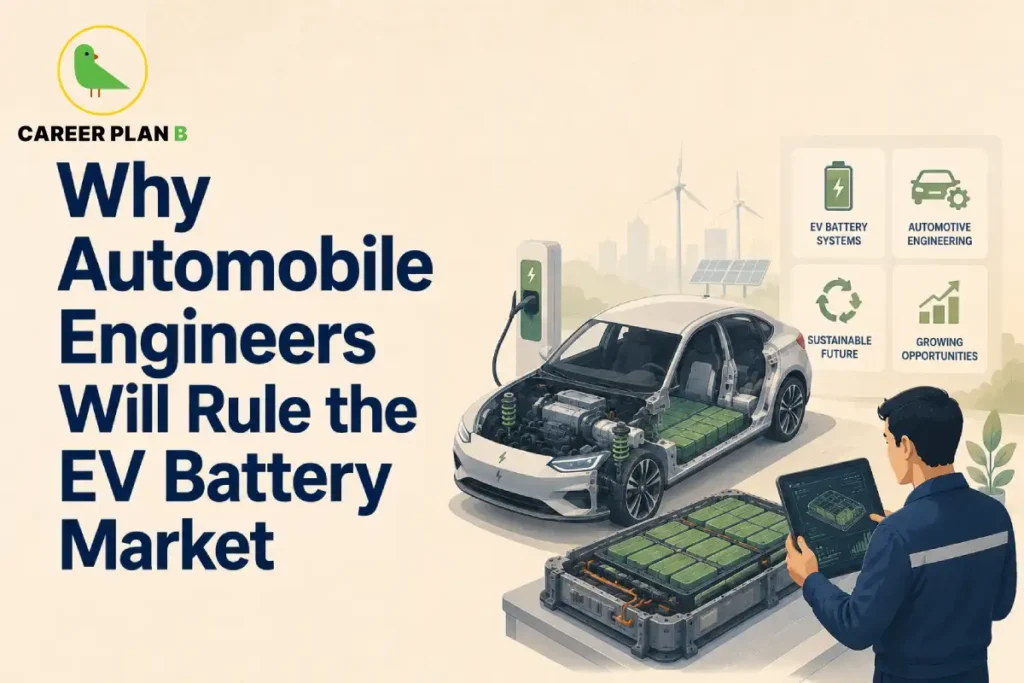
Introduction
Ask anyone in the EV industry what the most valuable part of an electric vehicle is, and the answer is almost always the same: the battery. But here’s something many students don’t realize: building a great battery isn’t enough. It has to work inside a vehicle, safely and efficiently. This is exactly why automobile engineers will rule the EV battery market in the years ahead. While battery chemistry gets a lot of attention, the real challenge lies in integrating that battery into a functioning, safe, and efficient vehicle, and that’s where automobile engineers come in. This blog explores why this shift is happening and how you can prepare for it.
Why the EV Battery Market Needs Automobile Engineers, Not Just Battery Specialists
A battery cell on its own doesn’t power a car. Engineers must package, protect, cool, and integrate the battery into the vehicle’s structure without compromising safety or performance. This is a complex engineering challenge that goes far beyond chemistry alone. This is precisely why automobile engineers in EV battery market roles are becoming so valuable. They bring the vehicle-level thinking needed to turn a battery cell into a safe, reliable, and well-performing part of the car.
Key Areas Where Automobile Engineers Are Making an Impact
Automobile engineers contribute to several critical stages of battery development and integration.
Battery Pack Design and Vehicle Integration
Automobile engineers use their strong mechanical design skills to arrange, house, and connect battery cells within a vehicle.
Thermal Management Systems
Batteries generate heat, and poor thermal management can affect both performance and safety. Automobile engineers design cooling systems that keep battery packs within safe operating temperatures, a core part of the EV battery engineering scope.
Structural Safety and Crash Protection
Battery packs must withstand collisions to protect passengers and critical vehicle systems. Automobile engineers apply their expertise in crash safety and structural design to ensure batteries remain secure even in impact situations.
Weight Distribution and Vehicle Dynamics
Batteries are heavy, and their placement significantly affects a vehicle’s balance and handling. Automobile engineers optimise weight distribution to maintain vehicle stability and performance. This often-overlooked responsibility plays an essential role in the future of battery technology in automobiles.
How Battery Innovation Is Reshaping Automobile Engineering Roles
As EVs become more advanced, we’re seeing entirely new hybrid roles emerge, ones that combine traditional vehicle engineering with battery systems knowledge. This growing intersection reflects how automobile engineering and battery innovation are no longer separate fields but deeply interconnected disciplines. Engineers with expertise in both vehicle design and battery integration are increasingly valuable. They bridge the gap between battery performance and real-world vehicle usability, making them highly sought after in the EV industry.
Skills Automobile Engineers Need to Enter the Battery Market
If you’re aiming for a battery technology careers for automobile engineers path, here are some important skills to build:
- Battery pack design and mechanical layout
- Thermal simulation and cooling system design
- Basic materials science, especially related to battery casings and insulation
- Familiarity with safety testing standards for battery systems
- Understanding of overall EV architecture and integration
Developing these skills for battery engineering careers early can give you a strong head start in this growing specialization.
Have Any Doubts?
Where Is This Career Path Headed?
The demand for automobile engineers in the battery space is closely tied to the broader growth of EV manufacturing in India. The Ministry of Heavy Industries has been actively supporting EV and battery manufacturing initiatives through schemes aimed at boosting domestic production capacity. ARAI plays a key role in setting and testing battery safety standards for vehicles, ensuring that battery integration meets national safety benchmarks. AICTE has also encouraged technical institutions to align their curricula with emerging automotive technologies, including battery-related subjects. This momentum is expected to create steady demand for battery pack design engineers, thermal systems engineers, and EV structural safety engineers. As EV manufacturing expands in India, automobile engineers will find growing opportunities in these specialised roles.
How Career Plan B Helps
Wondering if a career in EV battery engineering is the right fit for you? Career Plan B can help you find out. Through personalised career counselling, PsycheIntel and career assessment tests, and admission and academic profile guidance, we help you understand whether this specialization matches your strengths. Our career roadmapping process also guides you on the right electives, projects, and skills to build toward a strong career at the intersection of automobile engineering and battery technology.
For Latest Information
Frequently Asked Questions
- Do I need a separate degree in battery technology to work in this field?
Not necessarily. A strong automobile engineering foundation combined with relevant electives or certifications in battery systems is often sufficient to start.
- Is EV battery engineering only for electrical engineers?
No. While electrical engineers focus on battery chemistry and power electronics, automobile engineers play an equally important role in pack design, thermal management, and structural safety.
- What subjects should I focus on if I’m interested in this path?
Thermodynamics, materials science, mechanical design, and vehicle safety systems are especially useful, along with basic knowledge of battery systems.
- Are battery-related roles growing in India specifically?
Yes, supported by government manufacturing initiatives and rising EV adoption, demand for battery-related engineering roles is increasing steadily.
- Can automobile engineers switch into battery-focused roles later in their career?
Yes, many professionals transition into battery-focused roles by building relevant skills and experience over time, even after starting in traditional automobile engineering roles.
- Is this a stable long-term career path?
Continued investment in electric mobility across India and the world is expected to keep battery-related engineering roles in strong demand for the foreseeable future.
Conclusion
Understanding why automobile engineers will rule the EV battery market comes down to one key idea: batteries don’t function in isolation; they need to work seamlessly within a vehicle, and that’s where automobile engineering expertise truly shines. From thermal management to structural safety, automobile engineers are shaping the future of battery technology in ways that go far beyond chemistry alone. If you’re excited about this space and want guidance on how to enter it, Career Plan B is here to help you build the right path forward.