Team Career Plan B · July 17, 2026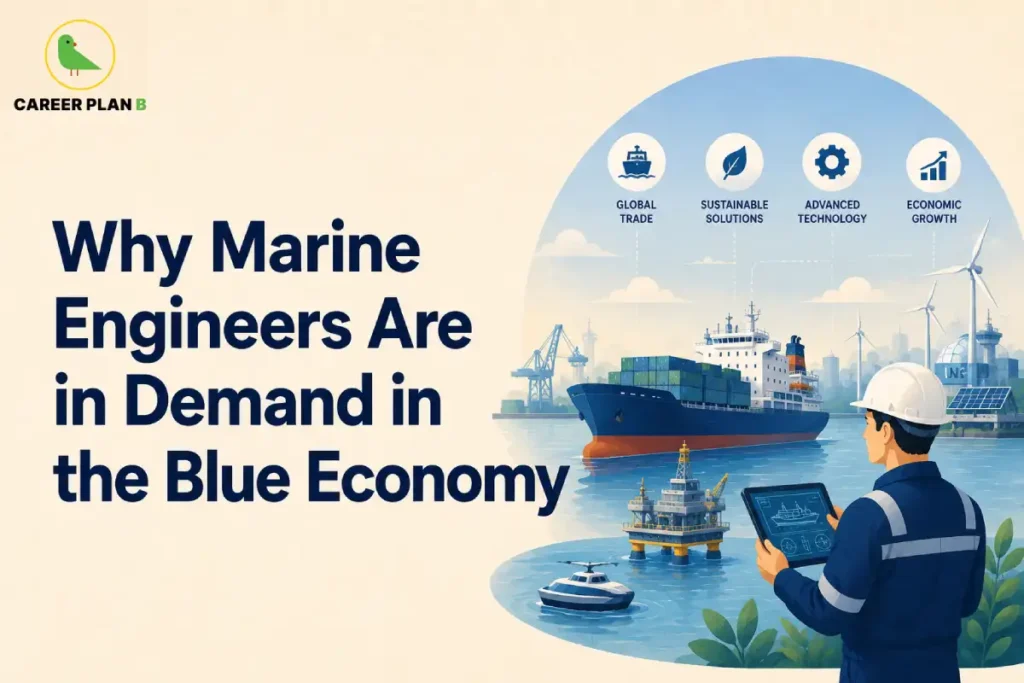
Introduction
Oceans aren’t just routes for ships anymore; they’re becoming one of the biggest economic frontiers of our time. From shipping and fisheries to renewable ocean energy, countries are increasingly investing in what’s called the “blue economy”. This shift explains why marine engineers are in demand in the blue economy today, more than ever before. As this sector expands, the need for skilled engineers who can maintain, design, and innovate around ocean-based systems is growing steadily. This blog explores what the blue economy actually means, where marine engineers fit in, and what this means for your career.
What Is the Blue Economy, and Why Does It Matter?
The blue economy refers to the sustainable use of ocean and coastal resources for economic growth, improved livelihoods, and job creation, while protecting ocean health. This includes sectors like shipping, fisheries, ocean energy, tourism, and marine biotechnology. In India, this sector has gained significant policy attention. NITI Aayog has actively worked on strategies to expand India’s blue economy, including a recent report focused on harnessing deep-sea and offshore fisheries sustainably, as part of a broader vision to strengthen blue economy India initiatives. This reflects how seriously the sector is being prioritized at a national level.
Why Marine Engineers Are Central to the Blue Economy
Nearly every part of the blue economy relies on engineering expertise to function safely and efficiently. Ships, offshore platforms, ports, and ocean energy systems all require skilled professionals who understand mechanical systems, power generation, and maintenance, exactly the expertise marine engineers bring to the table. As this sector grows, marine engineers aren’t just supporting shipping anymore; they’re becoming essential to a much wider range of ocean-based industries.
Key Areas Driving Demand for Marine Engineers
Let’s look at where this demand is coming from most strongly.
Shipping and Global Trade
The vast majority of global trade still moves by sea, making commercial shipping one of the largest and most consistent sources of marine engineering job opportunities worldwide.
Offshore Energy
Beyond traditional oil and gas platforms, emerging areas like offshore wind and other renewable ocean energy systems are creating new engineering roles focused on sustainable power generation at sea.
Port and Maritime Infrastructure Development
As countries invest in modernizing ports and maritime infrastructure, engineers are needed to support the mechanical and technical systems behind these expanding facilities.
Sustainable and Green Shipping Technologies
With a growing focus on reducing emissions from shipping, engineers with knowledge of cleaner propulsion systems and energy-efficient technologies are increasingly valuable, a key part of sustainable ocean economy careers.
Skills Required for Marine Engineers in a Growing Blue Economy
To thrive in this expanding field, marine engineers need a mix of core technical knowledge and newer, sustainability-focused skills. Some of the most important skills required for marine engineers today include:
- Strong understanding of mechanical and electrical shipboard systems
- Awareness of sustainability practices and emission-reduction technologies
- Familiarity with automation and monitoring systems
- Problem-solving skills, especially in high-pressure environments
- Adaptability to work across different types of vessels and offshore platforms
How India Is Positioning Itself in the Blue Economy
India has taken clear steps to strengthen its position in the global blue economy. The Ministry of Ports, Shipping and Waterways has outlined blue economy initiatives aimed at improving maritime trade efficiency, port infrastructure, and sustainable ocean resource use. NITI Aayog‘s recent strategy report on deep-sea and offshore fisheries also highlights India’s broader ambition to responsibly expand its ocean economy, supported by science-based and technology-driven approaches. The Directorate General of Shipping continues to regulate and support the training and certification of marine engineers who will power this expanding sector.
Together, these efforts reflect strong institutional support for blue economy careers, particularly for engineers with the right technical and sustainability-focused skill sets.
Have Any Doubts?
Career Scope for Marine Engineers Today
As the blue economy expands, so does the marine engineering career scope. Beyond traditional onboard roles, engineers can now explore opportunities in:
- Offshore energy platforms, including emerging renewable ocean energy projects
- Port and maritime infrastructure technical roles
- Green shipping and sustainable vessel technology development
- Research and development roles tied to ocean technology and marine systems
This widening scope means marine engineering is no longer limited to shipping alone, it’s becoming a gateway into a much broader and rapidly growing ocean-based economy.
How Career Plan B Helps
Curious whether a career in marine engineering within the blue economy is right for you? Career Plan B can help you explore this path with clarity. Through personalised career counselling, Psycheintel and Career Assessment Tests, and Admission and Academic Profile Guidance, we help you understand if this evolving field matches your interests and strengths. Our career roadmapping process also guides you on meeting marine engineer eligibility requirements and building the right skills for this expanding sector.
For Latest Information
Frequently Asked Questions
- What is the blue economy in simple terms?
It refers to using ocean resources, like shipping, fisheries, and ocean energy, in a way that supports economic growth while protecting marine ecosystems.
- Is the blue economy only about shipping?
No. It includes shipping, but also fisheries, offshore energy, port infrastructure, tourism, and marine biotechnology.
- Do marine engineers need special training for offshore roles?
Yes, offshore roles often require additional certifications related to safety and equipment specific to offshore platforms, beyond standard marine engineering training.
- Is this a growing career path in India specifically?
Yes, supported by national blue economy strategies and growing investment in ports, shipping, and ocean-based industries.
- Do I need to specialize in renewable energy to work in this space?
Not necessarily, though having some knowledge of sustainable and green technologies can improve your career flexibility as the sector evolves.
- How is this different from a traditional marine engineering career?
Traditional roles focus mainly on ship operations, while blue economy-related roles extend into broader ocean-based industries like energy, infrastructure, and sustainability-focused shipping.
Conclusion
Understanding why marine engineers are in demand in the blue economy comes down to one simple fact: nearly every ocean-based industry depends on strong engineering expertise to function safely and sustainably. As shipping, offshore energy, and maritime infrastructure continue to grow, marine engineers are stepping into a much wider and more dynamic role than ever before. If you’re interested in this expanding career path, Career Plan B can help you understand your options and plan the way forward.