Team6 · July 17, 2026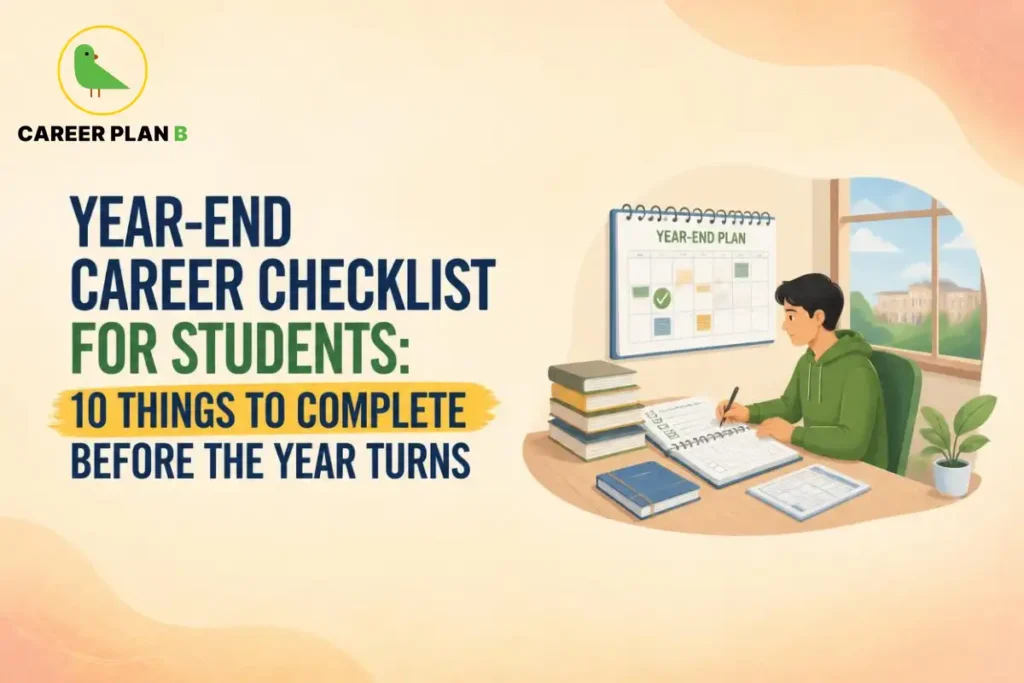
Introduction
The end of the year is more than a time for reflection—it is a crucial planning period for students preparing for higher education and future careers. Entrance exam registrations begin, scholarship applications open and close, education loan processing takes time, and many internships, certification programmes, and skill development opportunities have fixed application windows. Missing a key deadline can delay your plans by months or even an entire academic year.Instead of reacting to last-minute announcements, successful students stay ahead by tracking important dates and preparing the required documents well in advance. A structured year-end plan can help you avoid unnecessary stress and make informed decisions about your education and career.
This guide provides a practical year-end career checklist for students for 2025–26. Based on real registration timelines and application windows, it covers entrance exams, scholarships, education loans, skill programmes, and other essential milestones to help you stay organised and career-ready.
Why a Year-End Career Checklist for students Matters for the 2025-26 Academic Year
Several major student deadlines cluster around the December-to-March window every year. JEE Main 2026 Session 1 registration opened on 31 October 2025. The exam ran from 21 to 30 January 2026, according to the National Testing Agency. CUET UG 2026 applications opened on 3 January 2026, with the exam held from 11 to 31 May. NEET UG 2026 registration ran from 8 February to 8 March, with the exam on 3 May.
Scholarship deadlines move on a similar clock. The National Scholarship Portal extended most 2025-26 applications to 15 December 2025. Earlier scheme-specific deadlines had already closed on 31 October and 15 November. Miss this window, and you usually wait a full year for the next cycle. That’s exactly why a checklist done in December, not April, matters.
Review Your Academic Year So Far
Before applying to anything new, take stock of where you stand. Check your current grades, attendance, and any pending assessments or project submissions. If you’re in Class 12 or a final year of college, confirm your exam schedule. Watch for any practical or viva dates that might clash with entrance exam windows.
This is also the point to flag gaps early. A weak subject, an incomplete project, or a missing document. Fix these while there’s still time, before results and applications start moving.
Register for the Right Entrance Exams on Time
Entrance exam windows are unforgiving about deadlines. If you’re targeting engineering, track JEE Main registration. It typically opens in the last week of October. NTA usually confirms exact dates about six weeks earlier. Medical aspirants should track NEET UG registration, which has historically opened in February. For general university admissions, CUET UG applications tend to open in the first week of January.
Set calendar reminders for registration windows, not just exam dates. Correction windows are typically open for only two to three days. They also don’t allow changes to core details like category or exam city in later stages.
Apply for Scholarships Before the Window Closes
Most Government of India scholarships run through the National Scholarship Portal (NSP). It covers over 140 central and state schemes, from Class 1 to PhD level. You’ll first need a One Time Registration (OTR) number, generated using your Aadhaar. Complete this step early, even before you’ve picked which scholarships to apply for.
Deadlines vary by scheme. Most fall between October and December for the academic year in progress. Renewal applications for the following year usually open around June. Missing a renewal deadline can mean losing a scholarship you already held, not just failing to get a new one. So, check your renewal status even if you’re not applying fresh.
Explore Skilling and Certification Options
Academic scores aren’t the only credential that matters anymore. The Skill India Digital Hub and NSDC-affiliated training partners run short, often free, certification courses. These span sectors from IT and digital marketing to healthcare support roles. Union Budget 2026-27 also expanded disability-inclusive skilling through the Divyangjan Kaushal Yojana. It continued funding for Allied Health Professional training too, worth checking if it applies to your situation.
Even a single relevant certification, completed over a school or college break, can strengthen a later application.
Plan Your Education Financing Early
If you’ll need an education loan for the coming academic year, start the paperwork early. Don’t wait until admission season gets busy. The PM-Vidyalaxmi Scheme offers a single application portal covering 40-plus banks. Students can apply to up to three lenders at once, through one Common Education Loan Application Form.
Students with family income up to ₹4.5 lakh get full interest subvention on loans up to ₹10 lakh. Those with income up to ₹8 lakh get a 3% subsidy. Loans up to ₹7.5 lakh also carry a 75% government credit guarantee. This removes the need for collateral or a guarantor for many applicants.
Gather income certificates, admission letters, and fee structures ahead of time. This avoids delays once your admission is confirmed and fees are due.
Update Your Resume, Portfolio, or Application Profile
Your resume or academic profile should reflect the full year, not just what it looked like in June. Add any certifications, projects, internships, or extracurricular achievements since your last update. If you’re applying through CUET, JEE, or NEET, double-check your documents. Your Class 12 marks, category certificates, and identity details should match exactly across every portal you use.
Talk to Someone About Your Career Direction
A year-end review is also the right moment to ask a bigger question. Does your current academic path still match what you want to do? Talk to a teacher, mentor, or career counsellor before locking in entrance exam or college choices. Course corrections are far easier to make in December than after an admission decision is finalised.
Have Any Doubts?
Benefits, Challenges, and What the Data Says
A structured checklist has one clear benefit: it prevents missed deadlines that can cost a full academic year. Scholarship cycles, loan subvention windows, and exam registrations generally don’t reopen once closed. This is based on how NSP and NTA have run past cycles.
To be transparent about a limitation: no single official government calendar consolidates every deadline in one place. NTA, the Department of School Education, and individual state portals all publish their own notices separately. So, students genuinely need to check multiple official sources, not just one central page. Treat any third-party “master calendar” you find online as a starting point, not a final source. Always confirm dates on the relevant official website before acting on them.
How Career Plan B Helps
Keeping track of exam windows, scholarship deadlines, and skilling opportunities is a lot to manage alone. Career Plan B helps through:
Personalised Career Counselling: working through your options, so you know which exams or certifications are worth your time. Psychometric and Career Assessment Tests: checking whether your current direction fits your strengths, before you commit another year to it. Career Roadmapping: a clear, dated plan covering the registrations, applications, and deadlines relevant to you. Admission and Academic Profile Guidance: support building a stronger profile ahead of your next admission cycle.
Not sure where to start on your own checklist? Career Plan B is a reasonable place to begin.
For Latest Information
Frequently Asked Questions
Q1. What should students check before the year ends?
Academic performance so far, entrance exam windows, scholarship deadlines, pending certifications, and any education financing you’ll need to arrange.
Q2. When does JEE Main registration usually open?
Registration for the next cycle has typically opened in the last week of October, based on the 2025-26 pattern. Always confirm exact dates on the official NTA website.
Q3. What is the National Scholarship Portal, and who can use it?
NSP is the government’s central platform for over 140 scholarship schemes, for students from Class 1 through PhD level. A one-time Aadhaar-based registration is required first.
Q4. Do I need to reapply for a scholarship every year?
Often yes, through a renewal application, even if you already hold it. Missing a renewal deadline can mean losing funding you already had.
Q5. What is PM-Vidyalaxmi, and who is it for?
It’s a unified portal for collateral-free education loans, for students admitted through merit-based selection. Lower-income families also get interest subvention.
Q6. Is there one official source that lists all student deadlines together?
No. Exam bodies, scholarship portals, and skilling programmes each publish their own notices. Checking multiple official sources remains necessary.
Conclusion
A year-end career checklist for students in 2025–26 is not about adding more tasks to an already busy schedule. It is about making sure the most important, time-sensitive responsibilities are completed before their deadlines pass. Entrance exam registrations, scholarship applications, education loan and financial aid paperwork, counselling documents, internships, portfolio updates, and skill certifications all have fixed timelines. Missing even one of these can delay your academic plans or limit your career opportunities.
Every student’s journey is different, and your checklist should reflect your academic goals, career aspirations, and financial planning needs. Connect with Career Plan B today to create a personalized year-end career checklist tailored to your goals, so you can enter the next academic year with confidence, clarity, and a well-defined roadmap for success.