Team2 · June 16, 2026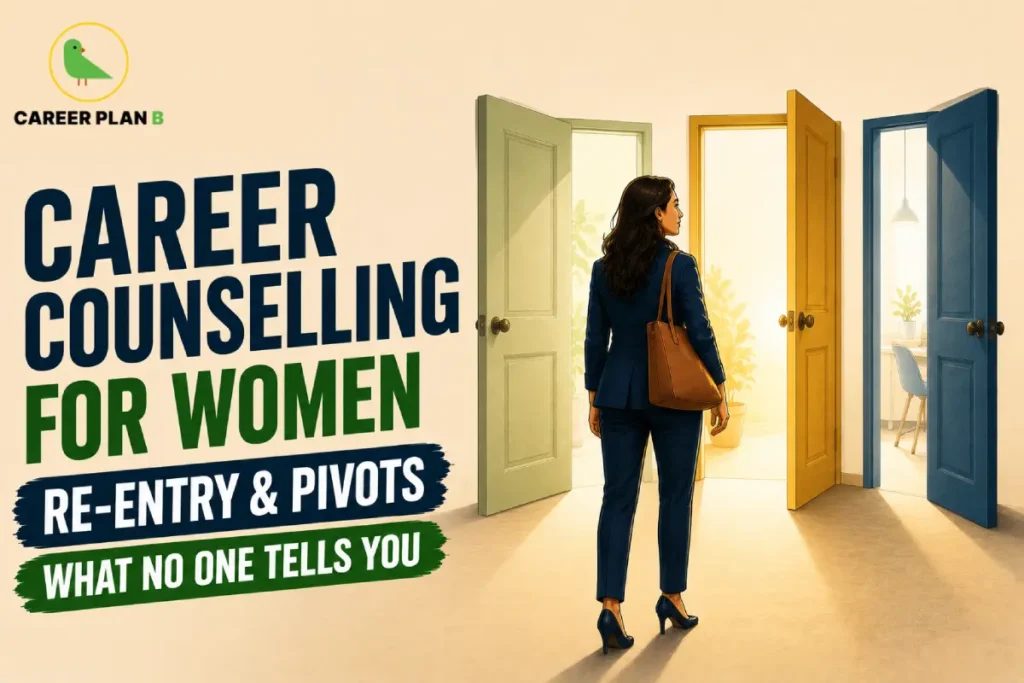
Introduction
There is a moment when many women in India quietly know the one where you close your laptop for what you think is just a few months, and then look up one day to find that three years have passed. You have raised a child, cared for a parent, held a household together, and somewhere in the middle of all of that, your career, the one you worked so hard to build, started to feel like it belonged to someone else. This is the reality of career counselling for women professionals in India, and it is far more common, and far more complicated, than the corporate world likes to admit.
This specialized branch of career counselling for working professionals is not just about updating a CV or rehearsing interview answers. It is about untangling the identity questions, the confidence gaps, and the very real market biases that come with stepping away and then trying, with your whole heart, to step back in.If you are one of the millions of women navigating this, this blog is for you. Not a checklist. Not a lecture. A conversation.
The Career Break Reality in India: It Is Not What You Think
Let’s start with the number that stopped us in our tracks. In India, around 7 million women have taken a career break and are currently seeking work. Seven million. That is not a niche problem — that is a national one.
And yet, the way these women are treated when they try to return tells a very different story. Research from Ashoka University found that, on average, women returning after a career break receive 49% fewer callbacks than women with similar qualifications who have not taken a break. Read that again. Same degree, same experience, same skills and half the opportunities, simply because of a gap. The study, published by the university’s Department of Economics, looked at the Indian private sector specifically, and the results were sobering.
What makes it more personal is why these breaks happen. 46% of women in India say their career took a backseat to family responsibilities at some point in their lives. For most, it was not a choice made lightly. It was the only option available because childcare is expensive, eldercare falls disproportionately on women, and workplaces rarely made it easy to stay.
Have Any Doubts?
Re-entry Anxiety: The Fear Is Real, But So Is the Way Forward
If the thought of sending your first job application after a break makes your stomach drop — you are not imagining things, and you are not being dramatic. That anxiety has a name, and it has a cause.
According to a LinkedIn report, 77% of working women in India felt that a career break had set them back in their careers due to stigma. And because of that stigma, 50% of women found it difficult to explain their break to recruiters, 42% chose to leave it off their CVs entirely, and 35% admitted to lying about it during interviews.
That last number is not a moral failing — it is evidence of how unsafe the re-entry environment feels. When honesty costs you the interview, people hide the truth. And then they carry the weight of that hiding, too.
But here is what is actually true: the skills you built during your break managing complex, high-stakes family situations, making decisions under pressure, negotiating, organising, adapting are real. They are transferable. They are leadership skills. The problem is not you. The problem is a hiring system that still reads a resume chronologically rather than contextually. That is the gap career counselling can help you cross.
How the Job Market Has Changed — And Where It Hasn’t
The Indian job market in 2025 is not the one you left. Some of that is genuinely good news. Remote and hybrid work is now standard in many industries. Returnship programmes structured re-entry pathways offered by companies are growing. Organisations like HCLTech and Wipro have incorporated specific programmes for women returning from one to five years away.
The GCC (Global Capability Centre) boom, the fintech expansion, and the rise of digital-first companies have created real demand for experienced professionals. Women now make up 48% of university students in India, showing that education is no longer a barrier and companies increasingly know it.
But the structural problems remain. Only 24% of managers in India are women, and in financial services, women make up 31% at entry level but just 13% in the C-suite. 62% of women rate workplace flexibility as “very important” or “essential,” and among mothers, that rises to 67%. Yet flexible, senior roles are still rare. The ladder exists — it just still has missing rungs for women.
Knowing this landscape honestly, not optimistically is the first step. Career counselling for women professionals in India means understanding both the real opportunities and the real obstacles, so your re-entry strategy is built on truth, not on wishful thinking.
The “Overqualification” Myth — And How to Handle It
Here is a conversation that happens far too often: a woman with eight years of pre-break experience applies for a mid-level role, and the recruiter tells her she is “overqualified.” What they usually mean, though they will not say it, is that they are unsure if someone returning after a break will be committed, up-to-date, or worth the salary.
Data shows that organisations are more likely to recruit less-qualified candidates over highly-skilled women returning from an extended career break, and two-thirds of professional female returners reluctantly accept lower-paid jobs, well below their potential.
This is where re-entry strategy matters enormously. The answer is not to hide your experience or to accept a role three levels below where you left. It is to reframe the narrative proactively to walk into that room (or Zoom call) and own the break as a chapter, not a crime.
Practically, this means: addressing the gap briefly, confidently, and with context in your cover letter. Highlighting what you did during that period any freelance work, volunteer roles, courses, or projects. And critically, focusing on the value you bring now, not defending the time you were away. A career counsellor can help you practise this until it feels natural rather than apologetic.
Career Pivot vs Career Re-entry: Knowing Which One Is Right for You
Not every woman returning to work wants to go back to what she was doing before.Some return to find the industry has changed beyond recognition. Others realize that staying on the exact same trajectory would lead to deep career stagnation in your 30s, finding that what drove them at 28 does not drive them at 36.
This is where the question of re-entry versus a pivot becomes important and where many women make the mistake of choosing based on fear rather than clarity.
Re-entry makes sense when your previous field still excites you, when your skills are transferable with some upskilling, and when the break was circumstantial rather than a signal of deeper dissatisfaction. A pivot makes sense when the break gives you space to reflect and realise the old path no longer fits when you are not trying to get back, but to go somewhere new.
Neither path is right or wrong. But choosing without reflection jumping into either option just to feel productive often leads to another exit six months in. The question to ask yourself is not “what job can I get?” but “what kind of work do I want to sustain?” That distinction, small as it sounds, changes everything.
How Psychometric Assessment Helps You Recalibrate
One of the most underused tools in the re-entry process is psychometric assessment and one of the most valuable, especially after a long break.
When you have been away from professional life for a while, your sense of your own professional identity can get fuzzy. You remember who you were at work, but you are not entirely sure how that person maps onto who you are now. Psychometric tools — personality assessments, interest inventories, aptitude mapping help make that visible. They give you language for your strengths, your working style, and the environments where you are likely to thrive.
This is particularly helpful if you are considering a pivot. Interests change. Values evolve. What felt like ambition in your twenties might look more like a need for autonomy or purpose in your thirties or forties. A structured assessment, interpreted by a trained counsellor, helps you make a decision based on evidence about yourself rather than on anxiety or pressure.
It also gives you something concrete to bring into conversations with recruiters: clarity. Knowing, and being able to articulate, exactly what kind of role suits you and why, signals a self-awareness that stands out in any interview room.
Have Any Doubts?
Flexible Work, Freelance, and Portfolio Careers as a Bridge
For many women, the most sustainable path back to full-time work is not a single leap — it is a series of smaller, deliberate steps. Freelance projects. Consulting assignments. Part-time roles. Contract work. These are not consolation prizes. They are bridges.
India is witnessing a 25–30% surge in freelance hiring, driven by cost efficiency, access to niche skills, and project-based needs. This is not a trend that benefits only fresh graduates. Experienced professionals — especially those with domain expertise in areas like finance, HR, marketing, or technology are exactly what many companies need on a project basis.
The portfolio career model where you hold multiple smaller engagements simultaneously rather than one full-time job suits the re-entry phase particularly well. It lets you rebuild professional momentum, update your skills in a live environment, and create new references and work samples, all while managing the transition on your own terms.
Returnship programmes, mid-career re-entry pathways, and genuinely flexible work models have been identified as potentially decisive in retaining and re-engaging women in the workforce. The key is to treat freelance or part-time work not as settling, but as strategy.
What Our Re-entry Programme Looks Like
At CareerPlanB, we designed our women’s re-entry programme specifically around one insight: the problems women professionals face when returning to work are not just practical they are emotional, psychological, and strategic all at once. You cannot hand someone a resume template and call it counselling.
Our structured three-session approach works like this:
Session 1 — Clarity: We begin by understanding where you are, not just professionally but personally. What drove the break, and what’s changed since then? What do you want from the next chapter, and where do your compromises end? We use psychometric tools in this session to help surface patterns in your interests, strengths, and working style that you may not have examined in a while.
Session 2 — Strategy: Armed with clarity, we build a realistic, market-aware re-entry plan. This includes: identifying target roles and sectors, mapping transferable skills, closing skill gaps, and addressing the break narrative so that you go into every interview with a response that is confident, honest, and human. We also discuss whether re-entry, a pivot, freelance, or a portfolio approach makes most sense for your specific situation.
Session 3 — Execution: This session focuses on the practical — LinkedIn profile, resume, outreach strategy, and interview preparation. We roleplay difficult questions. We address the salary negotiation conversation (which many returning women find especially difficult). And we discuss what healthy, sustainable re-entry looks like — including the warning signs of environments that will repeat the same patterns that pushed you out in the first place.
There is no judgment in any of these sessions. No “you should have kept your skills updated.” No surprise that a career break happened. You are not starting over — you are starting from experience.
A Real Story: Priya’s Return After Three Years
Priya (name changed), a marketing professional from Gurgaon, came to us after a three-year career break. Two years had been spent caring for a seriously ill parent, and the third was devoted to rebuilding confidence and deciding what to do next.
Before stepping away, she had built a strong career with fifteen years of experience across two multinational companies, leading teams and managing significant budgets. Yet after nearly a year of job applications, she found herself trapped in a cycle of silence and polite rejections. Despite her experience, she began questioning whether she still belonged in the professional world.
One of the first things she said was: “I don’t know if I’m still the person who did all of that.” It became clear that this wasn’t a resume issue — it was a confidence and identity challenge, something many returning professionals face.
Over three counselling sessions, we helped Priya separate the real impact of her career break from the fears surrounding it. Professionally, she had lost less ground than she assumed. Marketing had become more digital-first, but only a few weeks of targeted upskilling were needed to close that gap. The bigger challenge was rebuilding self-belief.
Together, we reframed her caregiving experience as evidence of transferable strengths: project management, stakeholder coordination, problem-solving, and crisis management. Through psychometric assessments and career exploration exercises, she also realised she no longer wanted to return to a large corporate environment. She wanted a role with greater ownership and autonomy.
Four months later, Priya joined a fast-growing D2C brand in Gurgaon as Head of Marketing. The role was more senior than she had expected, and the compensation was close to her pre-break salary. Her story reflects what focused, judgment-free career counselling can make possible for women returning to work.
How Career Plan B Helps
If you’ve read this far, something in here landed.
Maybe you stepped away for reasons that made sense at the time, and now you’re wondering if there’s still space for you. Perhaps you’re done shrinking yourself to fit a role that was never designed with you in mind. Or maybe you just need someone to help you see your own experience from the outside. You’re not starting over. You’re starting from somewhere with experience, judgment, and self-knowledge that most 25-year-olds haven’t earned yet.
That’s exactly what CareerPlanB is built for. Our career counselors work specifically with mid-career and senior women professionals navigating re-entry, pivots, and transitions. Our PsycheIntel assessment is designed to give you the kind of clarity that makes your next step feel purposeful rather than terrifying.
Get In Touch With Us
Frequently Asked Questions
Q1: Can career counselling for women professionals in India actually help with returning after a long break?
Yes — and it’s often where it adds the most value. A good counselor helps you reframe your break as experience, not a gap, and builds a re-entry strategy that reflects who you are now, not who you were before you left.
Q2: How long is “too long” a career break before re-entry becomes unrealistic?
There’s no hard cutoff. Women in India have successfully returned after 2, 5, even 10-year breaks — what matters more is the sector, your transferable skills, and how you position the transition, not the calendar.
Q3: What does career break counselling in India typically cover?
Beyond job search tactics, it should address confidence rebuilding, skills gap assessment, updated market positioning, and realistic goal-setting because returning to work is as much a mindset shift as a practical one.
Q4: Should I return to my old field or use this as an opportunity to pivot?
That depends entirely on why you left and what’s changed in you since. Career counselling for women in India helps you separate “familiar and safe” from “genuinely right” ; those aren’t always the same answer.
Q5: Is returning to work after a career break in India harder in certain industries?
Yes — traditional sectors like finance and law can be less flexible, while tech, consulting, and entrepreneurship tend to have more re-entry pathways. A counsellor with sector knowledge can help you target realistically rather than broadly.
Conclusion
A career break does not define the rest of your career unless you let it be the only story anyone hears about you. The Indian job market has real biases, yes. Re-entry is harder than it should be, yes. But it is also more possible than the silence and rejection you may have been experiencing have led you to believe. Thousands of women in India are returning, pivoting, and rebuilding on their own terms, with support that understands the full picture.
You do not need to have it all figured out before you start. You do not need to justify your break or apologise for your choices. What you need is a clear-eyed look at where you are, a realistic map of where you can go, and someone in your corner who has walked this path with women before you. That is what we are here for and we are ready when you are.