Team Career Plan B · November 2, 2026
Introduction
It was past 9 pm when Riya’s phone buzzed with an unknown number. The voice on the other end sounded confident, almost excited. “Congratulations! Based on your CUET 2026 score, we can guarantee you a seat in a top private university, but only if you pay the registration fee within the next two hours.” Riya’s parents were thrilled. Within minutes, they were ready to transfer the money.
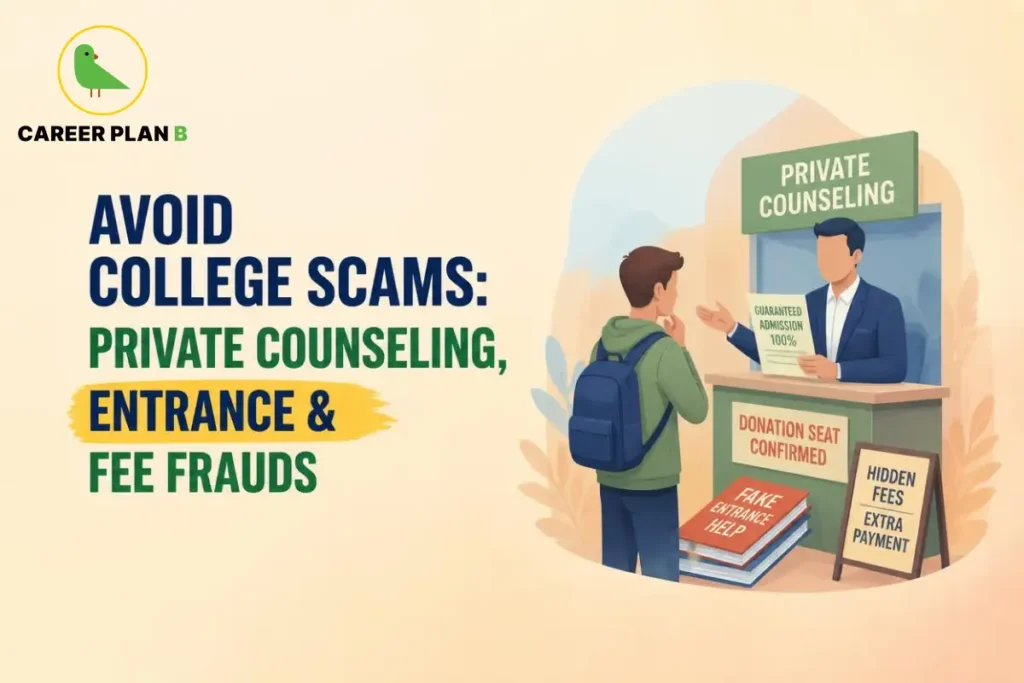
This is exactly how most college admission scams begin, not with a warning sign, but with a moment of relief after months of stress. Every year, thousands of students fall for fake offers, fraudulent counselling agents, and rigged fee portals right after their entrance exams. With CUET 2026 results expected to bring another wave of anxious students and parents searching for quick admission solutions, understanding college admission scams has never been more important. In this blog, we’ll walk through how these scams work, the red flags to watch for, and how you can choose a safe backup admission without falling into a trap.
Why Are Students an Easy Target Right After CUET 2026?
Think about the few weeks right after your CUET results are out. You’re tired, a little anxious, and constantly checking your phone for counseling updates. Your parents are equally worried, hoping you get into a good college without too much hassle. Scammers know this window very well, and they plan around it.
This is the exact emotional state that makes college admission scams so effective. A confident voice on the phone, a few official-sounding terms, and a tight deadline are often enough to push families into making quick decisions. One Delhi-based student shared online how an agent called him within hours of his CUET 2026 result declaration, claiming to have “insider access” to seat allotments. The script may sound different each time, but the pattern is almost always the same: urgency, exclusivity, and pressure to pay immediately.
Common Types of College Admission Scams You Should Know
Not all scams look the same, but most fall into a few common categories. Knowing these can help you spot trouble before it’s too late.
Fake “Guaranteed Seat” Offers
These calls or messages promise a confirmed seat in a popular course or university, often “before counselling even starts.” No official university or board can guarantee a seat outside the proper CUET 2026 counselling process, so this is usually the first red flag.
Entrance Exam Leak or Shortcut Promises
Some fraudsters claim they can help “adjust” scores, provide leaked papers, or get students into merit lists through backdoor methods. Apart from being completely illegal, these promises almost always end with the student losing money and gaining nothing.
Donation Seat or Management Quota Frauds
This is one of the more convincing scams because management quota seats do genuinely exist in some private institutions. However, fraudsters misuse this concept by demanding huge “donations” in cash or through unofficial channels, with no real seat ever materialising.
Fee Fraud Through Fake Payment Portals
Scammers create websites or payment links that look almost identical to a university’s actual portal. Students pay the “admission fee,” receive a fake receipt, and later discover the university has no record of their payment or application at all.
To make this clearer, here’s a quick comparison:
| Genuine Admission Practice | Fraudulent Practice |
|---|---|
| Seat allotment through official CUET 2026 counselling | Seat “guaranteed” before counselling begins |
| Fee paid through the university’s official website portal | Payment requested via personal UPI ID or third-party link |
| Admission confirmation via official email/ID from the university domain | Confirmation sent through personal WhatsApp or an unofficial phone number |
| Transparent fee structure published on the university’s official website | Vague, negotiable, or “cash only” fee demands |
How Private Counseling Frauds Operate
Private counseling can be genuinely helpful when it comes from a qualified, registered consultant. But fraudulent operators often follow a fairly predictable pattern, and learning this pattern is half the battle.
- Initial Contact: You receive a call, SMS, or email shortly after your CUET 2026 result, often claiming to have your “details from the board.”
- Building Trust: The agent shares impressive-sounding statistics, fake testimonials, or claims of tie-ups with “top universities.”
- Creating Urgency: You’re told seats are “filling fast” and a decision must be made within hours.
- Requesting Payment: A registration, processing, or “seat-blocking” fee is demanded, usually through informal payment methods.
- Disappearing Act: Once the payment is made, communication slows down or stops entirely, and the promised admission never happens.
If you notice even two or three of these steps happening in your conversation with an agent, it’s worth pausing and verifying everything independently before going further.
Choosing a Backup Admission Safely — What Should You Check?
Backup admission plans are smart, especially when CUET 2026 results don’t go exactly as hoped. But a backup option should still be verified carefully, the same way you’d check your first-choice college.
Verify University Recognition
Before considering any private college as a backup, check whether it is recognised by the University Grants Commission (UGC) or the All India Council for Technical Education (AICTE), depending on the course. Both bodies maintain official lists of approved institutions on their websites, ugc.gov.in and aicte-india.org, which are publicly accessible and free to check.
Cross-Check With Official University Websites
This is perhaps the simplest yet most overlooked step. Every recognised university has its own official admissions page where fee structures, eligibility criteria, and application deadlines are clearly listed. If an agent’s claims don’t match what’s written on the university’s own website, that mismatch is your answer. For example, IGNOU’s official admission portal (ignou.ac.in) and many central universities publish their CUET 2026-based admission process directly, so there’s rarely a need to rely on a middleman for basic information.
Real Checklist Before You Pay Any Admission Fee
Before transferring any amount, however small it may seem, run through this checklist:
- Confirm the university’s name and recognition status on UGC or AICTE’s official website
- Visit the university’s own official website and locate the admission/fee section yourself
- Check that the payment is being made directly to the university’s account, not a personal one
- Ask for the official admission letter or offer letter on the university’s letterhead with verifiable details
- Avoid any payment request that comes with extreme urgency or threats of “losing the seat”
- Keep screenshots and records of all communication for future reference
A few minutes of checking can save months of stress and a significant amount of money.
Have Any Doubts?
How Career Plan B Helps
Career Plan B helps students and families navigate CUET 2026 admissions and backup options with clarity, trust, and structured guidance in a crowded information environment:
- Personalized Career Counselling: Helps students evaluate private colleges, CUET-based admissions, and backup options based on their academic profile, interests, and long-term goals.
- Psycheintel & Career Assessment Tests: Provides data-backed insights into aptitude, personality traits, learning styles, and academic/career alignment, helping families make informed and confident decisions.
- Admission & Academic Profile Guidance: Supports students in understanding genuine admission pathways, comparing verified college options, and building a strong academic profile while avoiding misinformation or rushed choices.
- Career Roadmapping: Helps students create a structured long-term plan that connects their current admission decisions with future academic and professional growth.
- End-to-End Guidance: Assists families throughout the counselling and admission process so decisions are not influenced by pressure, confusion, or unverified outreach—but are grounded in clarity and alignment.
For Latest Information
Frequently Asked Questions
- How can I verify if a private college is genuinely recognised?
Check the official UGC or AICTE website, depending on whether it’s a general degree or technical course. Both portals list approved and recognised institutions, and you can search by the college’s name directly.
- Is it normal to get calls from colleges right after CUET 2026 results?
Some genuine outreach does happen, but legitimate institutions rarely demand immediate payment over a call. Always cross-check any such call with the university’s official website before responding.
- What should I do if I’ve already paid money to a fraudulent agent?
Stop all further payments immediately, collect all evidence such as messages, call recordings, and receipts, and report the matter to your local cyber cell or consumer helpline as soon as possible.
- Are management quota seats always a scam?
No, management quota seats are legal in many private institutions, but the process must go through the university’s official admission office with proper documentation, not cash payments to individual agents.
- How do I know if a payment link is genuine?
A genuine payment link will always be on the university’s own domain (matching their official website URL) and will generate a receipt that reflects on your application status when you log in.
Conclusion
College admission season can feel like a race against time, but it doesn’t have to come with unnecessary risk. By understanding how college admission scams work, recognising the warning signs in private counselling, and taking a few minutes to verify every claim against official university websites, students and parents can make confident, safe choices.
CUET 2026 is just one step in a much bigger journey, and your backup plan deserves the same care as your first choice. Take a breath, double-check before you pay, and remember that a genuine opportunity will never disappear because you took ten minutes to verify it.