Careerplanb · July 30, 2026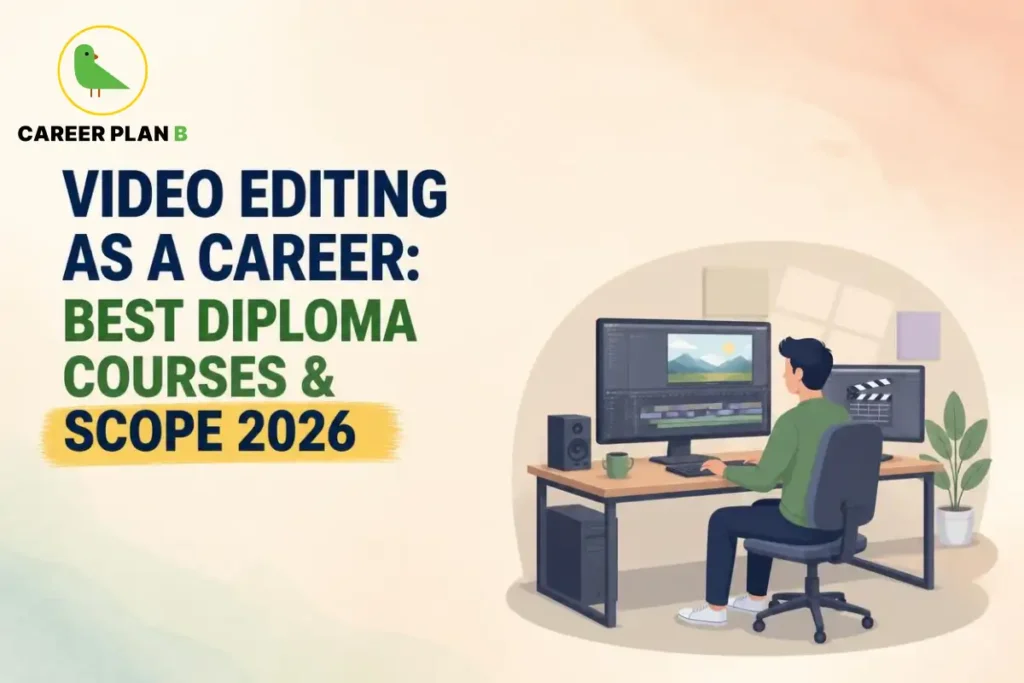
Introduction
Ever paused a Reel just to rewatch a perfectly timed cut? Someone trained, paid, and skilled made that happen, and it wasn’t magic. That’s precisely why Video Editing Courses have quietly turned into one of India’s most in-demand creative careers.
But is this path actually worth pursuing seriously, or just a hobby dressed up as a career? This guide unpacks the best Video Editing Courses, real salary numbers, and genuine career scope for 2026. Stick around, and editing might stop looking like a backup plan and start looking like a real one.
Why Is Video Editing Genuinely Growing as a Career?
India’s digital content economy has expanded dramatically. Millions of YouTube channels, streaming platforms, and digital businesses now compete for viewer attention daily. Consequently, skilled editors are needed across nearly every industry, not just entertainment alone.
Furthermore, short-form content on Instagram and YouTube Shorts has created thousands of new editing opportunities. As a result, demand extends well beyond big production houses into small businesses, influencers, and educational platforms.
Is AI Actually Replacing Video Editors?
No, and this concern is largely misunderstood. AI tools genuinely speed up rough cuts and workflow tasks. However, creative storytelling, pacing judgement, and emotional timing remain distinctly human strengths that AI cannot fully replicate yet.
What Does a Video Editing Diploma Course Actually Teach?
A structured diploma builds far more than basic cutting skills. Instead, strong programmes cover the full post-production pipeline, preparing students for genuinely professional work.
| Skill Area | What It Covers | Common Software |
|---|---|---|
| Core Editing | Cutting, sequencing, pacing, and story flow | Adobe Premiere Pro, Final Cut Pro |
| Colour Grading | Visual tone, mood, and consistency across shots | DaVinci Resolve |
| Motion Graphics | Titles, transitions, and animated visual elements | After Effects |
| Audio Syncing | Aligning sound with visuals, balancing audio levels | Premiere Pro, Audition |
Notably, many diploma courses now include dedicated modules on AI-assisted editing tools. Therefore, students graduate comfortable using both traditional software and newer AI features, genuinely improving their workflow speed from day one.
How Long Does a Video Editing Diploma Course Typically Take?
Most diploma programmes run between six months and one year, though advanced diplomas can extend up to two years. Meanwhile, shorter certification courses focused on specific software often take just a few weeks, suiting students who want faster, targeted skill-building.
Suggested blog :- Top Freelance Careers in Design, Media & Music (2026)
What Does a Career in Video Editing Courses Actually Look Like?
This field offers genuinely diverse paths, rather than one fixed job title. Depending on your interest, you can specialise in several distinct directions.
- YouTube or Social Media Editor – editing content specifically for creators and digital platforms
- Wedding Video Editor – specialising in cinematic edits for personal events
- Corporate Video Editor – producing training, marketing, and internal communication videos
- Motion Graphics Designer – focusing on animated visual elements and branded graphics
- Film or OTT Editor – working on longer-format content for streaming platforms
- Freelance Editor – taking on varied projects independently across multiple clients
Moreover, professionals trained in video editing can work as freelancers, join production houses, or become part of in-house corporate teams. This flexibility genuinely makes it a stable, adaptable profession rather than a narrow one.
Confused about your next steps? Get a personalized roadmap tailored to your career goals.
What Salary Can You Actually Expect?
Salary genuinely depends on skill level, niche, and client base. However, current data gives a realistic picture of what to expect at different career stages.
How Does Salary Actually Grow With Experience?
Freshers typically earn between fifteen and thirty thousand rupees per month, depending on portfolio strength and software expertise. With two to five years of experience, mid-level editors often earn between forty and eighty thousand rupees monthly. Meanwhile, experienced professionals specialising in motion graphics or VFX can earn considerably more, sometimes crossing ten to twenty-five lakh rupees annually.
Does Freelancing Actually Pay Well?
Yes, often significantly better than fixed employment for skilled editors. Freelancers can work with international clients, YouTube creators, and agencies simultaneously. Consequently, a strong portfolio combined with consistent quality can genuinely accelerate income growth faster than a traditional salaried role.
How Should You Actually Choose a Video Editing Course?
Not every course delivers equal training quality. Therefore, evaluate options carefully before enrolling and investing your time.
- Check the software coverage, ensuring the course includes Premiere Pro, DaVinci Resolve, and After Effects, not just one basic tool
- Prioritise hands-on project work over purely theoretical lectures, since portfolio strength matters most to employers
- Look for AI tool integration within the curriculum, since this genuinely reflects current industry practice
- Research placement or freelance support specifically, rather than relying on general institute claims
Do You Actually Need a Formal Diploma to Succeed?
Not strictly, though it genuinely helps build structured foundational skill faster. Many successful editors are self-taught through online tutorials and consistent practice. However, a structured diploma often shortens the learning curve and builds a stronger, more organised portfolio early on.
A Word of Caution Before You Enrol
Always verify a course provider’s reputation through genuine student reviews and placement outcomes before paying fees. Additionally, prioritise practical project experience over lengthy theoretical modules, since employers consistently value demonstrated editing skill over certificates alone.
How Career Plan B Helps
Deciding whether Video Editing Courses genuinely fit your creative and technical interests takes more than enthusiasm alone.This is where Career Plan B can help by offering:
- Personalised Career Counselling: Provides expert guidance based on individual interests, skills, and career goals, helping you judge whether video editing genuinely fits your strengths.
- Psychometric & Career Assessment Tests: Identifies strengths, personality traits, and suitable career opportunities, useful for confirming genuine creative and technical aptitude.
- Career Roadmapping: Creates a clear step-by-step plan to achieve academic and professional goals, including which editing specialisation to pursue.
- Admission & Academic Profile Guidance: Helps in selecting the right courses and colleges and improving academic profiles, so your diploma choice is genuinely outcome-driven.
Get In Touch With Us
Frequently Asked Questions
1. Is video editing a genuinely good career choice in 2026?
Yes, given rising demand from OTT platforms, YouTube, and social media, video editing offers strong, growing career opportunities across multiple industries.
2. How much do video editing diploma courses typically cost?
Costs vary widely by institute and duration, so it is best to compare a few reputed providers directly for current fee structures and course depth.
3. What software should I learn first for video editing?
Start with Adobe Premiere Pro for core editing skills, then gradually add DaVinci Resolve for colour grading and After Effects for motion graphics.
4. Can I start freelancing immediately after a diploma course?
Yes, many editors begin freelancing right after completing a diploma, though building a strong portfolio first genuinely improves your ability to attract clients.
5. Is AI going to replace video editing jobs?
No, AI tools speed up certain tasks, but creative storytelling and pacing decisions remain firmly a human skill that AI cannot fully replace.
Conclusion
Video editing has genuinely evolved from a niche hobby into a full-fledged, well-paying career path. With OTT platforms, YouTube, and social media all competing for skilled editors, this field offers real growth potential for anyone willing to build genuine technical and creative skill.
If you are still weighing whether this creative path suits you, thoughtful guidance can bring real clarity before you commit time and money. The right course, chosen carefully, can turn a passion for visuals into a sustainable career. Talk to a Career Plan B counsellor today to see if video editing is the right career path for you.