Careerplanb · July 30, 2026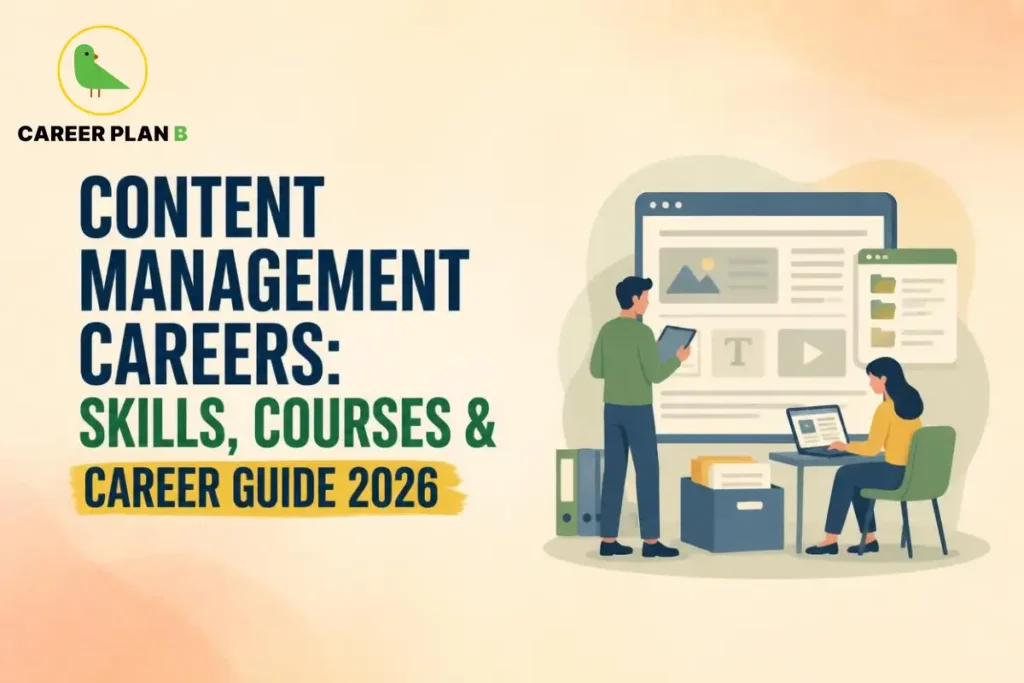
Introduction
An AI tool can write a blog post in eleven seconds flat. Deciding whether that post should even exist takes a human brain, and that’s exactly the shift powering Content Management Careers right now. Funny how the “robots taking jobs” story quietly created a new one instead.
So what does this career path actually involve in 2026, now that writing alone isn’t enough? This guide breaks down essential skills, relevant courses, and honest scope behind Content Management Careers. By the end, you’ll see exactly why this field is growing, not shrinking.
Why Are Content Management Careers Growing Despite AI Tools?
AI genuinely handles basic content creation quickly and cheaply now. However, crafting a strategy that positions a brand meaningfully, choosing the right topics, and maintaining a consistent voice still demands real strategic thinking. Consequently, this shift has made planning and oversight skills more valuable than pure writing speed alone.
Furthermore, businesses across nearly every sector now maintain active digital content operations. Therefore, demand extends well beyond media companies into e-commerce, fintech, healthcare, and education, all of which need structured content management.
What Exactly Does “Content Management” Actually Cover?
This field spans several connected activities, not one narrow task. It includes planning content calendars, managing CMS platforms, coordinating writers and designers, analysing performance data, and ensuring content aligns with broader business goals. Therefore, it sits at the intersection of writing, strategy, and technical platform management.
Confused about your next steps? Get a personalized roadmap tailored to your career goals.
What Does a Content Management Course Actually Teach?
Strong courses build a genuinely well-rounded skill set, covering both creative and technical foundations. Here is a simple breakdown of what most quality programmes include.
| Skill Area | What It Covers | Why It Matters |
|---|---|---|
| CMS Platform Skills | WordPress, Drupal, and similar content management systems | Core technical foundation for managing digital content |
| SEO Fundamentals | Keyword research, on-page optimisation, search visibility | Ensures content actually reaches its intended audience |
| Content Strategy | Editorial calendars, audience research, brand voice consistency | Aligns content with genuine business objectives |
| Analytics & Reporting | Interpreting performance data and audience behaviour | Guides ongoing content decisions with real data |
Notably, several respected platforms offer targeted certifications in this space. For instance, HubSpot’s Content Marketing Certification and Google’s Digital Garage programmes provide genuinely practical, industry-recognised training without requiring a full formal degree.
Do You Need Coding Skills for CMS Platforms?
Not necessarily. Many popular CMS training programmes are specifically designed for learners without coding backgrounds. Therefore, you can genuinely build proficiency in customising websites, managing user roles, and implementing SEO practices without needing to write code yourself.
Must read :- From Content Writing to SEO for Global Opportunities
Career in Content Management: What Roles Actually Exist?
This field offers genuinely diverse roles, rather than one fixed job title. Depending on your interests and strengths, several distinct directions exist.
- Content Strategist – planning comprehensive content direction aligned with business goals
- CMS Administrator – managing website platforms, user permissions, and technical content operations
- Content Marketing Manager – overseeing campaigns, editorial calendars, and content performance
- SEO Content Specialist – optimising content specifically for search visibility and organic traffic
- Digital Content Creator – producing written, visual, or multimedia content across platforms
Moreover, many professionals move fluidly between these roles as their career progresses. Consequently, starting as a content writer or CMS specialist often leads naturally toward broader strategist or managerial positions over time.
How Is a Content Strategist Different From a Content Writer?
A content writer focuses primarily on producing individual pieces, articles, posts, or scripts. In contrast, a content strategist decides what gets written, why, and how it fits into a larger plan. Therefore, strategists typically need stronger analytical and planning skills alongside writing ability.
What Salary Can You Actually Expect in Content Management?
Compensation varies considerably based on role, experience, and company size. Entry-level content roles in India often start modestly, while experienced strategists command significantly higher packages as responsibility grows.
How Does Experience Actually Affect Earning Potential?
Fresh graduates typically start in content creation or junior strategist roles, often earning more modest starting salaries. However, professionals who build strong portfolios and demonstrate measurable business impact, through improved engagement or search rankings, can progress into senior strategist or managerial roles with considerably stronger compensation over time.
How Should You Actually Build This Career?
Breaking into content management works best through a structured, portfolio-driven approach rather than credentials alone.
- Start with a foundational degree or certification in marketing, communications, or journalism, or a focused short course if you already have a different background
- Learn at least one CMS platform thoroughly, since practical WordPress or similar experience genuinely matters to employers
- Build a real portfolio, including sample editorial calendars, content audits, or SEO case studies, not just writing samples alone
- Pursue targeted certifications from platforms like HubSpot or Google, since these genuinely demonstrate practical, current skill
- Seek internships or freelance projects early, since hands-on experience accelerates learning far faster than theory alone
A Word of Caution Before You Commit
Always research a specific role’s actual day-to-day responsibilities before committing, since “content management” job titles vary considerably between companies. Additionally, prioritise building measurable results in your portfolio, since employers increasingly value demonstrated business impact over generic writing samples.
How Career Plan B Helps
Deciding whether Content Management Careers genuinely fit your strengths takes more than comfort with writing alone.This is where Career Plan B can help by offering:
- Personalised Career Counselling: Provides expert guidance based on individual interests, skills, and career goals, helping you judge whether content management genuinely fits your strengths.
- Psychometric & Career Assessment Tests: Identifies strengths, personality traits, and suitable career opportunities, useful for confirming genuine aptitude for strategic planning and analytical thinking.
- Career Roadmapping: Creates a clear step-by-step plan to achieve academic and professional goals, including which content management specialisation to pursue.
- Admission & Academic Profile Guidance: Helps in selecting the right courses and colleges and improving academic profiles, so your certification choices stay genuinely relevant.
Get In Touch With Us
Frequently Asked Questions
1. Is content management a good career choice in 2026?
Yes, especially as AI handles basic writing tasks, making strategic thinking, planning, and platform management genuinely more valuable skills for businesses.
2. Do I need a specific degree for content management careers?
Not strictly. While marketing or communications degrees help, many professionals build strong careers through certifications, portfolios, and hands-on experience instead.
3. What is the most important skill for a content strategist?
Strong analytical thinking combined with writing ability matters most, since strategists must plan content that genuinely aligns with measurable business objectives.
4. Which CMS platform should I learn first?
WordPress is a strong starting point, given its widespread use across businesses, though platforms like Drupal are also valuable depending on your target industry.
5. Can I transition into content management from a different field?
Yes, professionals from journalism, marketing, and even technical writing backgrounds regularly transition successfully into content management roles.
Conclusion
Content management has evolved into a genuinely strategic career, far beyond simply writing articles or managing a website. As AI handles routine content tasks, the human skills of planning, analysis, and audience understanding have only grown more valuable across nearly every industry.
If you are still weighing whether this career path suits your strengths, thoughtful guidance can bring real clarity before you commit time and resources. The right combination of creativity and strategy can build a genuinely sustainable, future-proof career. Talk to a Career Plan B counsellor today to see if content management is the right path for you.