Team Career Plan B · July 18, 2026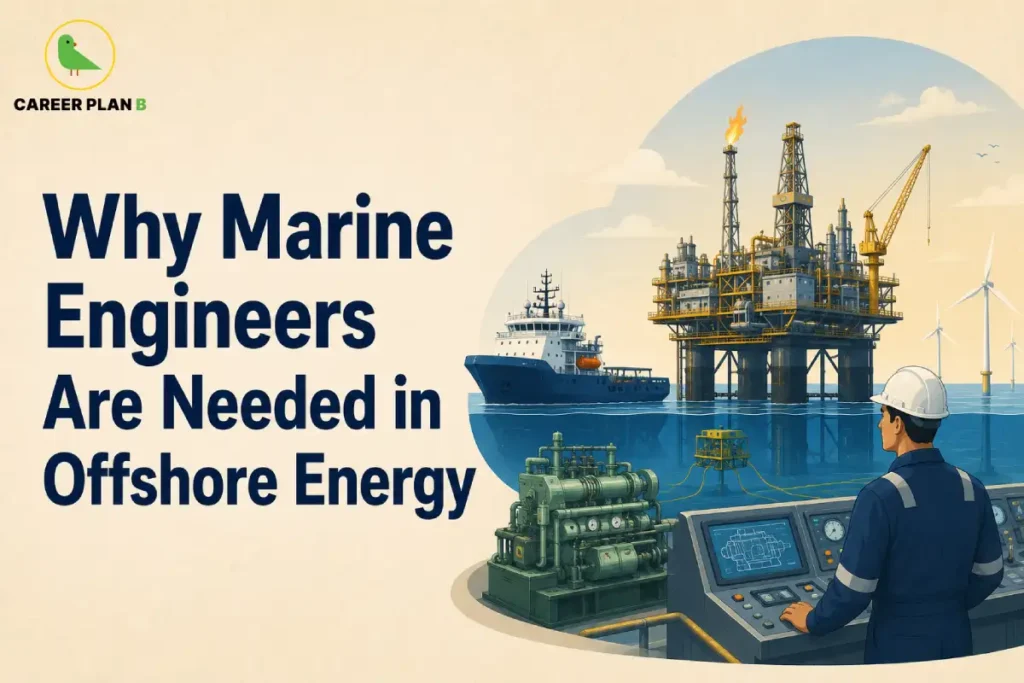
Introduction
Offshore energy platforms, oil rigs, gas platforms, and increasingly, wind farms rank among the most complex machines ever built. They generate their own power, run their own safety systems, and operate for weeks without touching land. And none of them function without marine engineers in offshore energy. Most students associate marine engineers purely with cargo ships and merchant navy life. But a large and fast-growing share of the profession actually works offshore, keeping oil platforms, floating production units, and now wind farms running safely. This overlap isn’t a coincidence; offshore platforms and FPSOs (floating production, storage, and offloading units) are essentially specialized vessels. They need the exact same core skills a marine engineer builds on a ship: power generation, engine and pump maintenance, and safety-critical systems management.
What Does Offshore Energy Actually Involve?
The offshore oil and gas industry uses several types of structures. Exploration platforms help locate oil and gas reserves. Fixed production platforms extract resources over long periods. FPSOs are large floating vessels that process and store oil before transporting it to shore.
Alongside oil and gas, India is also investing in offshore renewable energy, particularly offshore wind. The Ministry of New and Renewable Energy notified the National Offshore Wind Energy Policy in 2015. India has also set a target of 30 GW of offshore wind capacity by 2030. Project development is underway off the coasts of Gujarat and Tamil Nadu under the Ministry’s coordination (MNRE), the official government body for offshore wind development in India.
Whether it’s an oil platform or an offshore wind substation, these structures function like floating cities. They require constant power generation, mechanical maintenance, and rigorous safety systems to operate safely far from shore.
Why Are Marine Engineers Essential in Offshore Energy?
This is where marine engineering training becomes directly valuable.
Power generation and distribution: Offshore platforms generate their own electricity through diesel generators, gas turbines, or hybrid systems the same core systems marine engineers manage aboard ships.
Mechanical maintenance: Engines, pumps, compressors, and cooling systems onboard platforms require the same troubleshooting and preventive maintenance skills marine engineers develop at sea.
Safety-critical systems: Fire suppression, ballast control, and emergency power backup are all systems marine engineers are specifically trained to manage, with skills that transfer almost directly to offshore platforms.
Dynamic Positioning (DP) systems: FPSOs and drillships rely on DP systems to stay precisely positioned without anchors, and marine engineers with DP training are essential to operating and maintaining these systems.
Could Offshore Platforms Run Without Marine Engineers?
Realistically, no. Marine engineers bring a unique combination of mechanical expertise, safety training, and experience in isolated, high-risk environments. Few other engineering backgrounds offer this combination as directly or efficiently.
Marine Engineer Career Scope in Offshore Energy
The marine engineer career scope in offshore energy includes roles like platform engineers, technical roles supporting Dynamic Positioning Operators (DPOs), FPSO engineers, and, increasingly, offshore wind technicians and engineers. Many marine engineers transition into offshore energy after gaining a few years of sea experience on merchant vessels. This move typically requires additional offshore safety certifications, most commonly BOSIET (Basic Offshore Safety Induction and Emergency Training) on top of standard marine engineering certification from the Directorate General of Shipping (DG Shipping), India’s official maritime regulatory authority.
Salary and Growth in Offshore Energy Roles
Marine engineering salary in India in offshore oil and gas roles is often higher than equivalent merchant navy positions, largely due to hazard pay, specialized certifications, and the technical demands of platform work.
The marine engineering future scope looks particularly strong in offshore renewable energy. As India scales up offshore energy jobs in India through both oil and gas and offshore wind, demand for engineers with marine backgrounds is expected to grow steadily over the next decade, especially as offshore wind moves from policy to active construction.
Is Offshore Energy a Good Career Path for Marine Engineers?
Pros:
- Higher pay than many merchant navy roles
- Exposure to cutting-edge offshore technology
- Often shorter rotation cycles compared to long merchant navy sea postings
Cons:
- Hazardous, high-risk work environment
- Remote locations with limited connectivity
- Physically and mentally demanding schedules
Is Offshore Wind the Future for Marine Engineers?
As India’s offshore wind sector moves from policy into active construction with tenders and surveys already underway off Tamil Nadu and Gujarat, it’s likely to become a significant new employer of marine-trained engineers over the next several years, alongside the traditional offshore oil and gas sector.
Have Any Doubts?
Why to Get Into Offshore Energy as a Marine Engineer
- Complete a marine engineering degree and gain initial sea experience on merchant vessels
- Clear required DG Shipping certification exams
- Obtain offshore safety certifications (e.g., BOSIET)
- Apply to exploration and production companies, or emerging offshore wind developers
How Career Plan B Helps
Choosing a path within marine engineering, the merchant navy, offshore oil and gas, or emerging offshore wind requires understanding your own strengths and risk tolerance. Career Plan B offers personalized career counselling, PsycheIntel and career assessment tests, and academic profile guidance to help you map out the right offshore career path, backed by a clear roadmap to get there.
For Latest Information
Frequently Asked Questions
- Why are marine engineers needed in offshore energy?
Offshore platforms function like floating vessels, requiring the same power generation, mechanical maintenance, and safety skills marine engineers develop at sea.
- Do marine engineers earn more in offshore oil and gas than in the merchant navy?
Often yes, due to hazard pay and the specialized skills required for platform-based work.
- What certifications do marine engineers need for offshore energy roles? Beyond standard DG Shipping certification, most offshore roles require additional safety training, such as BOSIET.
- Is offshore wind a good career option for marine engineers?
Yes, it’s an emerging and growing sector in India, with significant government-backed projects planned for the coming years.
- Is offshore energy work more dangerous than merchant navy work?
Both involve risk, but offshore platforms often involve higher-hazard environments due to oil, gas, or high-voltage systems onboard.
- Can any marine engineer switch to offshore energy roles?
Most can, provided they complete the required offshore safety certifications and gain relevant sea experience first.
Conclusion
Marine engineers in offshore energy are far from a niche exception. They play a vital role in keeping oil rigs, FPSOs, and offshore wind farms operating safely. Their expertise in power systems, mechanical maintenance, and emergency safety makes them well suited to challenging offshore environments.
India continues to expand its offshore oil, gas, and wind energy sectors. Marine engineers with the right certifications and experience can play an important role in this energy transition. If you’re considering your career options, now is a good time to explore opportunities in the offshore energy sector and identify where your skills fit best.