Team Career Plan B · July 18, 2026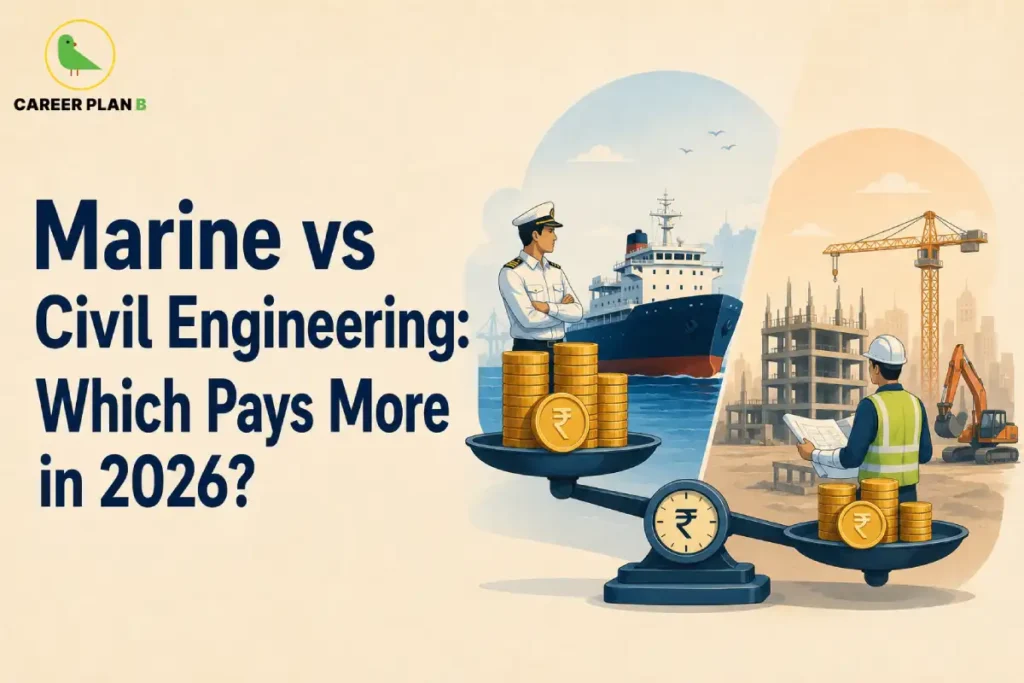
Introduction
Two engineering branches, two completely different worlds. One builds the roads, bridges, and buildings we live and work in every single day. The other keeps ships running across oceans, moving nearly everything we buy from one part of the world to another. Both are considered “core” engineering branches, not newer fields like computer science or data science, which is exactly why students assume marine engineering vs civil engineering must have similar salaries and career paths. They don’t. Civil engineering is grounded; literally and figuratively, it’s about permanent structures, government projects, and steady, land-based work. Marine engineering, on the other hand, means life at sea, rank-based promotions, and income tied to shipping cycles rather than construction budgets. The pay structures, growth patterns, and day-to-day realities are almost opposites.
What Is Marine Engineering?
Marine engineering covers the design, operation, and maintenance of a ship’s machinery, engines, boilers, generators, pumps, and electrical systems. After graduation, a marine engineer career scope typically begins with sea time as a trainee, followed by rank progression: 4th Engineer, 3rd Engineer, 2nd Engineer, and finally Chief Engineer, usually over 8-10 years, with a Certificate of Competency (CoC) exams required at each stage.
Many marine engineers eventually move ashore into ship management, marine surveying, or maritime consultancy roles. In India, marine engineering training and certification are regulated by the Directorate General of Shipping (DG Shipping), the official government body overseeing maritime education and seafarer licensing.
What Is Civil Engineering?
Civil engineering deals with the planning, design, and construction of physical infrastructure roads, bridges, buildings, dams, and water systems. It has several specializations:
- Structural engineering – designing buildings and bridges to withstand loads and stresses
- Transportation engineering – planning roads, highways, and railway networks
- Geotechnical engineering – studying soil and foundation behavior
- Construction management – overseeing project execution, budgets, and timelines
Civil engineer job opportunities span government infrastructure projects, private construction firms, real estate development, and consultancy. In India, technical education in civil engineering is regulated by the All India Council for Technical Education (AICTE), while a major share of government infrastructure work is executed by bodies like the Central Public Works Department (CPWD), under the Ministry of Housing and Urban Affairs, which handles construction and maintenance of central government buildings and infrastructure.
Marine Engineering vs Civil Engineering: Key Differences
| Factor | Marine Engineering | Civil Engineering |
|---|---|---|
| Work Environment | Ships (engine room) | Construction sites, offices |
| Study Duration | 4 years (B.E./B.Tech. Marine) | 4 years (B.E./B.Tech. Civil) |
| Entry Route | IMU CET, DG Shipping-approved institutes | JEE, state entrance exams, GATE (for PSUs) |
| Physical Demands | High (long sea duty, isolation) | Moderate to high (site visits, fieldwork) |
| Work Style | Continuous rank-based sea postings | Project-based, often region-specific |
| Travel | Extensive, international | Limited to regional, project-dependent |
Which Pays More? Marine vs Civil Engineering Salaries
Marine engineering salaries in India are generally strong from day one. A 4th engineer often earns more than most engineering freshers, boosted by sea allowances and favourable tax treatment on income earned during international voyages.
Civil engineering salaries in India varies significantly by sector. Government roles through PWD, CPWD, or PSU recruitment (often via GATE) offer moderate but highly stable pay with strong long-term benefits and job security. Private construction and real estate roles can pay more, especially in project management or specialized structural design, but income is less predictable and tied to project cycles.
In direct comparison: marine engineering usually wins on early-career pay, especially in the first 5-7 years. Civil engineering, particularly through government routes, offers steadier long-term security, even if the early salary growth is slower.
Future Scope: Which Branch Has Better Growth?
Is Civil Engineering a Safe Career Choice in India?
Yes, and increasingly so. India’s ongoing infrastructure push highways, metro systems, smart cities, and urban housing means civil engineering’s future scope remains strong for the coming decade. Government spending on infrastructure continues to create consistent demand for civil engineers across both public and private sectors.
Will Marine Engineering Remain in Demand?
Global trade isn’t slowing down, and over 90% of world trade still moves by sea. However, increasing automation on modern vessels is gradually reducing crew requirements per ship, which may affect entry-level hiring volumes over time, even as demand for skilled, certified engineers continues.
Have Any Doubts?
Lifestyle and Work Environment
- Marine engineers spend months at sea, away from family and with limited connectivity, in exchange for tax-free sea income and long shore leaves.
- Civil engineers typically work regionally, often close to home, with site visits balanced by office-based planning and design work. Government roles usually offer predictable hours and strong job stability.
Which Engineering Branch Is Better for You?
- Enjoy structured rank progression and life at sea? → Marine engineering
- Want to see physical structures you helped build stand for decades? → Civil engineering
- Prioritize strong early-career pay? → Marine engineering
- Prioritize long-term job security, especially via government roles? → Civil engineering
There’s no single answer to which engineering branch is better; your choice should depend on how you feel about travel and isolation versus staying grounded and whether you value early pay or long-term stability more.
How Career Plan B Helps
Deciding between marine and civil engineering isn’t just about comparing salary slabs; it’s about matching the career to your personality and long-term goals. Career Plan B offers personalized career counselling, PsycheIntel and career assessment tests, and academic profile guidance to help you identify the right fit, along with a clear career roadmap to move forward with confidence.
For Latest Information
Frequently Asked Questions
- Which pays more, marine or civil engineering?
Marine engineering usually pays more in the early years due to sea allowances. Civil engineering, especially in government roles, offers steadier long-term growth and security.
- Is civil engineering a good career in India in 2026?
Yes, thanks to continued infrastructure development, urbanization, and government spending on roads, housing, and smart cities.
- Is marine engineering better than civil engineering for job security?
Civil engineering, particularly through government and PSU routes, generally offers stronger long-term job security than marine engineering, which is more cyclical.
- Do civil engineers need to travel a lot?
Some travel is required for site visits and project locations, but it’s far less extensive than the international travel required in marine engineering.
- Can a civil engineer earn as much as a marine engineer?
Over a full career, yes, especially in private construction, real estate, or specialized structural roles, though marine engineers typically earn more in the initial years.
- Which branch has more government job opportunities?
Civil engineering has significantly more government job opportunities, through PWD, CPWD, railways, and various state infrastructure departments.
Conclusion
The marine engineering vs civil engineering comparison ultimately comes down to lifestyle, not just salary. Marine engineering rewards those willing to spend months at sea in exchange for strong early pay. Civil engineering rewards those who want to stay closer to home, build lasting structures, and benefit from long-term government job stability. Think carefully about which trade-off suits you better: early income versus long-term security, or life at sea versus life on land. If you’re still unsure, a conversation with a career counsellor can help you weigh your specific strengths against both paths.
The best career isn’t the one that pays the most in year one; it’s the one you’re still excited about after twenty years.