Team Career Plan B · July 18, 2026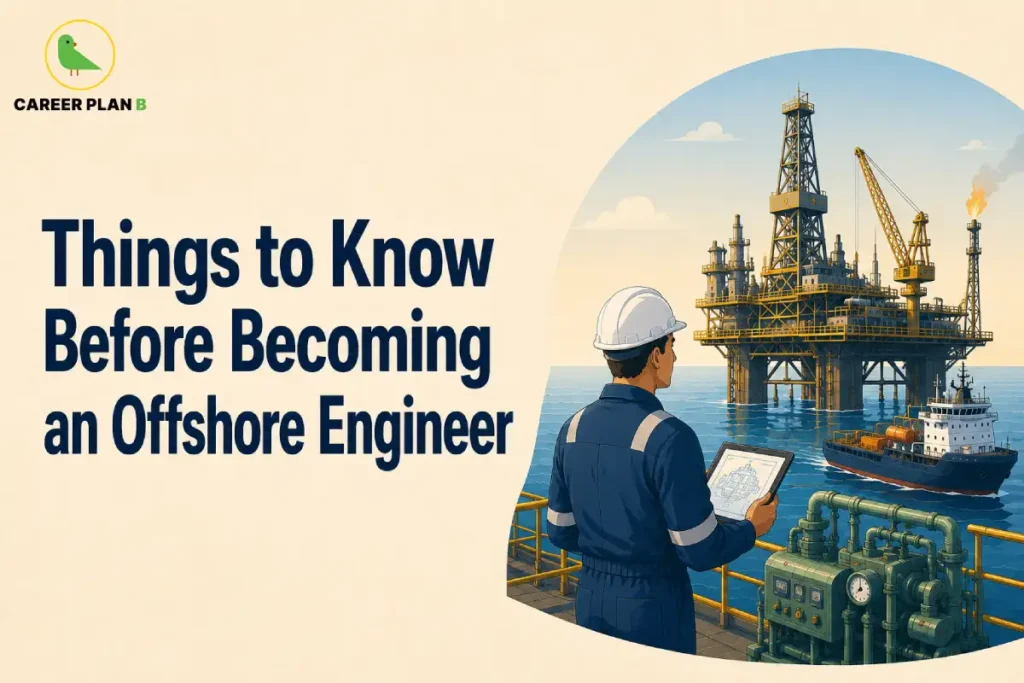
Introduction
Offshore engineering can look glamorous in job listings. High pay, international locations, and advanced offshore platforms make the career seem exciting. However, the reality comes with trade-offs that many students only discover after beginning their training.
This isn’t a “should you or shouldn’t you” guide. Instead, it’s a practical overview of the things to know before becoming an offshore engineer. It covers the realities of the job, required certifications, salary expectations, and lifestyle trade-offs. Understanding these factors early can help you make an informed career decision and avoid unexpected challenges later.
What Does an Offshore Engineer Actually Do?
“Offshore engineer” isn’t a single job title; it’s an umbrella term covering multiple disciplines. Marine engineers, petroleum/drilling engineers, and mechanical or electrical engineers all work offshore, each handling different responsibilities on the same platforms. Core responsibilities typically include machinery maintenance, power generation and distribution, safety systems management, and emergency response readiness. Offshore installations vary too. Fixed production platforms, FPSOs (floating production, storage, and offloading units), drillships, and semi-submersibles each have slightly different operational demands.
Thing 1: You’ll Need Specific Certifications Beyond Your Degree
A standard engineering degree alone isn’t enough to work offshore. Most offshore safety certifications such as BOSIET (Basic Offshore Safety Induction and Emergency Training) and HUET (Helicopter Underwater Escape Training) are mandatory before you can even step onto a platform. For marine-background engineers, additional certification through the Directorate General of Shipping (DG Shipping) is also typically required. Offshore oil and gas operations in India fall under the regulatory oversight of the Directorate General of Hydrocarbons (DGH), the official technical regulatory body under the Ministry of Petroleum and Natural Gas.
Thing 2: The Work Rotation Is Intense
Offshore work typically follows a rotation cycle: weeks on the platform, followed by weeks off. This isn’t a 9-to-5 job with evenings at home; it means extended stretches away from family, limited connectivity, and adjusting your entire personal life around rotation schedules.
Can You Handle Weeks Away From Home at a Time?
This is worth answering honestly before committing to this path. Some people thrive on the structure and long breaks between rotations; others find the isolation and disruption to personal relationships genuinely difficult. There’s no right answer, but it’s a question you should sit with before choosing this career, not after.
Thing 3: The Environment Is Genuinely Hazardous
It’s important to be direct about the risks of working on offshore platforms. Engineers may face fires, high-pressure systems, extreme weather, and limited access to emergency services. This is why offshore safety certifications are more than a formality. They provide essential training that can make a critical difference during an emergency. If high-risk environments cause you significant stress, consider this carefully before choosing an offshore career.
Thing 4: Salary Is Strong, But Varies by Role and Sector
Offshore engineering salary in India is generally higher than equivalent onshore roles, thanks to hazard pay and the specialized skills required. However, pay varies significantly depending on sector and employer. Offshore oil and gas jobs at PSUs like ONGC tend to offer stable, moderate pay with strong long-term benefits, while private exploration and drilling companies can offer considerably higher packages for specialized roles. Offshore renewable energy roles, particularly in India’s emerging offshore wind sector, are still establishing their pay structures but are expected to grow as the industry matures.
Thing 5: Career Scope Extends Beyond Oil and Gas
Many students assume that offshore engineering only involves oil and gas platforms. However, the offshore engineer career scope extends far beyond this sector. Engineers can also find opportunities in offshore wind, defence-related structures, and support vessels. India is actively expanding its offshore renewable energy sector, creating new career possibilities. The offshore engineering future scope looks promising as renewable energy investment grows alongside continued oil and gas demand. This creates multiple career paths rather than limiting engineers to a single industry.
Thing 6: Entry Path Matters
There are two common routes into offshore engineering. The first is through a marine engineering career scope: completing a marine engineering degree, gaining sea experience, then adding offshore certifications. The second is through petroleum or mechanical engineering degrees, followed by direct entry into platform-based roles.
Have Any Doubts?
Is a Marine Engineering Background Better Than a Petroleum Engineering One for Offshore Roles?
Neither is strictly “better”; it depends on which offshore role you’re targeting. Marine engineering backgrounds tend to suit platform power systems, machinery, and dynamic positioning roles, while petroleum engineering backgrounds are better suited to drilling, reservoir, and production-focused positions. Both paths require the same offshore safety certifications regardless of your original degree.
How Career Plan B Helps
Deciding whether offshore engineering is right for you means honestly weighing your risk tolerance, lifestyle preferences, and long-term goals. Career Plan B offers personalized career counselling, PsycheIntel and career assessment tests, and academic profile guidance to help you assess your fit for this demanding but rewarding field, backed by a clear career roadmap to help you plan your next steps.
For Latest Information
Frequently Asked Questions
- What should I know before becoming an offshore engineer?
Understand the rotation-based lifestyle, hazardous work environment, required safety certifications, and that “offshore engineer” spans multiple disciplines, not just one job type.
- What certifications are required for offshore engineering jobs?
Beyond your engineering degree, certifications like BOSIET and HUET are typically mandatory, along with any discipline-specific certification (such as DG Shipping certification for marine engineers).
- Is offshore engineering a dangerous career?
It involves genuine hazards: fire, high-pressure systems, and isolation from emergency services, which is why rigorous safety training is mandatory before working offshore.
- How much do offshore engineers earn in India?
Pay varies by sector and employer but is generally higher than equivalent onshore roles due to hazard pay, with PSU and private sector packages differing significantly.
- Can a mechanical engineer become an offshore engineer?
Yes, mechanical and electrical engineers commonly work offshore, provided they complete the required offshore safety certifications.
- Is offshore engineering only about oil and gas?
No, the field also includes offshore wind energy and offshore defence-related structures, with renewable energy roles expanding
Conclusion
Things to know before becoming an offshore engineer ultimately come down to being honest with yourself about trade-offs: strong pay and genuinely interesting technical work, in exchange for hazardous conditions, intense rotation schedules, and extended time away from home. This career isn’t right for everyone, and that’s completely fine. But if you go in with clear eyes about what the job actually involves rather than just the impressive salary figures, you’ll be far better positioned to decide whether this path genuinely fits your life goals, not just your career ambitions.