Team6 · August 12, 2026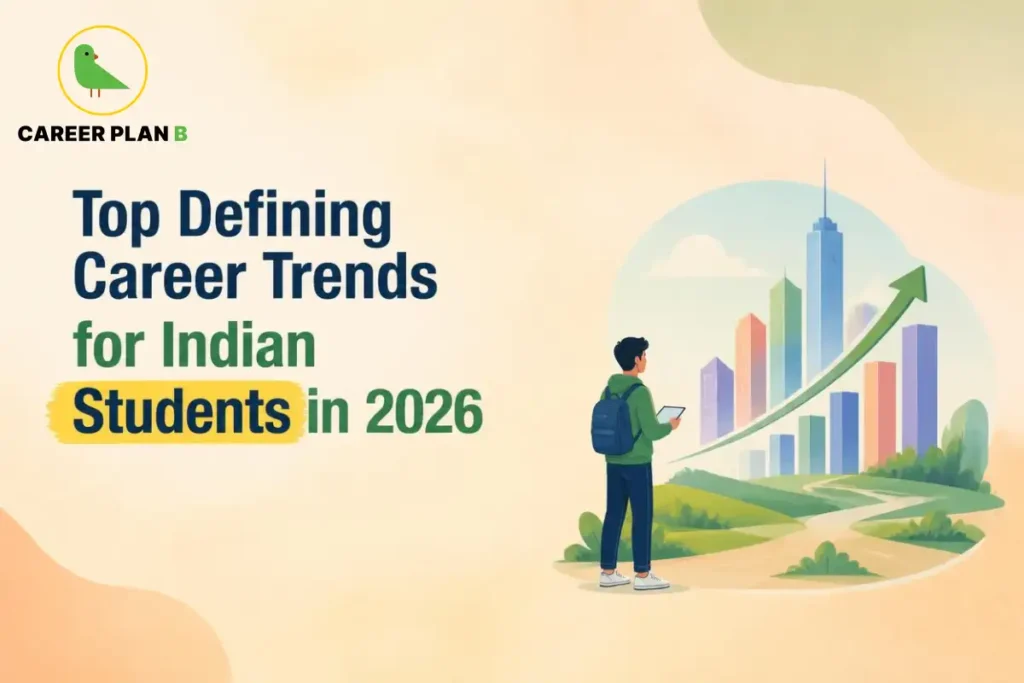
Introduction
Job market reports tell you what employers want. They rarely tell you how students themselves are actually behaving in response. That second half of the picture matters just as much, and it’s changing fast.
Across colleges and online platforms, Indian students are approaching career trends differently than they did even a few years ago. The shift isn’t just about which fields are growing. It’s about how students choose to learn, when they start building a professional identity, and how much weight they give a single degree versus a broader mix of skills.
This guide covers the defining trends in how Indian students themselves are planning careers in 2026, not just what the job market is asking for.
Trend One: Skill-First Thinking Is Replacing Degree-First Thinking
Students increasingly treat their degree as a starting baseline, not the finished product. A growing share now assumes, from early in their degree, that they’ll need to add specific certifications or demonstrable projects on top of it.
This shows up clearly in how students plan their time. Instead of waiting until final year to think about employability, many now start layering skills from year one, choosing electives and side projects with a specific outcome in mind rather than just academic interest.
Why this matters: this shift rewards early planning. Students who start building a skill layer in year one, even a small one, tend to enter the job market with a much stronger, more coherent profile than those who start in their final semester.
Trend Two: Dual-Track Learning Is Becoming Normal, Not Niche
Pairing a UG degree with a parallel track, whether that’s a professional certification, freelancing, or a second skill area entirely, has moved from an unusual choice to a fairly common one.
B.Com students pursuing CA or CS alongside their degree, BCA students building freelance projects, and BA students adding design or writing certifications all reflect the same underlying pattern. Students are treating their degree years as a window for building two things in parallel, not one thing sequentially.
Why this matters: dual-tracking works best when it’s planned deliberately, with a clear sense of how the two tracks reinforce each other, rather than added as an afterthought once a student feels behind.
Trend Three: AI Literacy Is Spreading Across Every Stream
AI is no longer treated as a subject only relevant to computer science and engineering students. Commerce, arts, and science students increasingly build a working knowledge of AI tools relevant to their own field, from AI in financial analysis to AI-assisted content and design work.
This trend reflects a practical instinct more than a technical one. Students aren’t necessarily becoming AI specialists. They’re making sure their existing field doesn’t leave them behind as AI tools get embedded into more everyday professional work.
Why this matters: you don’t need a technical background to benefit from this trend. A basic, applied understanding of how AI tools work within your own field is becoming a genuine differentiator, regardless of your stream.
Trend Four: Freelancing Is Treated as Career Building, Not Just Extra Income
Student freelancing has shifted in purpose. It used to be viewed mainly as a way to earn some money during college. Increasingly, students treat it as a deliberate way to build a portfolio and test a career direction before fully committing to it.
This connects closely to how students use their degree subjects. A B.Com student taking on bookkeeping freelance work, or a BA Communication student managing social media for a small business, both use freelancing to apply degree concepts in a real setting, not just to earn.
Why this matters: approached this way, freelancing becomes a genuine career-testing tool. A few real client projects can tell you more about whether a field fits you than a semester of coursework alone.
Trend Five: Government Platforms Are a Serious Part of the Plan
Free, government-backed learning platforms have moved from a backup option to a genuinely competitive first choice for many students, particularly for academic reinforcement and technical foundations.
Students increasingly build a layered profile that includes at least one credit-eligible course from a platform like SWAYAM, alongside more specialised paid courses or statutory certifications where relevant to their target field. This reflects growing awareness that free doesn’t mean lower quality, especially when the content comes from strong faculty at recognised institutions.
Why this matters: don’t overlook these platforms assuming paid options are automatically better. For many subjects, they offer comparable or stronger academic credibility, often with added credit transfer value your institution may recognise.
Trend Six: Career Confusion Is Being Treated as Solvable, Not Just Endured
Perhaps the quieter shift is in mindset. More students now treat career confusion as a problem with an actual process to work through, rather than something to simply wait out until clarity magically arrives.
This shows up in growing use of structured career assessments, deliberate small-scale testing of career directions through short courses or projects, and a greater willingness to seek structured counselling rather than relying only on family or peer opinions.
Why this matters: if you’re still unsure of your direction, this shift is good news. You’re not expected to already know. You’re expected to have a process for figuring it out, and that process is now far more accessible than it used to be.
Have Any Doubts?
A Quick Reference: Trends and What to Do About Them
| Trend | What It Looks Like | Practical Response |
|---|---|---|
| Skill-first thinking | Layering certs/projects early | Build a skill layer now, not in final year |
| Dual-track learning | Degree + certs or freelancing | Pair tracks so they reinforce each other |
| AI literacy | Non-tech students using AI | Apply AI tools specifically to your field |
| Freelancing as testing | Work to test a direction | Treat real projects as career research |
| Govt platforms | Free, credit-eligible courses | Don’t assume paid is always better |
| Solvable confusion | Assessments replacing waiting | Use a process; don’t wait for clarity |
How Career Plan B Helps
Following these trends is useful, but applying them to your own specific situation takes more than general awareness. Career Plan B helps you build that clarity through:
- Personalised Career Counselling to help you decide which of these career trends genuinely apply to your goals and circumstances.
- Psycheintel Career Assessment Tests to clarify your strengths before you commit to a specific skill-first or dual-track plan.
- Admission and Academic Profile Guidance to help you choose the right certifications, platforms, and pairings for your degree.
- Structured Career Roadmapping to turn these broader trends into a specific, staged plan through 2026.
For Latest Information
Frequently Asked Questions
1. Do I need to follow every one of these trends to stay competitive?
No. These are patterns worth being aware of, not a checklist to complete entirely. Pick the ones that genuinely fit your field, goals, and available time, rather than trying to follow all of them at once.
2. Is dual-tracking realistic for every student, or just high performers?
It’s realistic for most students, provided the pairing is planned deliberately and the workload stays manageable. Trying to dual-track without a clear plan often leads to underperformance in both areas instead.
3. How do I know if freelancing is actually testing a career direction or just distracting me from my degree?
Check whether your freelance work connects to your degree subjects or target career, and whether you’re learning something specific from each project. If it’s disconnected from any clear direction, it’s likely just income, which is fine, but treat it as such.
4. Are government platforms like SWAYAM really as good as paid courses?
For academic and foundational content, often yes, particularly given the faculty quality and potential credit transfer value. For highly specialised or tool-specific skills, a paid or industry-specific course sometimes adds value SWAYAM alone doesn’t cover.
5. I still feel confused about my career. Does that mean I’m behind these trends?
No. Feeling confused is common and doesn’t mean you’re behind. What matters is whether you’re using a structured process, like an assessment or counselling, to work through that confusion, rather than simply waiting for it to resolve itself.
6. Which of these trends matters most for a student just starting their degree?
Skill-first thinking matters most early on, since it shapes how you use your entire degree period. Starting to build a skill layer from year one sets up everything else, including dual-tracking and freelancing, much more effectively.
Conclusion
Job market data tells you what employers want. These career trends tell you how students themselves are actually adapting to that demand, often well ahead of when it shows up in a formal report.
Skill-first thinking, dual-track learning, AI literacy across every stream, freelancing as genuine career testing, serious use of government platforms, and a more structured approach to career confusion all point in the same direction: students are taking more deliberate control over their own career planning than before.
Not sure which of these trends actually fit your specific goals? Career counselling can help you build a plan around the ones that matter most for you.