Team Career Plan B · July 18, 2026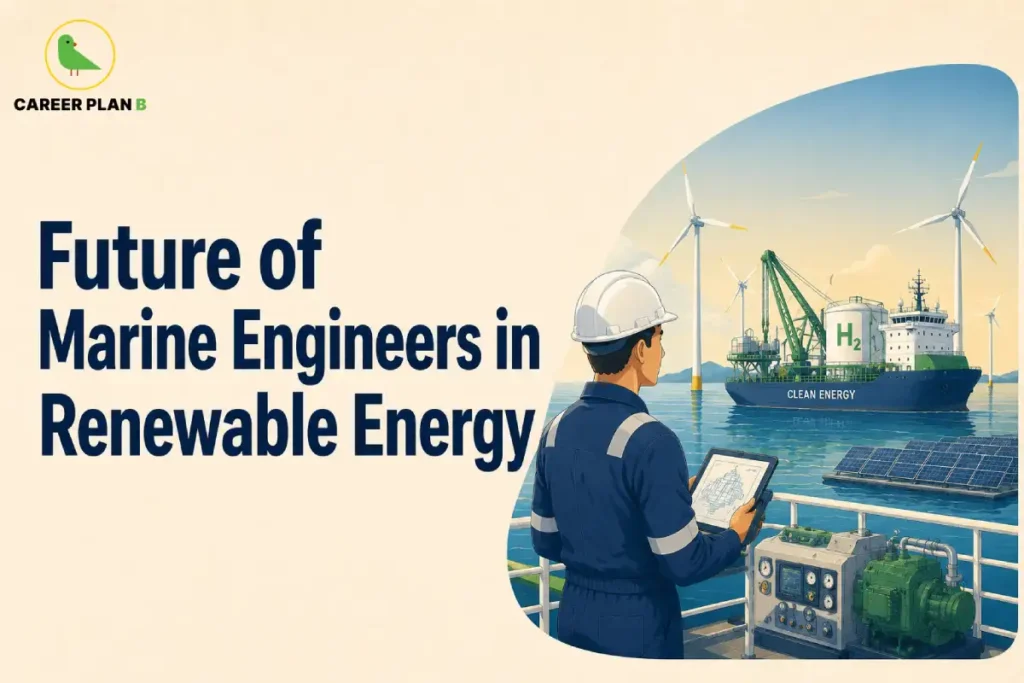
Introduction
For decades, marine engineers built their careers around two paths: merchant navy ships and offshore oil rigs. Now a third path is emerging fast, and most students haven’t heard about it yet: renewable energy. The future of marine engineers in renewable energy is being shaped right now, as India’s push toward offshore wind and other clean energy sources creates an entirely new category of demand for marine-trained engineers. This isn’t a distant possibility; projects are already underway, and the skills marine engineers already possess turn out to be exactly what this emerging sector needs.
What Does Offshore Renewable Energy Actually Involve?
Offshore renewable energy centres primarily on offshore wind farms large turbines installed in the sea, connected to substations that transmit power to shore. Floating solar installations are another emerging area, though less developed than offshore wind at this stage. India has set an ambitious target: 30 GW of offshore wind capacity by 2030, with active project development already underway off the coasts of Gujarat and Tamil Nadu, coordinated through the Ministry of New and Renewable Energy (MNRE), the official government body overseeing offshore wind policy and development in India.
Why Are Marine Engineers a Natural Fit for Renewable Energy?
This is the core reason behind the shift. Offshore wind installations require power generation, distribution systems, structural maintenance, and safety management. Marine engineers already develop many of these skills while working on ships and offshore platforms. Floating wind turbines also require expertise in stability and structural integrity, especially in deeper waters. Marine engineers gain relevant knowledge through their training in vessel and hull stability. Installation vessels and maintenance operations also rely heavily on Dynamic Positioning (DP) systems. This is another area where marine engineering skills can transfer directly to offshore wind projects.
Why Not Just Train New Engineers Specifically for Renewable Energy?
It’s simply more efficient to build on existing expertise. Training an engineer from scratch in offshore power systems, structural stability, and marine safety protocols takes years. Marine engineers already have this foundation; they typically just need additional renewable-energy-specific certifications rather than starting from zero, making them a faster, more cost-effective talent pool for this growing sector.
Marine Engineer Career Scope in Renewable Energy
Emerging roles include offshore wind technician, turbine maintenance engineer, installation vessel engineer, and floating platform engineer all relatively new job categories compared to traditional merchant navy ranks. The typical path involves marine engineers transitioning from merchant navy or offshore oil and gas roles into renewable energy after gaining relevant sea experience, then adding specific certifications. The key credential here is GWO (Global Wind Organisation) safety training, typically completed alongside existing DG Shipping certification that most marine engineers already hold.
Salary and Growth in Renewable Energy Roles
Marine engineering salary in India in offshore wind roles is still developing as the industry matures but is expected to be competitive given the specialized skill requirements and the relatively limited pool of qualified engineers currently available for this emerging sector.
Renewable energy careers in India overall are backed by significant government investment, creating long-term demand that’s likely to grow steadily as India’s clean energy targets get closer to their 2030 deadline.
Marine Engineering Future Scope in a Renewable World
The marine engineering future scope looks genuinely strong in this space. India’s offshore wind plans point to sustained project development over the coming years. Globally, the sector is already expanding rapidly, particularly in Europe. This growth creates international career opportunities for marine engineers with the right training and skills. As a result, their career options can extend well beyond India’s domestic offshore wind projects.
Is Offshore Wind the Next Big Employer for Marine Engineers?
It’s shaping up that way. As India’s offshore wind projects move from policy and planning into active construction and operation, this sector is likely to become a significant employer of marine-trained engineers over the next decade, alongside traditional merchant navy and offshore oil and gas roles.
Have Any Doubts?
In what way to Prepare for a Renewable Energy Career as a Marine Engineer
- Complete your marine engineering degree and gain initial sea experience
- Clear required DG Shipping certification exams
- Obtain GWO safety certification, alongside offshore certifications like BOSIET, if targeting installation or maintenance vessel roles
- Stay updated on offshore wind project developments in India, particularly around Gujarat and Tamil Nadu, to identify entry opportunities early
How Career Plan B Helps
Renewable energy is a genuinely new frontier within marine engineering, and figuring out whether to specialize in this direction takes careful thought. Career Plan B offers personalized career counselling, PsycheIntel and career assessment tests, and academic profile guidance to help you assess whether this emerging path fits your goals, backed by a clear career roadmap to help you plan ahead.
For Latest Information
Frequently Asked Questions
- What is the future of marine engineers in renewable energy?
Strong and growing, as India’s offshore wind targets and global renewable energy investment create new demand for marine-trained engineers.
- What certifications do marine engineers need for offshore wind jobs?
GWO (Global Wind Organisation) safety training is the key additional certification, typically completed alongside existing DG Shipping certification.
- Can any marine engineer switch to offshore wind roles?
Most can, provided they complete the required GWO certification and gain relevant experience, since core marine engineering skills transfer well to this sector.
- Is offshore wind a good career option in India right now?
Yes, it’s an emerging but genuinely promising sector, backed by significant government investment and clear 2030 targets.
- Do offshore wind roles pay as well as offshore oil and gas roles?
Pay structures are still developing as the industry matures, but specialized skill requirements suggest offshore wind roles will remain competitive.
- Is renewable energy work less hazardous than offshore oil and gas work?
Generally yes, though offshore wind installations still involve real risks related to height, weather exposure, and marine conditions.
Conclusion
The future of marine engineers in renewable energy offers an exciting new direction for the profession. It creates a third major career path beyond the merchant navy and offshore oil and gas. As India expands its offshore wind sector, marine engineers with the right skills and certifications can position themselves for emerging opportunities.
For marine engineers and aspiring students, this is a career path worth exploring. The sector is still developing, which gives early entrants time to build relevant skills and experience. As offshore renewable energy grows, new opportunities for marine engineers are likely to emerge.